






 0


Falling pig prices deepen the crisis for German producers
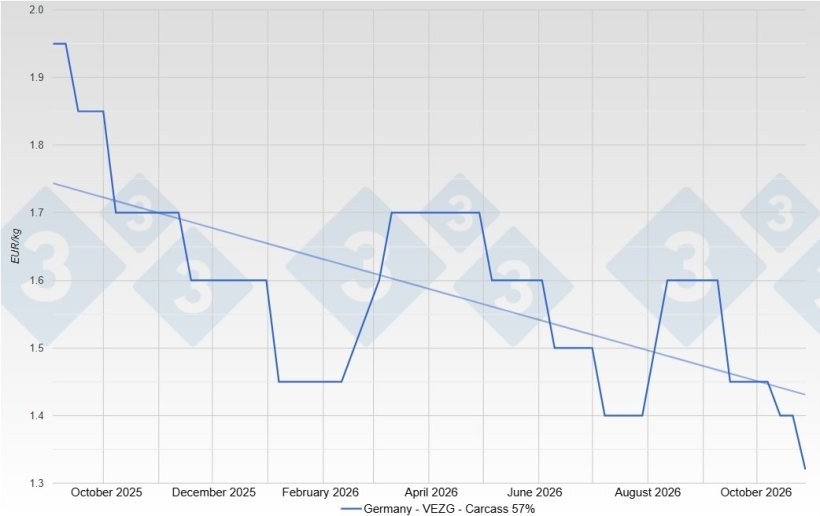
At the beginning of the month, the slaughter pig market was already well supplied. Following the summer temperatures, daily weight gains increased again, bringing more pigs ready for slaughter onto the market. At the same time, demand for pork remained disappointingly weak. Slaughterhouses were able to cover their requirements without difficulty and showed little interest in additional volumes. In particular, the market for processing meat and bone-in cuts lacked the much-needed momentum.
After initially holding steady at €1.45 per kilogram of carcass weight, the pig price suffered its first setback in the middle of the month, falling to €1.40. But the bottom had not yet been reached. At the end of October, leading slaughter companies increased the pressure once again and demanded further price reductions. Eventually, the quotation dropped by another eight cents to just €1.32. In total, pig prices lost 13 cents over the course of the month. For many farms that have already been struggling with substantial losses for months, the economic situation deteriorated dramatically. This happened despite slaughter numbers declining slightly towards the end of the month and carcass weights remaining stable. Nevertheless, demand was simply too weak to provide any relief to the market.

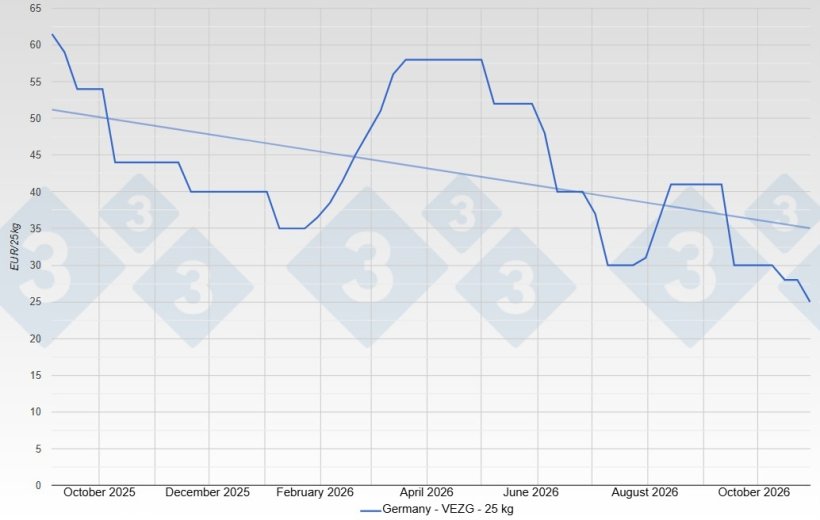
Piglet producers also felt the impact of the difficult situation. Piglet supplies remained sufficient throughout the month, while finishers were reluctant to restock their barns in view of their own financial losses. The piglet price fell from €30.00 to €25.00 for a 25-kilogram piglet during October. Piglets sold outside established supply agreements became increasingly difficult to market.
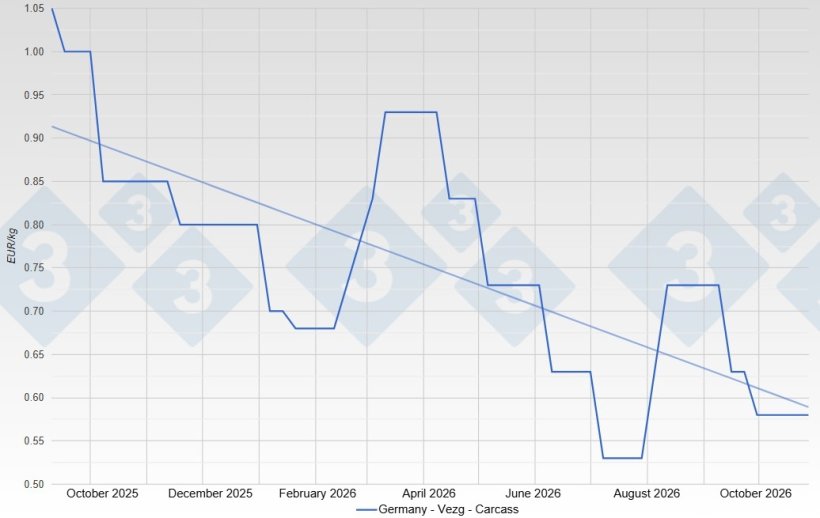
The situation was hardly any better for slaughter sows. Although the animals offered were generally sold without major difficulties, demand for sow meat remained below expectations. The usual seasonal recovery in autumn failed to materialise, while the abundant supply of inexpensive processing meat intensified competition. The sow price ultimately remained at the low level of €0.58.
Slaughterhouses and retailers face criticism over pricing practices
Developments within the German meat industry caused additional frustration. Tönnies and Westfleisch in particular came under criticism after repeatedly demanding further price reductions and temporarily threatening to cut slaughter volumes. While medium-sized slaughter companies generally supported stable quotations towards the end of the month, the market leaders maintained the pressure. For producers already facing serious financial difficulties, this approach was difficult to understand.
At the same time, further discount campaigns on meat and sausage products by food retailers intensified the debate over how value is distributed along the supply chain. Aldi and Lidl once again reduced the retail prices of numerous products, while many pig farmers were fighting for their economic survival.
However, there were also some positive developments regarding supply contracts. Following intensive discussions with agricultural associations, Tönnies agreed to explicitly reinstate the independent VEZG quotation as the price basis in its supply contracts. This represented an important step towards greater transparency and planning security.
There was also movement in the dispute between EDEKA Nordbayern Sachsen Thüringen and pig farmers participating in the Bauernschätze programme. The dispute dates back to spring 2026. EDEKA had originally agreed on long term supply contracts with participating pig farmers, using a pricing model based on actual production costs. Relying on these agreements, some farmers had made substantial investments in new animal welfare housing facilities. In March and April, EDEKA terminated the existing contracts and pushed for an early transition to a new surcharge based pricing model. However, some farmers wanted to maintain their original agreements. In September, EDEKA subsequently issued immediate termination notices, arguing that the original pricing model had become economically unreasonable. Following strong criticism and the threat of legal action by the German Pig Farmers' Association, EDEKA withdrew the immediate terminations. However, the regular termination notices remained in place. The dispute highlights the importance of reliable supply contracts for agricultural businesses, particularly when farmers make substantial investments based on long term agreements.
EU oversupply and structural changes add to market pressure
Internationally, the pig market also remained under considerable pressure. In France and Spain, the downward trend in pig prices continued. In particular, export restrictions resulting from African swine fever in Spain weighed heavily on the EU pork market. Meat volumes that could no longer be exported to third countries as usual increased the supply pressure within the EU. At the same time, weak demand from China and intense competition from suppliers in the United States, Brazil and Russia made export business increasingly difficult.
A different development was emerging in the Netherlands. Pig inventories and slaughter numbers have been declining there for several years, leaving the slaughter industry struggling with growing excess capacity. As a result, Vion plans to discontinue pig slaughtering at its Apeldoorn site by the end of the year. Denmark may also be heading towards structural changes. The Danish government has introduced a moratorium on permits for the construction and expansion of conventional pig housing facilities. The Danish farmers' association is challenging the decision in court, warning of serious consequences for investment and employment. In the longer term, such developments could influence EU pig supplies. In the short term, however, the market remained abundantly supplied.
Hopes for a Christmas recovery amid continued uncertainty
Looking ahead to the coming weeks, market sentiment remains subdued. Hopes are increasingly focused on the approaching Christmas season, which normally brings stronger demand for pork and processed meat products. By the end of October, however, the anticipated boost had largely failed to materialise. Even medium-sized slaughter companies doubt whether the latest significant price reduction will actually stimulate pork sales. The decisive factor will be whether food retailers and meat processors noticeably increase their orders and whether the pressure from additional EU meat supplies begins to ease.
Under the current conditions, a rapid and sustainable recovery appears difficult. A turnaround in the piglet market is also unlikely until pig finishers regain confidence. In the medium term, declining pig inventories in several EU countries could help ease the situation. Until then, however, the financial burden on many German farms remains enormous.
October clearly demonstrated that lower pig prices alone are not a solution to a weak pork market. Instead, the prolonged period of losses threatens to accelerate structural change in pig production even further. For farmers, the crucial question therefore remains whether the hoped-for recovery in demand will arrive in time to at least stabilise the markets. After such a difficult October, even that would be an important first step.


