

























 0
0
Introduction
In 2024, a submission was received at Royal GD (Deventer, the Netherlands) for postmortem examination of a weaned piglet from an 850-sow farm. Weaned piglets on the farm showed a syndrome characterized by bulging eyes, corneal opacity, and hair loss. During this and subsequent submissions, several pathological findings were documented, and multiple pathogens were detected through routine diagnostic investigations. However, these findings were inconsistent between cases and did not adequately explain the observed clinical syndrome.
Clinical diagnostics
To define the problem more precisely, a joint farm visit was conducted with the herd veterinarian and feed advisor. Acutely affected pigs were examined to determine the age of onset and progression of the disease. Also, we aimed to identify whether affected pigs showed other signs of illness, such as reduced responsiveness or fever.

Approximately 15% of suckling piglets were found with consistent clinical signs. Some were as young as ten days of age. Within affected litters, the number of clinically affected piglets was either one or two, or nearly the entire litter.
Clinical signs included:
- exophthalmos (bulging eyes)
- strabismus
- alopecia (hair loss)
- erythema (hyperemia of the skin).
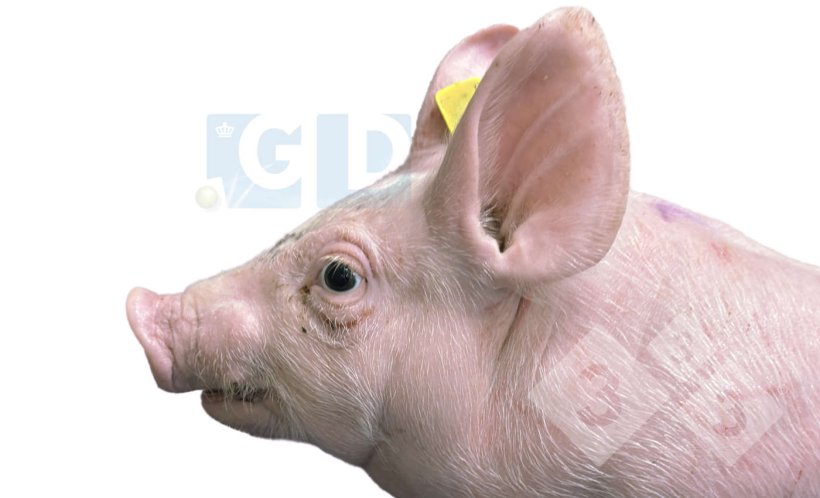
Some piglets also had an apparent swelling in the neck and in others the lower jaw appeared shortened. More severely affected pigs were seen breathing with an open mouth.
Still, piglets remained alert, had good body condition and their body temperatures were within reference range. No association was found with sow parity, or pig gender.
In weaned pigs, the same clinical picture was observed as reported earlier by the veterinarian; chronically affected pigs with potential long-term effects, such as conjunctivitis, corneal opacity and poor growth. Retrospectively, based on archived photos some sows showed very subtle bulging eyes as well, but no other clear clinical signs.
Laboratory diagnostics
During the farm visit, blood samples were collected from five affected pigs and three pigs were submitted for post-mortem analysis on the next day. Blood analysis showed slightly elevated haptoglobin, lactate dehydrogenase, alkaline phosphatase and bilirubin levels and decreased creatinine levels (Table 1), indicative of liver involvement, but other blood analysis were inconsistent. No clinical signs of jaundice or anemia were found. Remarkably, at post-mortem, apparent macroscopic or microscopic lesions of the eye, skin or abdominal organs were not observed. Tissues were stored for further analysis.
Table 1. Blood analyses results. Only consistent aberrant results of blood analyses are shown. (red text means values are elevated compared to reference range values and orange text means levels are below reference range)
| Pig | 1 | 2 | 3 | 4 | 5 | Unit |
|---|---|---|---|---|---|---|
| Age | 23 | 18 | 17 | 16 | 23 | days |
| Haptoglobin | 0.1 | 1.0 | 0.54 | 1.14 | 1.08 | g/L |
| Total bilirubin | 7.2 | 4.2 | 9.3 | 5.3 | 4.2 | µmol/L |
| Creatinin | 91 | 65 | 67 | 74 | 66 | µmol/L |
| Albumin | 32.2 | 31.9 | 34 | 28.1 | 23.3 | g/L |
| LDH | 734 | 850 | 966 | 629 | 581 | U/L |
| ALP | 767 | 724 | 500 | 684 | 635 | U/L |
LDH = lactate dehydrogenase, ALP = alkaline phosphatase
Outbreak evolves
In winter and spring of 2025, multiple veterinarians reported similar cases.
In the Netherlands, an animal health surveillance program is in place, executed by Royal GD in joint commission of the Dutch pig producers organization and the Dutch Ministry of Agriculture, Fisheries, Food Security and Nature. As a part of this program, amongst others, a telephone helpdesk is available for all stakeholders in the major livestock sectors next to subsidized specialized veterinary consultancy and postmortem examination services.
In this context, more farm visits were conducted, and ample piglets were sampled and submitted for in-depth investigations. Still, despite many hypotheses, no common factors were found, and sound conclusion could not be drawn. Still many differential diagnoses were ruled out, including hyperthyroidism, hyper- and hypovitaminosis D, and intoxications with heavy metals. Given the increasing number of farms reporting clinical signs, it was decided to use an advanced in-house developed Next Generation Sequencing protocol to investigate plausible infectious pathogens in stored tissue samples.
Virus discovery
In 18 pigs from 5 affected farms clear and consistent evidence was found for presence of viral DNA from a protoparvovirus.
The obtained protoparvovirus genome showed high similarity to a parvovirus previously found in a fecal sample from a fox sampled in the Netherlands in 2012.
This “fox” parvovirus was not found in samples from healthy non-affected pigs nor was it found in archived sequence data from samples collected before 2025. To confirm the presence of Fox parvovirus in all affected pigs, a fox parvovirus PCR was developed and PCR-positive results were found for all affected animals. Tissue from non-affected pigs tested negative. Subsequently, an in situ hybridization assay was set up which confirmed presence of viral RNA in tissue, indicative of viral protein synthesis in these cells. Finaly, the virus was successfully isolated.
Follow up and ongoing investigations
Follow-up on the initial farm was conducted by the herd veterinarian. The number of affected pigs decreased clearly within 4 months after the initial reports, and this is reported by other farms as well. Still, long term follow-up on other farms suggests that few affected pigs may be observed for many more months. Although formal studies need to be conducted, positive PCR results of many different sample matrices (including faeces, blood, skin swab, environmental swabs), suggest abundant viral shedding. Since parvoviruses are extremely resilient in the environment, we expect that in case of waning immunity new cases on farms will arise, possibly with larger outbreaks every few years when the sow herd has been completely replaced.
Impact on farms
Farmers report the need to provide substantial additional care in feeding affected weaned pigs as creep feed intake in suckling pigs is almost completely halted and feed intake in weaned pigs early after weaning is reduced. Consequently, pigs may suffer from traditional post-weaning diseases and decrease of growth. Veterinarians report an increase of skin anomalies, including scratches and exudative epidermatitis (greasy pig disease) in affected populations.
During the acute phase of the outbreak some farmers reported few sows to have aborted before clinical signs evolved in suckling pigs. In addition, veterinarians report an increase in congenital malformations and umbilical hernias on affected farms as well. Yet, causal inference between these reports and fox parvovirus have yet to be substantiated as initial investigations turned out negative.
Sow farmers report an increase in sales of inferior quality, or non-compliant, slaughter piglets. Although, mortality in weaners may increase with ~6% in some severely affected farms likely due to concurrent disease and long-term effects, most farms report a minor direct effect on mortality.
Preliminary data from affected farms suggest that farm productivity and economics are predominantly affected by:
- higher feed use
- decrease in growth in suckling pigs (-1 kg weaning weight at 28 days) and weaned pigs (-2 kg at 10 weeks)
- lower sales of compliant pigs
Potential effects on growth in finishing pigs have not been investigated yet.
Preliminary calculations indicate that the average loss of margin per piglet sold at 25 kg may range from €1,11 during a mild outbreak lasting four months to €2,95 during a severe outbreak lasting 6 months when considering all piglets sold over a one-year period. Loss of margin per sow would be between €34 and €84 per sow for one year in the same scenarios. These calculations are conditional to the assumption that piglet prices are constant (€50), and reduction of growth can be accommodated within existing facilities.
Outlook
As this clinical syndrome and the findings of fox parvovirus are relatively recent, many questions remain about virus pathogeneses, immune responses, options for interventions and prevention including vaccination and so on. Still, within a very short period, the disease has now been reported in multiple European countries (Canuti et al., 2026; Theuns, 2026; Tobias et al., 2026). It is unclear about how the virus got introduced into pig farms and whether its original host is either the fox or fox’s prey. As parvovirus are resilient it seems unlikely that this virus will disappear from farms easily. The clinical impact may be resolved in case herd immunity is long lasting but may surge again in case immunity wanes. Sufficient reasons to be vigilant and sufficient reason for Royal GD to follow up closely in collaboration with partners and veterinarians in the field.