

























 0
0
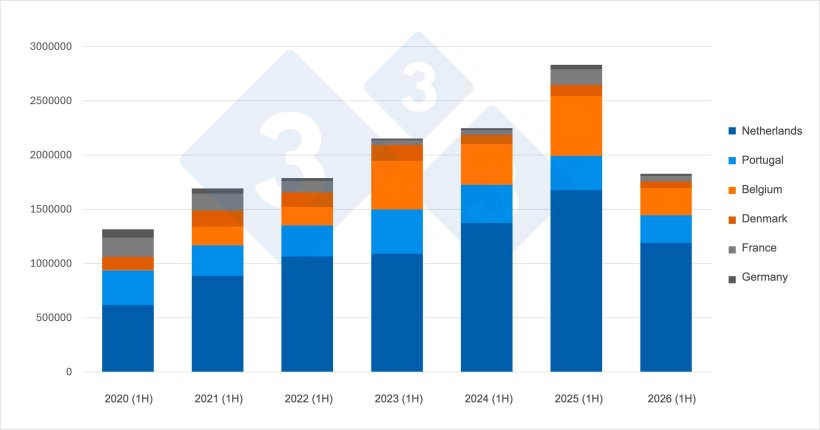
Spain imported 1,829,506 live pigs (all categories) in the first half of 2026, compared to 2,839,861 in the same period in 2025. This 35.6% decrease ends the growth trend observed in recent years, reflecting a widespread decline in foreign purchases of live pigs, in a context further influenced by the sanitary situation in the Spanish swine industry, which confirmed the presence of African swine fever in wild boars in November 2025.
The Netherlands remained the leading supplier to the Spanish market, with 1,193,696 pigs, accounting for 65.2% of total imports. Even so, its shipments fell by 28.9% compared to the first half of 2025, when they exceeded 1.67 million animals.

Portugal remained in second place with 255,423 animals, down 19.4% from a year earlier. Belgium, Spain’s third-largest supplier, was close behind with 249,586 pigs, although it recorded one of the largest year-over-year declines among the major exporters, at 54.6%.
The other major suppliers also reduced their exports to Spain. Denmark shipped 59,935 pigs, 42.3% fewer than in the first half of 2025, while France reduced its sales to 52,121 animals, representing a 64.2% decline. Germany exported 14,373 pigs to Spain, 58.4% fewer than a year earlier.
Despite the overall decline, the market structure remained largely unchanged. The Netherlands, Portugal, and Belgium together accounted for nearly 93% of all Spanish imports of live pigs during the first half of 2026, cementing their position as the main suppliers to the domestic market.
July 24, 2026/ 333 Staff with data from MAPA.