
























 1
1
Artificial intelligence from the design stage: Building pig farms today that are ready for the future
For decades, pig farm design has focused on three pillars: biosecurity, production efficiency, and construction costs. Today, without replacing any of these, three increasingly relevant elements have been added: animal welfare, the environment, and the digitalization of the production system.
Automation, sensors, and artificial intelligence (AI) tools have arrived to transform how farms are managed. However, their real impact depends not only on software or algorithms, but on something much more concrete: whether the farm was designed from the outset to reliably generate and use data.

When the infrastructure is prepared for it, technology ceases to be an accessory and becomes an everyday tool for making better production decisions.
The change in approach is simple: Think about the technology before building the farm.
Traditionally, technology is incorporated after the farm is already operational. The result is well-known: makeshift wiring, poorly placed cameras, and sensors installed where they can rather than where they should. This leads to inconsistent data and systems that staff end up ignoring because they don't see their purpose.
Integrating AI and technology from the design stage involves asking a key question:
In what areas of the production system will the critical farm data be generated?
When this question is answered during the design stage, the infrastructure ceases to be a limitation and becomes an enabler of efficiency and data-driven management.
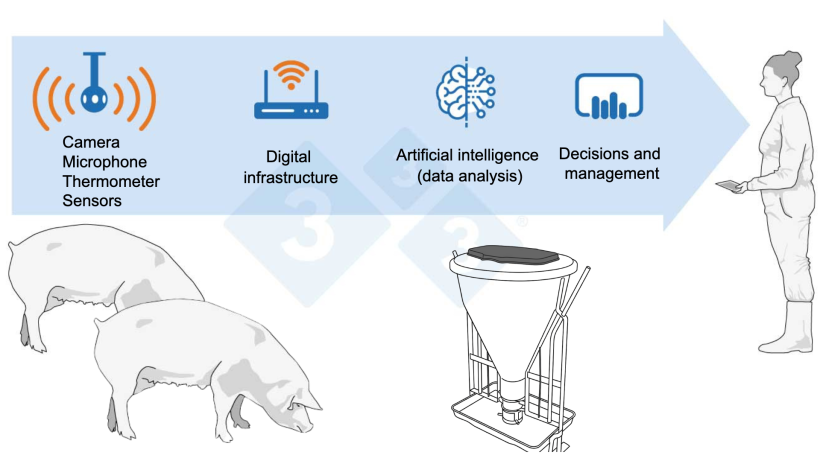
Figure 1. The farm as a data system
Digital infrastructure: The nervous system of the farm
Just as a farm cannot function without water or electricity, digitalization is also impossible without stable, well-planned connectivity. Therefore, digital infrastructure must be designed with the same level of detail as feeding or ventilation systems.
Some key elements include:
- Dedicated conduits for data cables, separate from the electrical network.
- Complete network coverage in farrowing, gestation, finishing, and walkways.
- Standardized connection points in each building.
- Uninterruptible power supply (UPS) systems for routers, switches, and local servers.
This allows the technology to function stably and avoids relying on improvised solutions in the future.
Design so that my eyes (my cameras) can see you
AI-powered cameras already allow for weight estimation, estrus detection, lameness identification, and real-time monitoring of animal behavior. However, their accuracy depends on both the algorithm and the physical design of the building. In this context, the integration of technology and AI represents a further step in the evolution of precision livestock farming, transforming traditional infrastructure into an intelligent ecosystem capable of converting visual data into automated decisions that optimize productivity and animal welfare. To obtain reliable data, it is necessary to consider the following from the design stage:
- Fixed heights and mounting points for overhead cameras.
- Homogeneous lighting, avoiding shadows or harsh reflections.
- Floors that are easy to keep dry.
- Simple access for cleaning and maintenance.
A well-installed camera can generate consistent information for years. In contrast, a camera placed "wherever possible" will introduce noise into the data and reduce the technology's value.
For example, if the walkways are designed with adequate width, uniform lighting, and glare-free floors, an AI camera can estimate weight and detect lameness by analyzing the animal's gait, which genetic providers already use to select females for their conformation.
This reduces handling, decreases stress, and allows objective information to be delivered to veterinarians and production managers.
Listen and measure before you see
In many cases, animals exhibit physiological changes before showing visible clinical signs. The combination of environmental sensors and analytical algorithms allows for the early detection of these variations.
To achieve this, barn design must consider:
- Materials that reduce excessive echoes when using acoustic sensors.
- CO₂, ammonia, temperature, and humidity sensors that are positioned according to the animal's height.
- Homogeneous distribution of sensors to accurately represent the environment inside the facilities.
With reliable environmental data, it is possible to manage the environment more precisely, improving animal welfare and reducing health risks. Figure 2. Effective sensing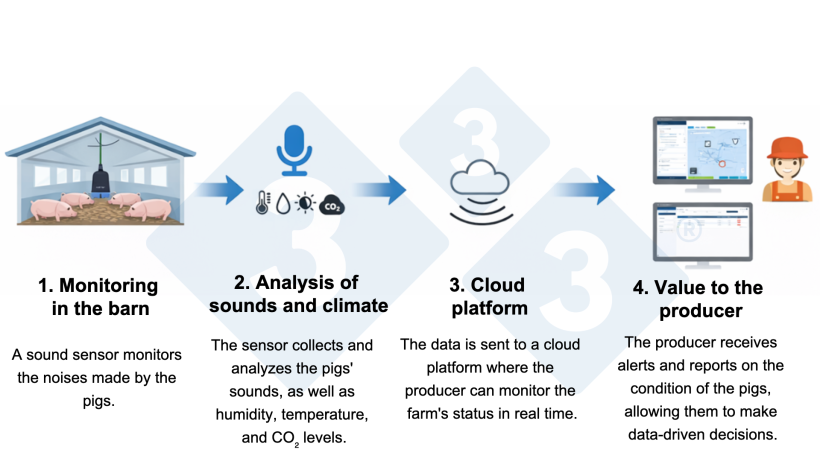
Feed, where technology and AI impact the economic outcome from day one
Feed represents the highest cost in pig production, making it one of the areas where digitalization can generate the greatest return.
To take advantage of this, the infrastructure must be prepared from the construction phase:
- Silos equipped with integrated load cells, offering greater accuracy than alternative systems such as infrared sensors and ultrasonic level sensors.
- Space and wiring prepared for electronic dispensers.
- Designs that facilitate maintenance and future expansions.
With reliable real-time data, analysis systems can anticipate supply shortages, adjust feeding curves, and detect production deviations early, directly impacting technical and economic results.
Digitization throughout the entire farm cycle
The value of AI is not limited to daily operations. Its impact spans the entire farm development cycle.
Design: Simulation of animal and people flows, identification of data capture points, and standardization between barns.
Construction: Planning of pipelines, supports, technical rooms, and connectivity tests before animals enter.
Operation: Continuous monitoring of behavior, environment, and consumption, with early alerts for production teams and veterinarians.
Management: Historical production and health analysis, comparison between barns or batches, and better support for economic decision-making
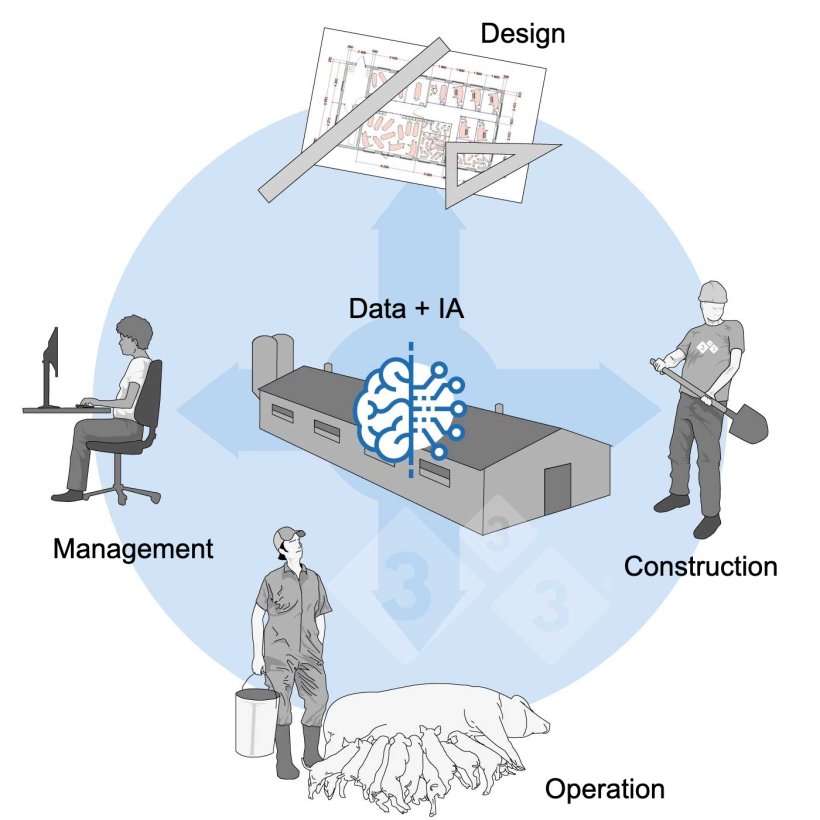
Figure 3. AI as ongoing support throughout the farm cycle.
Building today allows us to make better decisions tomorrow
Preparing a farm for automation and data use represents only a fraction of the total construction cost, but it can determine the system's ability to adapt and improve over the next few years.
Artificial intelligence does not replace the producer or the veterinarian. Its true value lies in transforming data into useful information for making faster and more accurate decisions.
Therefore, designing farms with data in mind is not futurism, it is responsible management and a long-term vision for modern pig production.