


























 Empresa
PIC Africa
Sudáfrica
16
Productos
23
Publicaciones
108
Seguidores
Empresa
PIC Africa
Sudáfrica
16
Productos
23
Publicaciones
108
Seguidores
Managing health challenges through improved female genetics


Introduction: Disease Pressure as a Strategic Challenge
Disease risk is pervasive in contemporary pig production—and increasingly costly. Syndromes such as PRRS, influenza, and E. coli-related diarrhea disrupt productivity, increase culling, and erode both welfare and margins. Pre-weaning mortality, reproductive inconsistency, high treatment rates, and emerging pathogens remain systemic threats.
Published analyses of nearly 810,000 sows across Spanish commercial herds showed pre-weaning mortality as a critical efficiency limiter—and survival rate as a measurable target for improvement in standard production settings. Similarly, genomic studies characterizing resilience to PRRS measured reproductive stability under exposure, highlighting durability as a heritable trait. These findings underscore the importance of genetics, not just management, in addressing disease impact.
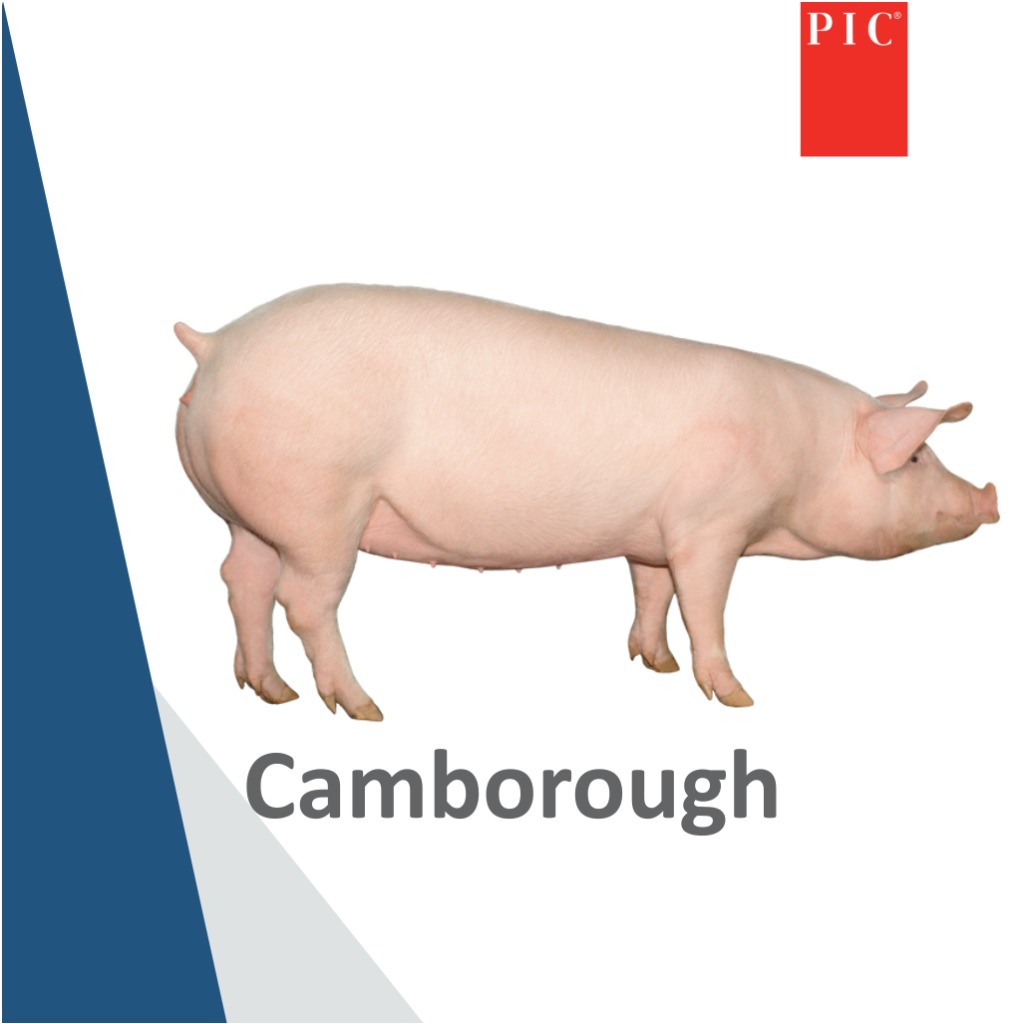
This chapter set out to provide deeper insight into four technical pillars of genetic disease resilience—and demonstrates why PIC’s Camborough® and X54® solutions remain uniquely aligned with farm-level epidemiological realities.
More Pigs Survive to Weaning: Building Birth Robustness
Early-life viability is fundamental. Published literature confirms that piglets heavier than ~1.8 kg at birth have pre-weaning survival above 90 %. In large-sample commercial benchmarking from Spain, pre-weaning mortality was shown to track closely with litter uniformity and birthweight distributions.
PIC’s genetic approach addresses this by:
• Raising average birthweight through balanced selection, reducing piglet vulnerability and support needs.
• Improving placental efficiency and intra-uterine resource allocation to limit runts and promote uniform litters.
• Selecting for early activity and suckling behavior, ensuring piglets are active at first colostrum moments.
• Embedding a survival index trait focused on real-world pre-weaning viability.
Cumulatively, these traits achieve >93.5 % survival in Camborough® herds and >94 % in X54® systems—on par with elite technical benchmarks, and with <1 % full-litter fostering .
Read more: Robustness Impacts Overall Profitability – PIC North America
Reproduction Under Pressure: Ensuring Fertility in Challenging Environments
Reproductive performance under health stress defines sow farm profitability. A mere 2 % drop in farrowing rate can reduce output by ~500 pigs/year on a 1,000-sow unit.
Research modeling PRRSV-resilient versus susceptible sow populations shows that resilient sows deliver better reproductive outcomes and economic margins—by 12 % in endemic, and 17 % in recurrent outbreak settings. Stability in number born alive (NBA) and low non-productive litter (NLP) during outbreak periods correlates with resilience MDPI.
PIC integrates these findings into selection by:
• Evaluating sows under commercial health-challenged environments, not just nucleus farms.
• Selecting for conception stability, litter retention, and parity progression through P5+.
• Incorporating genomic predictors for reproductive resilience and immune performance.
As a result, Camborough® demonstrates >88 % farrowing rate even during PRRS outbreaks, while X54® maintains output through high-litter parity progression with minimal reproductive drop-off.
Fewer Treatments, Lower Costs: Genetics as Preventive tool
Reducing antimicrobial use is critical for sustainability, welfare, and market confidence. But interventions don’t start at the clinic—they start at the farrowing crate.
Real-world data show that piglets from genetics selected for vitality and uniformity—coupled with structural teat quality and functional lactation—require fewer medications, especially when E.coli related diarrhea is the norm.
Selection against F18 E. coli receptor genes has decreased susceptibility in PIC lines, significantly reducing edema disease and post-weaning diarrhea risk. Combined with strong udder structure and early behavior, piglets need fewer treatments and experience better colostrum intake—a factor proven to support immunity and reduce neonatal morbidity.
Future Health Risks: Staying Ahead of Evolving Pathogens
Genetic risk mitigation is the most powerful biosecurity. F18 resistance was fixed across Camborough® and X54® decades ago. Now, PIC is pioneering CD163 knockout lines, engineered to block the most dominant and widely-circulating strains of PRRSV entry:
• These gene-edited sows remain uninfected when challenged.
• They do not shed virus to herd mates.
• Growth, reproduction, and general fitness remain unaffected.
Additionally, immune resilience traits derived from commercial data are now embedded in selection indices—supporting robust performance under endemic disease pressures.
Integrated Genetic Strategy: Connecting Traits to Solutions
Rather than viewing genetics and disease separately, PIC’s system is designed as a continuum: from genetic trait selection to farm-level disease mitigation.
Camborough® combines balanced litter size and maternal behavior with placental efficiency and survival-focused genetics. That means piglets that start stronger, sows that reproduce reliably, and reduced intervention needs drive smoother, more predictable farrowings.
X54® amplifies those gains at scale—delivering larger litters without increased variability, stable farrowing rates under pressure, and integrated resistance traits that improve nursery health outcomes.
Together, these products represent a single, cohesive genetic strategy: built to reduce losses at birth, maintain reproduction under adversity, minimize treatments, and pre-empt future threats.
Read more: Data Makes the Difference: PIC Seeks Answers to Environmental Impact of Genetics – PIC UK
Conclusion: Genetic Resilience as Competitive Advantage
The path to true disease management lies not in reactive protocols, but in genetic prevention. PIC’s integrated breeding platform—anchored in real-world survival, reproductive resilience, reduced health burden, and supply chain bio-security—ensures that Camborough® and X54® deliver both performance and protection.
Read more: Resilience in pig breeding – PIC UK
Because today’s pig farmers shouldn’t choose between success paths—they need one partner for every farm.
Follow this link to the article:
https://gb.pic.com/resources/managing-health-challenges-through-improved-female-genetics/
Productos
Contacto:
Contacta con nosotros a través del siguiente formulario.
Un resumen semanal de las novedades de 3tres3 Argentina
Accede y apúntate a la lista