

























 0
0
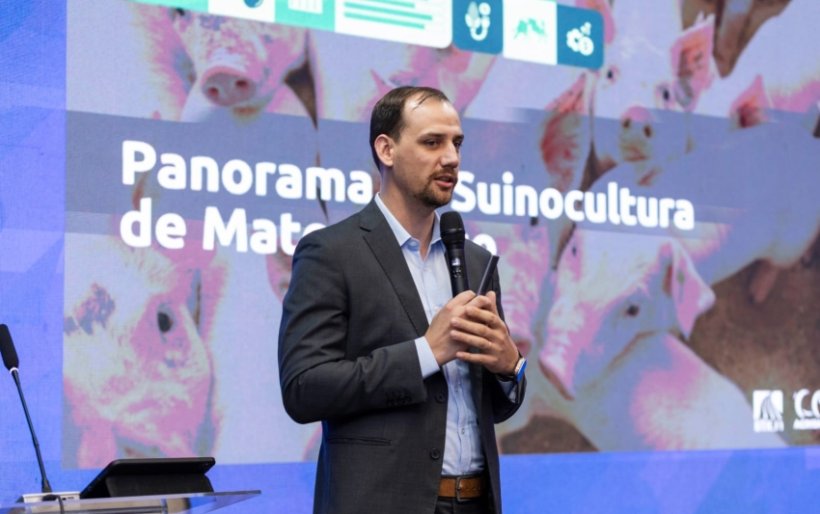
Despite the growth in production and record exports of Brazilian pork, producer profitability in Mato Grosso is experiencing one of the most delicate moments in recent years. The combination of falling prices, still high production costs, and difficulties in expanding domestic consumption was one of the main topics debated during the 5th Mato Grosso Swine Farming Symposium, held by the Mato Grosso Swine Breeders Association (Acrismat).
During the event, the superintendent of the Mato Grosso Institute of Agricultural Economics (IMEA), Cleiton Gauer, presented an updated overview of the production chain and highlighted that the state continues to expand its herd and production. However, this growth has not been reflected in the producer's income.

According to him, after the turn of the year, the prices paid per kilogram of pork showed a sharp decline, significantly reducing the sector's profit margin.
Gauer explained that the situation is even more worrying for producers who have ongoing financing and investments, since the reduction in profitability compromises their ability to meet these commitments.
Another point highlighted was export behavior. Although Brazil is registering record shipments of pork, this performance is still not enough to balance the domestic market.
"When we analyze Mato Grosso, only about 15% of production is destined for export. In other words, most of it remains in the domestic market, which limits the positive impact of foreign sales on the prices received by producers," he explained.
Efficient management will be decisive
Embrapa Swine and Poultry researcher Franco Muller Martins emphasized that the current scenario demands even more efficient farm management from producers.
During his presentation on production costs and perspectives for 2027, he presented the methodology used by Embrapa to calculate production costs in six Brazilian states, including Mato Grosso, providing information that serves as a reference for producers.
According to the researcher, although Brazil is experiencing an excellent moment in exports, this progress has not been sufficient to guarantee satisfactory margins for producers. For Martins, in addition to the work carried out within the farms, it will be essential that the entire chain continues to invest in actions to stimulate pork consumption. Besides the economy, the researcher also addressed the importance of biosecurity as a strategic factor in maintaining the competitiveness of Brazilian swine farming, a topic that also gained prominence during the symposium.
According to Frederico Tannure Filho, president of Acrismat, the discussion about production costs, market, and profitability has become indispensable given the current scenario in the sector.
"The pig farming industry is experiencing a moment of great technological evolution, but also of increasingly tight margins. Therefore, Acrismat made a point of bringing together specialists who could present an economic diagnosis of the sector and point out ways for producers to make safer decisions. Knowledge is an essential tool to maintain the competitiveness of the activity," he stated.
According to him, one of the main objectives of the 5th Mato Grosso Pig Farming Symposium was to bring producers closer to the technical and economic information that directly impacts the profitability of farms, strengthening the sector to face the challenges of the coming years.
July 20, 2026/ Acrismat/ Brazil.
https://acrismat.com.br