




 0

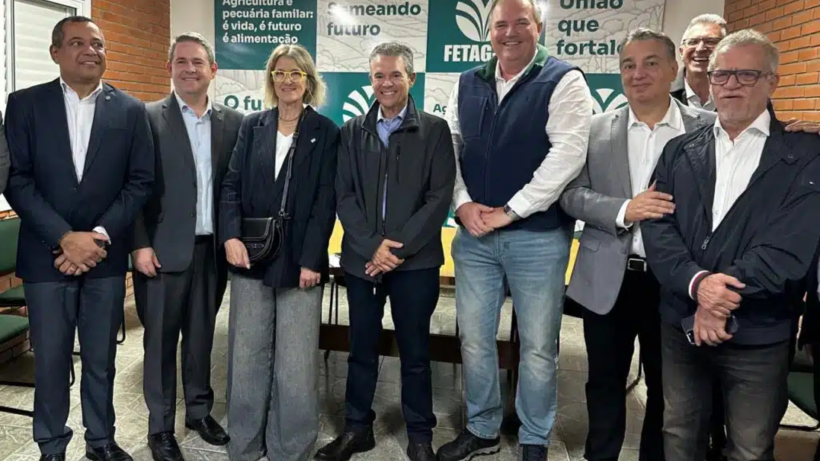
Agricultural producers and government officials from Mercosur countries stated that regulatory harmonization within the bloc and coordination on animal health are strategic for regional competitiveness and international integration. The statement was made during a seminar organized by the Federation of Rural Associations of Mercosur (FARM) and the Inter-American Institute for Cooperation on Agriculture (IICA) as part of the Expointer trade fair in Porto Alegre, Brazil, on September 4, 2026, with the participation of agricultural stakeholders from Argentina, Brazil, Paraguay, and Uruguay.
The president of Argentina’s SENASA, María Beatriz Giraudo, stated that the role of health agencies is “to monitor and inspect, but most importantly, to serve as a bridge to maximize commercial competitiveness,” and she spoke in favor of moving toward regulatory convergence and the simplification of procedures through digitization. Jorge Andrés Rodríguez of FARM described Mercosur’s regulatory integration as a “strategic and urgent” agenda, in part due to the development of European regulations that act as a non-tariff barrier to agri-food trade.

During the meeting, Fernando Schwanke, IICA’s representative in Argentina, explained how the Agricultural Health and Food Safety Hub works—a regional platform aimed at strengthening institutional capacities for surveillance, prevention, and response to sanitary and phytosanitary risks. José Urdaz, head of IICA’s program on agricultural health, biosecurity, and food safety and quality, warned that “the cost of not investing in agricultural health is very high in terms of economic, productive, and commercial losses,” and that prevention costs less than responding to a crisis.
Urdaz also detailed the work being carried out by IICA in response to the reemergence of African swine fever (ASF) on the island of Hispaniola and the reemergence of the cattle borer in Central America, as part of efforts to strengthen regional and national agricultural and livestock health systems.
September 4, 2026/ Inter-American Institute for Cooperation on Agriculture/ Brazil.
https://iica.int/es/