


























 0
0
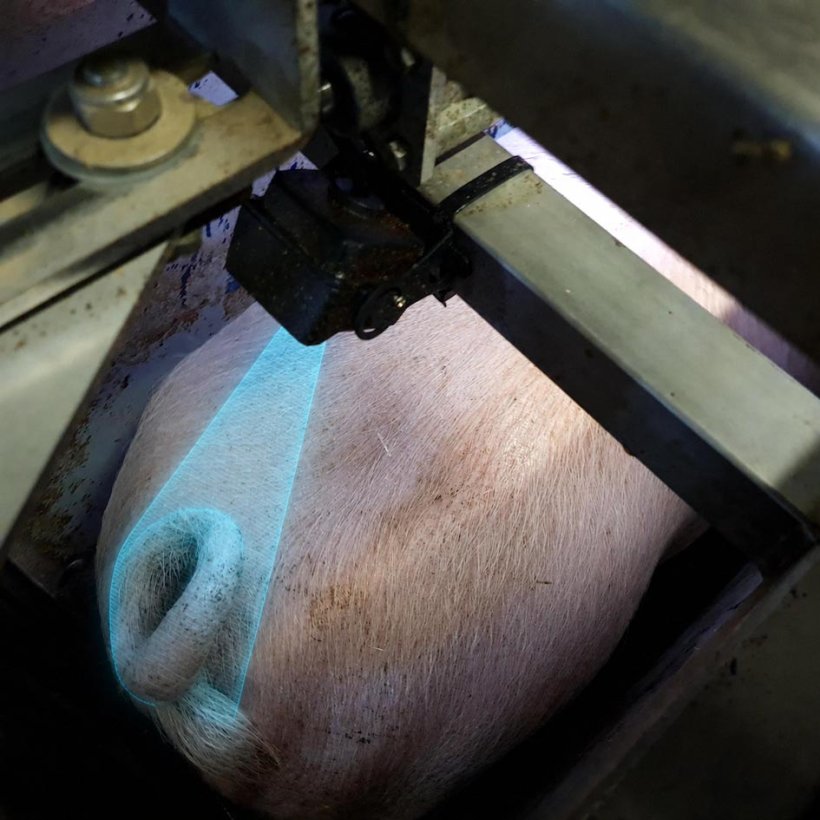
 WEDA’s EuroTier innovation, PigTail, has won the prestigious DLG Innovation Award EuroTier in silver. The fully automated, camera-based image processing system for sorting chutes in group housing uses artificial intelligence to analyse the condition of each animal’s tail as it passes through. There is significant demand for this application: automated monitoring of pigs can save a great deal of working time whilst significantly improving the quality of monitoring. Before the marketing date, the software provides, at the touch of a button, the proportion of intact ring-tailed animals for the purpose of applying for animal welfare premiums.
Addition of an animal welfare diagnostic tool
The manual recording and assessment of tail condition in hundreds of animals in large groups is, in practice, extremely time-consuming, prone to error and virtually impossible to carry out during normal operations. Existing sorting chutes weigh and select animals purely on the basis of weight. The WEDA innovation PigTail is the first to extend the sorting chute with a visual animal welfare di- agnostic tool. It fully digitises the verification process for subsidy schemes and eliminates the need for counting during weaning.

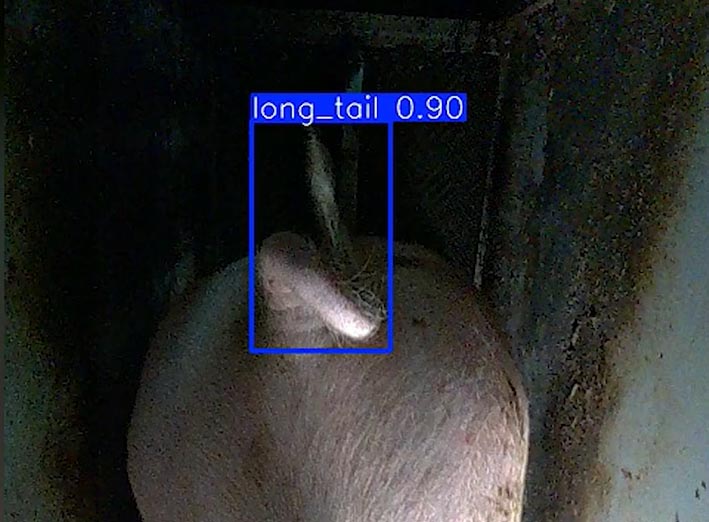
AI detects anomalies
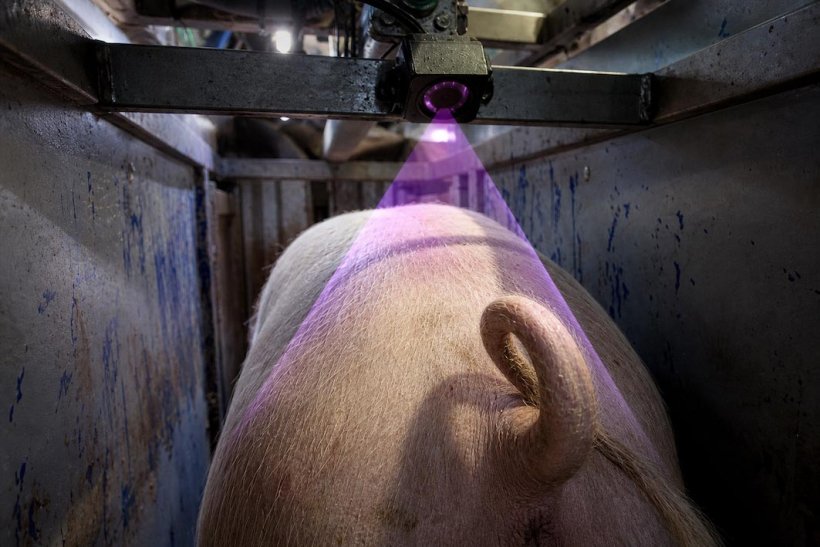
As the animal passes through the sorting chute, a camera captures an image from above. The AI segments the image and then immediately detects whether the tail is intact or whether there is tail necrosis or signs of tail-biting. By linking this to ear-tag recognition (RFID/LF), the AI compares the current image with the animal’s historical data. If the system determines that an animal had an intact tail yesterday but is showing injuries today, a notification containing the pen and animal numbers is immediately sent to the farmer. The system continuously aggregates the data. Before the marketing date, the software provides a list of animals with intact ringed tails at the touch of a button for the purpose of applying for animal welfare premiums.
Key features and benefits at a glance
- Early warning system against cannibalism: As injured animals are reported immediately, the farmer can intervene – by providing enrichment materials or separating affected animals – before systematic tail-biting spreads throughout the whole group.
- Reliable and error-free documentation: The exact number of ring-tailed animals is immediately available for premium calculations. The risk of revenue losses due to estimation errors or inadequate documentation during inspections is eliminated.
- Enormous time savings for sales purposes, as there is no need for manual counting and assessment of often more than 400 restless animals.
- Relieves staff of strenuous, error-prone inspection tasks carried out directly amongst the animals.
- Improved health and safety through reduced time spent in the animal housing.
September, 2026 - WEDA Dammann & Westerkamp
