






 0

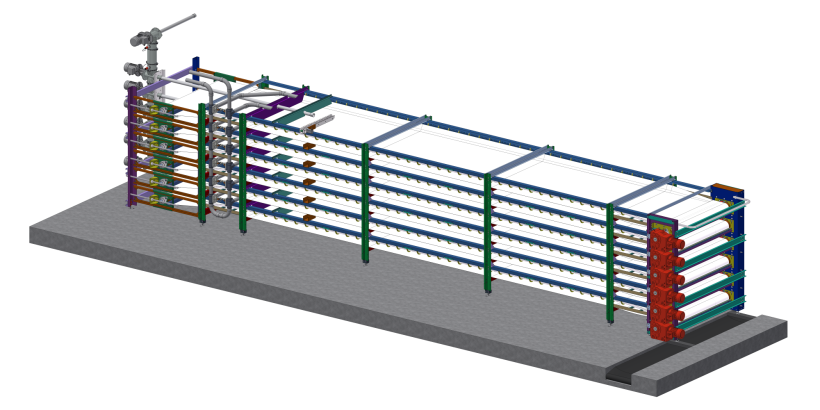
 Larvae Island is a complete dry nutrient package for hatched insect larvae, which is automatically dispensed via a spiral directly onto the liquid rearing feed, enabling larvae to be reared in a single system. This makes insect rearing incredibly easy and sets new standards in terms of cost, labour and resource efficiency.
Reduction in labour costs
Traditional insect rearing is a labour-intensive, two-stage process involving separate rearing and fattening phases. The process requires different types of containers, separate climate-controlled rooms, costly robotic technology and transport systems that are high-maintenance. The processes require human intervention, which increases labour costs. Furthermore, at the end of the rearing phase, the larvae must be fasted so that the contents of the boxes can dry out in preparation for transfer. The innovative Larvae Island system from WEDA Dammann & Westerkamp completely eliminates these obstacles by reducing technology and logistics to the absolute minimum: there is no longer any box handling, no fasting and no need for expensive investments in robotics.

Faster animal growth
WEDA’s new product, Larvae Island, is a dry, nutrient-rich and structurally stable feed island for insect larvae after hatching. It reduces the complex production processes involved in traditional insect farming to three automated steps: dispensing liquid rearing feed, applying Larvae Island (the rearing feed) in dry form, and finally populating the system with the insects. In this one-step process, the larvae remain in the same system throughout the entire growth period. This eliminates the need for transferring, sorting or transporting different types of containers. The larvae are supplied with nutrients precisely and continuously at all times, leading to faster growth and more production cycles per year. The focus on core processes significantly reduces overall costs and eliminates numerous investment costs and work steps, thereby achieving maximum cost-efficiency.
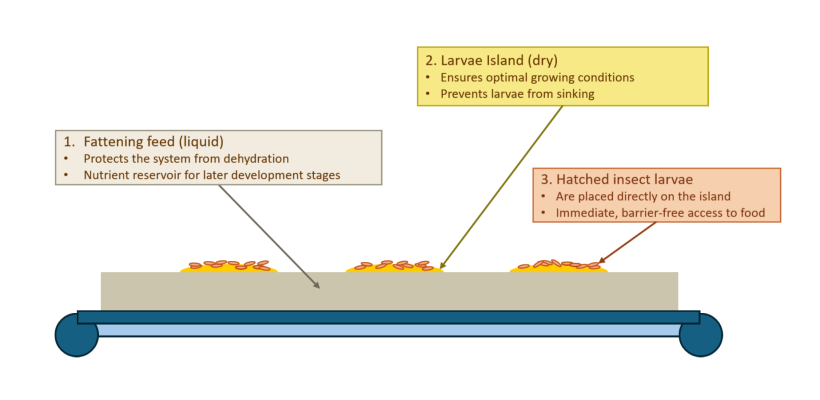
Key features and benefits at a glance
- Lower capital costs: The elimination of specialised rearing crates, separate climate-controlled rooms, costly crate handling and robotic technology significantly reduces capital costs.
- Safe, automated transport of goods: Feed components and animals are transported and distributed automatically; there is no need to move crates back and forth.
- Efficient use of resources: Faster insect growth, automated transport processes and the elimination of the need for additional climate-controlled rooms reduce energy consumption and conserve natural resources.
- Reduced labour: Once the insects have been introduced, the larvae do not need to be handled again until harvest. This saves time and money.
- Time savings: The amount of labour required is significantly reduced, which makes it easier to get started in insect farming and opens up new opportunities, such as insect farming as a sideline.
September 2026 - WEDA
