





















 Company
Vilomix
Denmark
19
Publications
191
Followers
Company
Vilomix
Denmark
19
Publications
191
Followers
Pay attention to feed quality when emptying the silo



Ganna Kirianova, Nutritionist, pigs
When grain silos are emptied, the final portion of the grain often differs significantly from the rest of the contents. At the bottom, there is typically an accumulation of damaged grains, dust and other impurities, which together create optimal growth conditions for microorganisms. At the same time, there is often an increased concentration of both mycotoxins and soil bacteria. The problems may be caused by several factors at once – or by a single dominant problem that causes production results to falter.
Feed quality is crucial
The quality of the feed plays a crucial role in the health, welfare, and productivity of pigs. Naturally occurring mycotoxins in grain can have serious consequences if not managed correctly, ultimately leading to reduced performance and financial losses.
Therefore, the feed strategy should always be adapted to the situation in the barn – especially during transition periods when silos are being emptied.
Signs of elevated toxin levels
If pigs are exposed to elevated levels of toxins via their feed, this can manifest itself through several clear symptoms in the barn. These may include:
- Increased incidence of abortion
- Incomplete or absent oestrus
- Reduced milk yield in sows
- Vomiting
- Redness or swelling around the vulva
- Protruding rectum
- General reduction in productivity
If these signs appear, it is a clear indication that feed quality – particularly from the bottom of the silos – should be evaluated more closely.
Managing toxins during this period
If toxin problems are suspected, a temporary measure involving the use of a toxin binder can be an effective solution until the silos have been emptied and the grain from the new harvest is of stable quality.
A general recommendation is to add a toxin binder in an appropriate dosage per tonne of feed during this transitional period. This can reduce the impact on animal welfare and prevent production losses.
Prevention starts with the silo
To minimise the risk of future problems, it is essential to focus on the condition and maintenance of the silos: 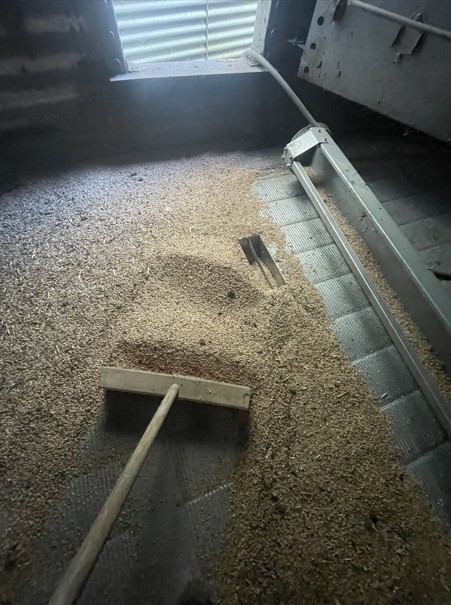
- Clean the silos thoroughly before filling with new grain
- Check the base of the silos – especially if they have not been opened for many years
- Ensure that the silos are sealed at joints and screws so that moisture cannot penetrate
- Check that the grain cleaner is working correctly
These measures significantly reduce the risk of both microbial growth and toxin formation.
When soil bacteria are the problem
If the problem primarily manifests itself as increased mortality due to gas bloat, the cause is often soil bacteria rather than toxins. In such cases, adding probiotics is a better option than a toxin binder alone.
Probiotics can help to stabilise the gut flora and strengthen the pigs’ resistance to unwanted bacteria, which may be present in feed from the bottom of the silos.
A combination offers the greatest security
In practice, a combination of toxin binders and probiotics may be the most effective solution. By addressing both toxins and bacterial issues, there is a high degree of certainty that the remaining grain in the silo will not cause any further problems.
Contact:
Contact us using the following form.