

























 0
0
Introduction
Microminerals or trace minerals are essential elements that form part of the structure of numerous molecules and participate in a multitude of biological processes. Therefore, micromineral supplementation in swine diets is fundamental for their growth, reproduction, and the proper development of the immune system. Until a few years ago, microminerals were added to diets to control nutritional deficiencies such as anemia (iron), parakeratosis (zinc), and goiter (iodine). However, micromineral requirements vary depending on the animal’s physiological state and the challenges the organism faces, and they are difficult to estimate. The functionality of certain microminerals in swine is related to various benefits:
- Zinc and selenium are associated with improved immune status and disease resistance.
- Manganese can improve carcass efficiency and quality.
- Copper and zinc offer benefits related to the control of digestive pathologies.
However, for more than a decade now, EFSA has established mandatory regulatory standards at the European level to limit the use of microminerals (basically Cu, Regulation (EU) 2018/1039; and Zn, Regulation (EU) 2016/1095 with the review and prohibition of therapeutic use in 2022, and to reduce environmental pollution.

The combined addition of vitamins and microminerals accounts for about 1-2% of the formulation cost of swine feed.
Due to their low economic cost, in Europe most animal feeds are formulated to comply with European regulations without considering specific requirements based on production system, health status, stress, or the animal's physiological pressure.
Microminerals are incorporated into swine diets through premixes, since the ingredients commonly used in feed formulation are often deficient in these minerals, poorly available, highly variable, and may interact with other micronutrients, protein structures, or compounds with high cation exchange capacity.
The main microminerals included in premixes for pig feed are:
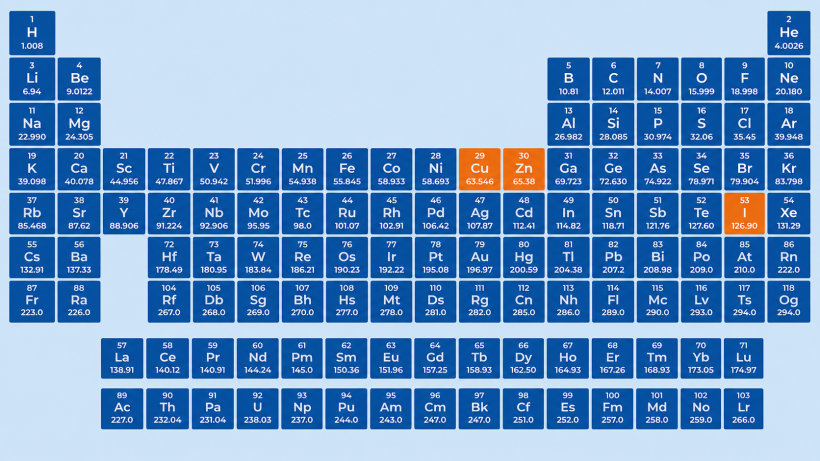
- Copper (Cu)
- Zinc (Zn)
- Iron (Fe)
- Manganese (Mn)
- Iodine (I)
- Selenium (Se)
Organic or inorganic?
Before discussing each of the microminerals in detail, it is worth noting that they can be supplied in the form of inorganic or organic sources. Inorganic sources primarily include mineral salts, such as sulfates, oxides, chlorides, carbonates, and phosphates, and are characterized by their wide commercial availability and lower cost. Organic sources, on the other hand, consist of microminerals bound to organic molecules, such as amino acids, peptides, proteins, polysaccharides, organic acids or hydroxymethionine analogues (HMTBa), and include forms such as chelates, mineral complexes, and proteinates and other complexes with organic ligands. The main difference between the two lies in the nature of the mineral's chemical bond, which affects its stability during digestion, its intestinal absorption, and its metabolic utilization by the animal. In general, organic sources have greater bioavailability (although there are differences in bioavailability among the various types of organic microminerals depending on their chelation index and the stability constant between the mineral and the ligand), while inorganic sources continue to be widely used in swine nutrition due to their proven efficacy, high solubility in certain chemical forms, and lower supplementation cost, but with greater uncertainty regarding potential interactions.
Zinc (Zn)
Physiological functions, absorption and metabolism:
Zinc (Zn) is an essential micromineral involved in multiple biological functions, which can be grouped into four main areas:
- Enzymatic and antioxidant function: It acts as a cofactor for approximately 300 enzymes, including those involved in protein synthesis, DNA replication, cell division, and muscle development.
- Immune response: It is a key mineral for the proper functioning of the immune system. It participates in the maturation and activation of T and B lymphocytes, antibody production, maintenance of the intestinal barrier integrity, and regulation of the inflammatory response.
- Growth processes: It plays a key role in bone health and tissue repair. It is involved in bone mineralization, osteoblast activation, and collagen synthesis—essential processes for the formation and maintenance of bones, skin, and connective tissues, as well as for keratinization and wound healing.
- Reproduction: In males, it is essential for spermatogenesis and contributes to sperm stability and viability. In females, it is involved in follicular maturation and embryonic development during the early stages of gestation.
Nutritional recommendations:
Table 1. Practical recommendations for Zn by production phase published in different nutrition tables: FEDNA (Spanish), CVB (Dutch), INRA (French), NRC (USA) and ROSTAGNO (Brazil).
| Production phase | FEDNA 2013 mg/kg feed |
CVB 2020 mg/kg |
INRA mg/kg |
NRC mg/kg feed |
Rostagno, 2024 mg/kg BW gain |
| Piglets | 100-130 (optimal: 120) |
- | 15 kg BW:80 (Revy et al., 2003) |
5-11 kg BW: 100 11-25 kg BW: 80 |
Inorganic: 208 Organic: 93.6 |
| Growing pigs | 110-120 (optimal: 110) |
- | 25 kg BW:65 (Revy et al., 2003) |
25-50 kg BW: 60 | Inorganic: 208 Organic: 93.6 |
| Finishing pigs | 90-110 (optimal: 80) |
- | 50-100 kg BW:50 (Revy et al., 2003) |
50-135 kg BW: 50 | |
| Sows | 95-120 (optimal: 100) |
- | Gestating and lactating sow: 100 | - | Inorganic: 137.4 Organic: 61.8 |
CVB (2020) does not present Zn requirements for pigs at any production phase since its maximum inclusion is regulated by European guidelines.
- Zinc deficiency has a particularly marked impact on animal growth and development, manifesting as a lower growth rate, impaired feed conversion, and reduced muscle development and bone mineralization. Furthermore, it compromises immune function by decreasing T-cell activity and antibody production, thus increasing susceptibility to infections. Additionally, zinc deficiency can disrupt the integrity of the intestinal barrier, increasing its permeability and promoting bacterial translocation, with consequent repercussions on health and productive performance (Pajarillo et al., 2021; Shurson et al., 2022).
- Toxicity: On the other hand, although less frequently described, an excess of Zn can also have adverse effects. Among them, the interference with the absorption of other minerals stands out, especially copper, which can induce secondary deficiencies; alterations in the intestinal microbiota, associated with a greater risk of inflammation; and hepatic accumulation of the mineral. In severe cases of poisoning, this accumulation can cause hepatocellular damage, liver necrosis, and jaundice (Cai et al., 2025).
Sources of Zn and European regulations:
European regulations allow the incorporation of Zn into feed with 12% moisture for:
- Piglets and sows: up to 150 ppm
- Finishing pigs: up to 120 ppm
In Europe, inorganic sources of Zn can be used, such as:
- zinc sulfate heptahydrate (3b604, one of the most commonly used sources of zinc in swine nutrition)
- zinc acetate dihydrate (3b601)
- anhydrous zinc chloride (3b602)
- zinc oxide (3b603)
- zinc sulfate monohydrate (3b605)
and organic sources of zinc in the form of:
- 1-zinc selenomethionine (3b818i)
- hydrated zinc amino acid chelate (3b606)
- zinc protein hydrolysate chelate (3b612)
- hydrated zinc glycine chelate (solid, 3b607) or liquid (3b608)
Copper (Cu)
Physiological functions, absorption and metabolism:
Copper (Cu) is a micromineral involved in cellular respiration, tissue pigmentation, hemoglobin formation, and connective tissue development.
Cu is primarily absorbed in the upper gastrointestinal tract, especially the duodenum, although some is also absorbed in the stomach. Furthermore, copper has been shown to exert antimicrobial activity when administered at concentrations between 100 and 250 ppm (Shannon, 2019). Supplementation with 150 ppm of Cu, in both the form of copper sulfate (CuSO4) and cuprous oxide (Cu2O), has also shown positive effects on the modulation of the gut microbiota, although with different response profiles depending on the source used (Blavi et al., 2021). Compared to animals supplemented with CuSO4, pigs fed Cu2O showed greater microbial diversity and a lower abundance of Enterobacteriaceae and Clostridium in the proximal intestine, changes that could explain, at least in part, the improvement in body weight observed with this source of Cu. However, it should be noted that in Europe there are limits on the inclusion of Cu in diets depending on the age of the pigs, which are explained later.
Cu is also an essential micromineral for the activity of several metalloenzymes such as cytochrome C oxidase, lysyl oxidase, cytosolic Cu-Zn superoxide dismutase (SOD1), extracellular SOD 3, monoamine oxidase, and tyrosinase (Manto, 2014).
Furthermore, Cu has a positive impact on pig growth and productivity through the following actions:
- Antimicrobial agent
- Improves the digestibility of certain nutrients
- Improves the immune response
- Protects cells against oxidation and damage caused by free radicals.
Nutritional recommendations:
The nutritional requirements for Cu in pigs vary according to age, physiological state, and diet composition.
Table 2. Practical recommendations for Cu by production phase published in different nutrition tables: FEDNA (Spanish), CVB (Dutch), INRA (French), NRC (USA), and ROSTAGNO (Brazil).
| Production phase | FEDNA 2013 mg/kg feed |
CVB 2020 mg/kg |
INRA mg/kg |
NRC mg/kg feed |
Rostagno, 2024 mg/kg BW gain |
| Piglets | 8-15 | - | - | 5-11 kg BW: 6.0 11-25 kg BW: 5.0 |
Inorganic: 23.0 Organic: 10.3 |
| Growing pigs | 9-13 | - | - | 25-50 kg BW: 4.0 | Inorganic: 23.0 Organic: 10.3 |
| Finishing pigs | 8-10 | - | - | 50-135 kg BW: 3-3.5 | |
| Sows | 10-15 | - | - | Gestating sow:10 Lactating sow: 20 |
Inorganic: 15.2 Organic: 6.84 |
CVB (2020) does not present Cu requirements for pigs at any production phase since its maximum inclusion is regulated by European guidelines.
Positive effects have been observed with higher Cu levels, even though they fall outside the range of Cu allowed in feed in the European Union. For example, in breeding sows, the inclusion of 60 ppm of Cu appears to improve reproductive performance compared to sows fed a diet containing 6 ppm of Cu (NRC, 2012). Meanwhile, another study found that sows fed diets containing 250 ppm of Cu in the form of CuSO4 had a lower culling rate, larger litters, and piglets with higher birth and weaning weights, compared to sows fed diets without Cu supplementation (Cromwell et al., 1993).
It should be noted that copper absorption can be reduced by interactions with zinc, iron, sulfur, molybdenum, and phytates, which affects the animal's actual needs.
For example, high dietary concentrations of Zn increase Cu requirements by inducing greater synthesis of intestinal metallothionein, a protein that binds to Cu and reduces its absorption (Underwood, 1977; Cousins, 1985), or the presence of phytates in the diet can reduce Cu absorption because phytic acid forms complexes with mineral cations, including Cu, thereby decreasing its availability for digestion and absorption (Martin and Evans, 1986). Thus, supplementation with phytases increases Cu absorption by releasing Cu from phytic acid (Adeola, 1995).
- Cu deficiency in pigs causes anemia due to copper's role in Fe metabolism, especially in hemoglobin formation and development. It also leads to bone abnormalities, depigmentation, cardiovascular disorders, immunosuppression, neurological problems such as ataxia, and reduced growth, all due to decreased activity of enzymes vital to these Cu-dependent functions. Furthermore, it disrupts lipid metabolism, contributing to hypercholesterolemia and hypertriglyceridemia.
- Toxicity: While it has been observed that supplementing diets with Cu causes changes in the fatty acid profile of the carcass, and a prolonged excess of Cu can cause liver damage due to its accumulation in the liver and high oxidative activity, hemolysis has also been observed in pigs fed more than 250 ppm of Cu over a long period, and the inclusion of 750 ppm of Cu in the diets of finishing pigs has caused oxidative stress, although pigs tolerate higher concentrations than ruminants due to their greater capacity to excrete Cu via bile. High doses of CuSO4 (250–500 ppm) increase Cu accumulation in the livers of pigs. However, this accumulation varies depending on the source of Cu used. Other sources, such as cuprous oxide (Cu2O), result in lower hepatic Cu accumulation in pigs during the transition phase compared to CuSO4, possibly due to its lower solubility (Bikker et al., 2018; Hamdi et al., 2018).
Copper sources and European regulations:
In swine nutrition, Cu is supplied only to a small extent by animal and plant-based feeds and primarily through premixes. This is because the Cu content of plant sources is low (corn contains 4 mg of Cu/kg, barley 6 mg/kg, and wheat 7 mg/kg, FEDNA) and is highly variable depending on the type of soil, the maturity of the grain, and weather conditions during growth (Underwood, 1999). Therefore, in swine nutrition, most of the Cu is supplied through the premix derived from organic or inorganic sources of Cu.
Most Cu sources used in swine are organic, primarily sulfates, but amino acid chelates, glycinates, etc., are also available. Copper sulfate pentahydrate (3b405) is the reference salt and is assigned a bioavailability of 100%.
Inorganic Cu sources, such as copper oxide (3b404), have lower bioavailability, but have positive effects on the microbiota and production outcomes, described in the literature (Hamdi et al., 2018, Blavi et al., 2021).
According to current European regulations, Cu can be administered to:
- Suckling and weaned piglets up to 4 weeks post-weaning: a maximum feed content of 150 ppm, assuming a feed with 12% moisture.
- Pigs between 5 and 8 weeks post-weaning: the maximum limit is reduced to 100 ppm.
- Pigs from 9 weeks post-weaning until slaughter: the maximum permitted feed content is 25 ppm.
These maximum permitted levels are mainly due to environmental reasons, since Cu excreted in feces can accumulate in agricultural soil, affecting the soil microbiota and aquatic ecosystems.
Iodine (I)
Physiological functions, absorption and metabolism:
Iodine (I) is an essential trace mineral that is primarily absorbed in the duodenum and jejunum, although some may also be absorbed in the stomach. Its availability can be reduced when there are high levels of calcium or iron in the diet, as these interfere with its utilization.
Physiologically, I is essential for the synthesis of thyroid hormones (T3 and T4). These hormones regulate basal metabolism, growth, nervous system development, and overall energy metabolism, so an adequate supply of iodine is fundamental for the proper functioning of the body (Li et al., 2012).
Nutritional recommendations:
Table 3. Practical recommendations of I byproduction phase published in different nutrition tables: FEDNA (Spanish), CVB (Dutch), INRA (French), NRC (USA) and ROSTAGNO (Brazil).
| Production phase | FEDNA 2013 mg/kg feed |
CVB 2020 mg/kg |
INRA mg/kg |
NRC mg/kg feed |
Rostagno, 2024 mg/kg BW gain |
| Piglets | 0.6-1 | 5-25 kg BW: 0.15 | - | 5-25 kg BW: 0.14 | Inorganic: 1.73 |
| Growing pigs | 0.4-0.7 | 25-135 kg BW: 0.15 | - | 25-135 kg BW: 0.14 | Inorganic: 1.73 |
| Finishing pigs | 0.3-0.5 | - | |||
| Sows | 0.6-1.3 | Gestating sow: 0.58 Lactating sow: 1.50 |
- | Gestating and lactating sows: 0.14 | Inorganic: 1.142 |
The I requirements of piglets and growing pigs are very low. These values remain practically stable between phases, as the physiological demand for I does not vary significantly throughout the production cycle. The only relevant exception is the lactating sow, during which CVB recommends 1.5 mg/kg of iodine in lactating sows, while in gestating sows it recommends 0.58 mg/kg of iodine. This is due to the high metabolic demand during lactation and the transfer of thyroid hormones to the milk, which are essential for piglet growth and thermoregulation.
- The consequences of I deficiency stem primarily from a decrease in the synthesis of thyroid hormones, which affects multiple physiological functions. A lack of T3 and T4 leads to a lower basal metabolic rate and reduced protein synthesis, resulting in impaired growth. During gestation, this deficiency can cause neurological abnormalities in fetal development, as thyroid hormones are essential for the maturation of the nervous system. A characteristic sign is goiter, resulting from excessive stimulation of the thyroid gland, which enlarges in an attempt to compensate for the I deficiency. A decrease in body heat production is also observed, due to the slowed metabolism. In breeding sows, the deficiency can lead to irregular estrus cycles, reduced fertility, an increase in early abortions, and a higher number of stillborn or weak piglets—a direct consequence of maternal and fetal hypothyroidism (Cromwell et al., 1975). In lactating sows, reduced metabolic activity results in low milk production, which negatively affects piglet growth and survival.
- Toxicity: An excess of I can also inhibit the synthesis of thyroid hormones, leading to a state of iodine-induced hypothyroidism. When this occurs, pigs develop virtually the same consequences as in a deficiency, since the functional lack of T3 and T4 leads to reduced metabolism, slower growth, goiter, neurological disorders, and reproductive problems (Pecoraro et al., 2022).
Sources of iodine and European regulations:
In Europe, regulations limit the maximum inclusion of I in pig feed to 10 ppm in feed with 12% moisture.
Unlike Zn and Cu, there are currently no organic sources of I as a general-purpose nutritional additive in animal feed. In practice, the most commonly used source is anhydrous calcium iodate (3b202) due to its greater stability during feed storage and processing, although granulated and coated anhydrous calcium iodate (3b203) and potassium iodide (3b201) are also used less frequently.