



 Company
ECO Animal Health Global
United Kingdom
23
Publications
405
Followers
M. hyo Elimination – Part I: Is Your Farm Ready? Key Preconditions for Joining a Program


Jordi Mora, Global Director, Technical Services, ECO Animal Health
Mycoplasma hyopneumoniae (M. hyo), the causative agent of enzootic pneumonia, is a major respiratory pathogen in intensive pig production.
A survey of 19 large US pork production companies, conducted between November 2005 and February 2006 and discussed by D. J. Holtkamp in a 2014 pig333 article, ranked and quantified losses associated with major swine health challenges. The findings highlight the economic importance of M. hyo during finishing.
Table 1. Estimated losses associated with major health challenges in finishers
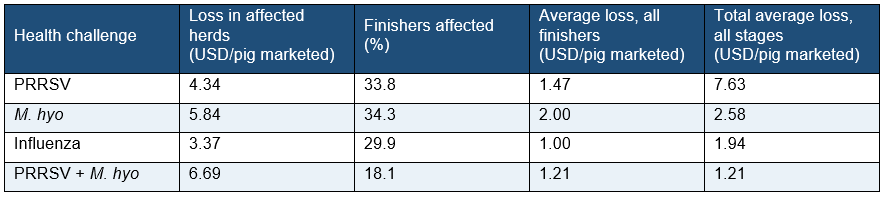
Source: Holtkamp DJ. Economic impact of Mycoplasma hyopneumoniae on pig farms. pig333, 2014. The table is a finisher-focused extract from the wider table published in that article. View the original pig333 article
Some production systems successfully control M. hyo through vaccination, medication and management. However, part of the industry has moved towards eradication.

Performance benefits associated with M. hyo-negative pigs
Field data presented by Paul Yeske at the American Association of Swine Veterinarians (AASV) compared the performance of M. hyo-negative and M. hyo-positive pigs. The table below is derived from the dataset published in the corresponding AASV proceedings. The data describe differences in average daily gain, feed efficiency and mortality between groups of pigs with similar genetics and nutrition.
Table 2. Production performance by M. hyo health status
 Source: Yeske P. Mycoplasma hyopneumoniae elimination: Swine Vet Center experience. Proceedings of the 2015 AASV Annual Meeting. View the AASV proceedings paper
Though, the potential benefits are not limited to production performance. Reduced antimicrobial use may be another important outcome after successful M. hyo elimination.
At ESPHM 2023, Borobia and Mora reported the results of an M. hyo elimination program in a 270-sow farrow-to-finish herd in Northern Ireland. Antimicrobial use was compared for the year before restocking (2019) and the year after restocking (2021). It decreased from 163.3 mg/kg to 16.2 mg/kg, corresponding to a reduction of 147.1 mg/kg, or approximately 90%.
Table 3. Antimicrobial use before and after M. hyo elimination
 Source: Borobia J, Mora J. Report of a successful Mycoplasma hyopneumoniae (MHP) elimination program in Northern Ireland. ESPHM 2023, BBD-OP-05.
Key preconditions for joining a successful elimination program
Before starting an M. hyo elimination program, several factors should be considered to assess whether the farm can achieve and maintain a negative status.
1. How did M. hyo enter the farm?
Farms considering M. hyo elimination may aim to move from disease control through vaccination and other measures to a M. hyo-negative herd, or to regain negative status following a recent outbreak. Here, the most likely route of introduction should be identified. If this remains unknown, the factors that allowed M. hyo to enter the farm may still be present, increasing the risk of reinfection after eradication.
2. Is the farm location suitable?
M. hyo can spread between farms through the air. Distance from other pig farms is therefore an important consideration. A distance of 3.2 km from potential sources of infection has commonly been used as a reference, but prevailing winds, local topography, climate and neighboring pig units, slaughter plants or major roads, also need to be considered.
3. Is biosecurity strong enough?
Elimination makes little sense if M. hyo can easily be reintroduced. The farm's external biosecurity should therefore be reviewed before starting the program, including replacement gilt sourcing and transport. Previous introductions of other pathogens, such as PRRSV, may also indicate weaknesses that should be addressed first.
4. Is the herd stable?
Before starting elimination, the herd should be clinically stable, with minimal evidence of M. hyo transmission to piglets and no clinical signs associated with M. hyo in sows. The best way to confirm negativity is to sample a minimum of 30 first- and second-parity sows prior to farrowing using deep tracheal swabs tested by qPCR. Alternatively, negativity can be confirmed by sampling their litters at weaning using the same technique.
5. How will replacement gilts be managed?
Replacement gilts introduced after elimination should come from an M. hyo-negative source with a well-defined health status. The replacement strategy needs to be planned before the program starts to avoid reintroducing M. hyo once negative status has been achieved. To this end, the source unit should have a clear health status surveillance protocol. M. hyo vaccination should not be used in the source unit, and replacement gilts should be 100% ELISA-negative at the time of loading.
It is important to ensure biosecurity during transport, and quarantine facilities should be located at least 3.2 km from the destination farm. These gilts should be 100% negative at the end of the quarantine period before being transported to the sow farm. Self-replacement programs, in which only semen for artificial insemination (AI) is introduced and no replacement gilts are sourced externally, are strongly preferred.
References
- Holtkamp DJ. Economic impact of Mycoplasma hyopneumoniae on pig farms. pig333. 19 September 2014. Open source
- Yeske P. Mycoplasma hyopneumoniae elimination: Swine Vet Center experience. Proceedings of the 2015 AASV Annual Meeting. Open source
- Borobia J, Mora J. Report of a successful Mycoplasma hyopneumoniae (Mhp) elimination programme in Northern Ireland. ESPHM 2023, BBD-OP-05. ESPHM 2023_Proceedings.pdf
- Gayan J, Sanchez P, Lasa C, Hernandez J-I, Casal N. M. hyo eradication: analysis of productive parameters. IPVS-ESPHM 2024. Summary published by pig333 in 2025. Open source
Contact:
Contact us using the following form.