

















 0
0
Biosecurity through zoning in swine farming: A critical issue
In a context where animal epidemics threaten livestock operations around the world, biosecurity has emerged as an essential tool for protecting farms. Africa, where pig farming plays a key role in the economy and food security, is no exception to this need. Rigorous biosecurity management through the creation of different farming zones can make all the difference in preventing the risk of introducing pathogens and diseases. The following is an in-depth look at this essential strategy.
Zoning of livestock farms: A defense against contamination
To achieve this, strict zoning is recommended. The farm and its surroundings should be divided into three zones to minimize the animals’ exposure to various external sources of contamination. The boundaries of these zones are marked by building walls, fences, regularly maintained hedges, chain-link fences, ditches, embankments, ground markings, etc.

The three areas to be defined are:
- An area designated for visitors and vehicle parking, located as far away as possible from the livestock buildings.
- The outer zone: This zone is reserved for people and vehicles authorized to enter the site (feed deliveries, gilt deliveries, slaughterhouse transport trucks, etc.). However, no pigs and no people wearing farm clothing are permitted to enter this zone. People wearing farm clothing and animals must not enter this zone.
- The rearing area: This is the enclosure where the pigs are raised.
- Only individuals wearing the required protective gear are permitted to enter. To limit the spread of disease, it is essential to wear clothing and footwear used exclusively for livestock operations. This gear must remain within this area and must not be used outside of it. After visiting the slaughterhouse, it is mandatory to change into clean clothing and footwear and to disinfect your shoes before returning to the farm. Finally, anyone entering the livestock area must pass through a sanitary airlock.
- Vehicles are not allowed in this area. If vehicles must enter to deliver straw or remove manure, use, if possible, a vehicle designated specifically for the swine facility that is not used on other farms or for field work. Otherwise, ensure that the exterior of the vehicles is cleaned and disinfected, and spread lime on the path used by the vehicles.
- Pets are not allowed in this area.
- People who have been in a slaughterhouse should, if possible, wait at least one night before entering this area, or take a shower and strictly follow biosecurity procedures (thoroughly changing boots and clothing). Anyone entering the livestock area, including family members, increases the risk of ASF transmission. Only authorized personnel or those essential to animal management are permitted in this area.
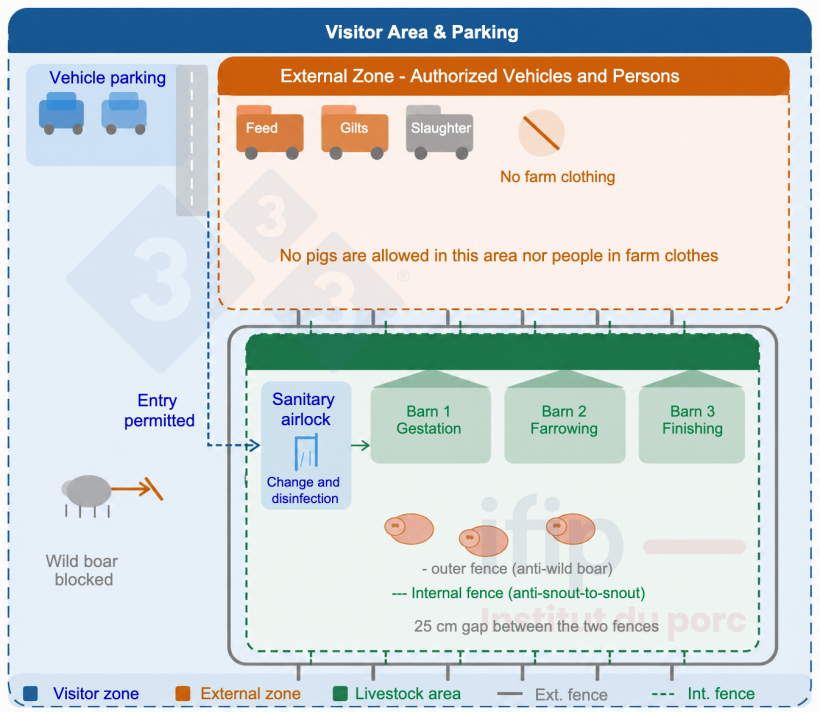
Zoning and biosecurity plan for a pig farm.
For small-scale farms and backyard operations, it is possible to have only two zones: an inner zone, where the pigs and people in farm attire are located, and an outer zone.
- No people wearing farm clothing nor pigs may leave the rearing area; and
- There must be no overlap between the routes used by people wearing farm clothing and those used by outside vehicles.
Fencing the livestock area: The first element of biosecurity
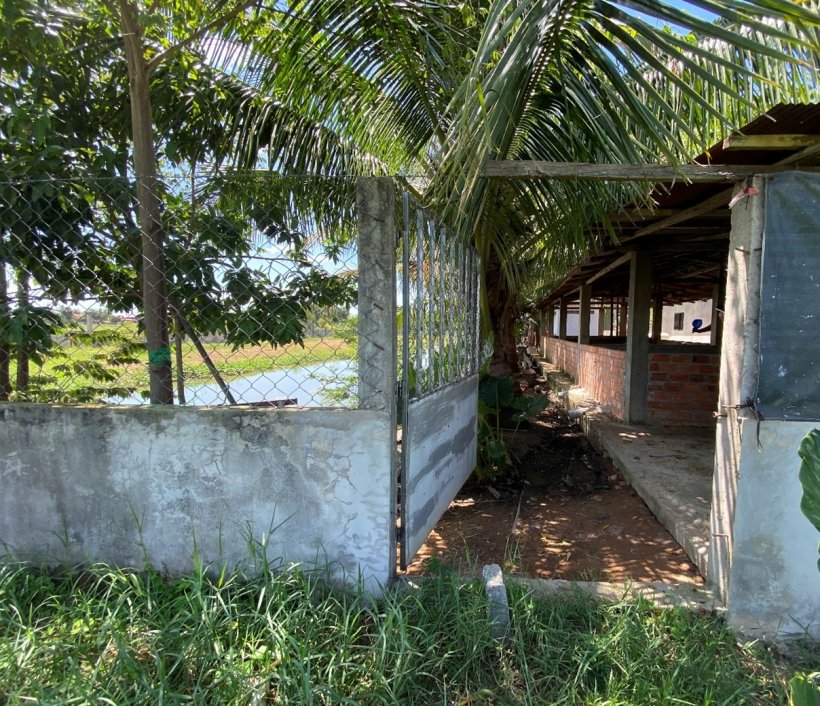
Fencing around the livestock area is the first line of defense against any intrusions (wild animals, people, vehicles, etc.). Its installation should be planned from the very beginning of the operation, as it is an essential investment. To choose the most suitable protection, several criteria must be taken into account: installation cost, durability, and maintenance.
To minimize these risks, several measures are recommended:
- Consider a solid wall 1.3 m high.
- Consider a double fence, with a 25 cm gap between them, consisting of:
- An outer fence for all types of enclosures, preventing any intrusion by wild boars.
- An inner fence for all types of enclosures, preventing any snout-to-snout contact.
- Specific access points for farm machinery.
Conclusion
Biosecurity is not an option, but a necessity to ensure the long-term viability of pig farming in Africa. The establishment of clearly defined farming zones, effective biosecurity checkpoints, and anti-intrusion fencing is essential to protect the animals and limit the introduction of diseases.
Effective biosecurity management in pig farming is essential to ensuring animal health, good production results, and, consequently, financial success.