

















 0
0
The infrastructure of a Latin American swine farm must be designed with animal comfort, efficient workflow, hygiene, and biosecurity in mind. It is not simply a matter of physical space; it is the blueprint for the production system's profitability. In the dynamic Latin American swine industry, where margins are tightening every day, it is essential to understand that every step a worker takes and every movement an animal makes comes at a cost.
The concept of pig flow ultimately involves moving the animals efficiently between different buildings and production sites. This flow is a critical driver of the system’s efficiency. Smart layout design aims to optimize walking distances between barns, or between barns and loading areas to reach transport vehicles, which is a crucial factor for labor efficiency and animal productivity.

It is not uncommon to see farms that have grown over time without a master plan that took such growth into account from the very beginning, where excessive distances between buildings often drive up labor demands, going even beyond simple proportionality between the number of animals and the number of staff. However, this risk is not exclusive to large, expanded farms; even small operations with poor design can see their productivity significantly reduced.
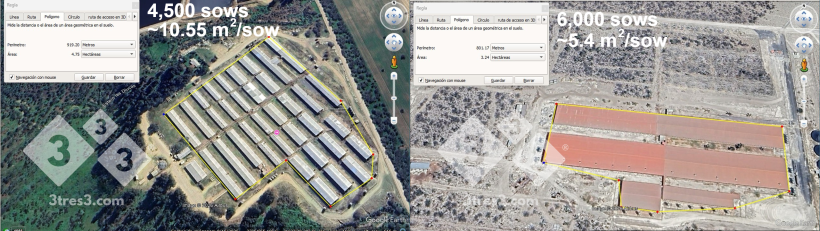
Figure 1. Comparison of spatial distribution between a farm with 4,500 sows (left) and a farm with 6,000 sows (right).
This comparison shown in the photos clearly illustrates the point we’re making. The farm layout on the left involves long distances for both people and animals. On the right is a compact, functional farm that optimizes movement and also improves biosecurity by keeping all these elements within the building itself.
The hidden cost of excessive walking
Various field observations and some studies suggest that frequent movement of workers between farrowing rooms—especially when distances are long—may be associated with lower productive and reproductive efficiency. Although the impact may vary depending on the production system and farm management, reducing unnecessary movement of people and animals is generally considered a best practice for optimizing performance in farrowing. A design that minimizes movement of people and animals results in better reproductive and productive performance.
Long distances between breeding/gestation and farrowing barns increase labor demands and limit the time available for individual care. In contrast, efficient designs, planned with short, direct routes, reduce the time spent walking. This allows workers to spend more time observing, identifying problems, and caring for individual pigs, which improves overall reproductive and productive performance.
Biosecurity and disease spread
Shorter distances and well-structured designs, as we saw in a previous article (No entry: One-way biosecurity and the design of clean and dirty zones on a pig farm), improve biosecurity, reducing the spread of disease and making it easier to manage.
Furthermore, the health impact does not depend solely on the size or scale of the farm, but also on how its facilities and production flows are organized. In some cases, having more barns or independent units can facilitate implementing sanitary downtimes by sector or batch, provided there is adequate production planning. In contrast, on farms with few barns and high continuous occupancy, certain sectors (such as gestation) may be more difficult to completely empty, which can complicate some health control strategies.
Optimal barn design, workflow, and productivity
A design that facilitates smooth movement is a key driver of farm efficiency. Key factors in the system’s productivity will be aisles without sharp turns, uniform lighting, flooring that is in good condition and consistent, and a thorough understanding by staff of the factors that facilitate or hinder the movement of pigs—taking into account their physical, physiological, and welfare characteristics.
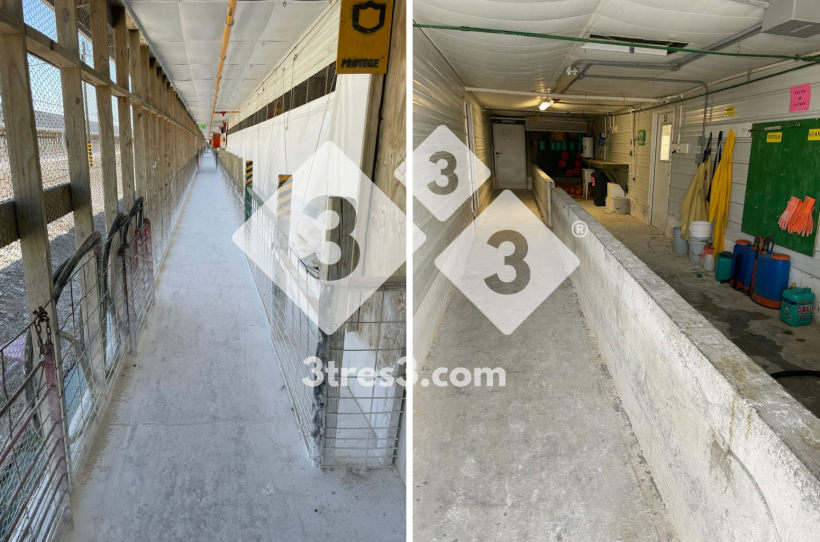
Figure 2. Wide hallways that are isolated from the outside, well-lit, and unobstructed.
Barn size and density
Although not directly a matter of “distance,” the density inside the barn— influenced by the building’s design and layout—also affects productivity. Today, in many places, regulations already specify square meters per animal based on age and production status, but in all cases, we must always keep in mind that, over time, farm productivity will improve thanks to advances in genetics, nutrition, and staff management. Therefore, when designing and calculating workflow, it is essential to anticipate this future change and avoid creating a problem for ourselves in the future.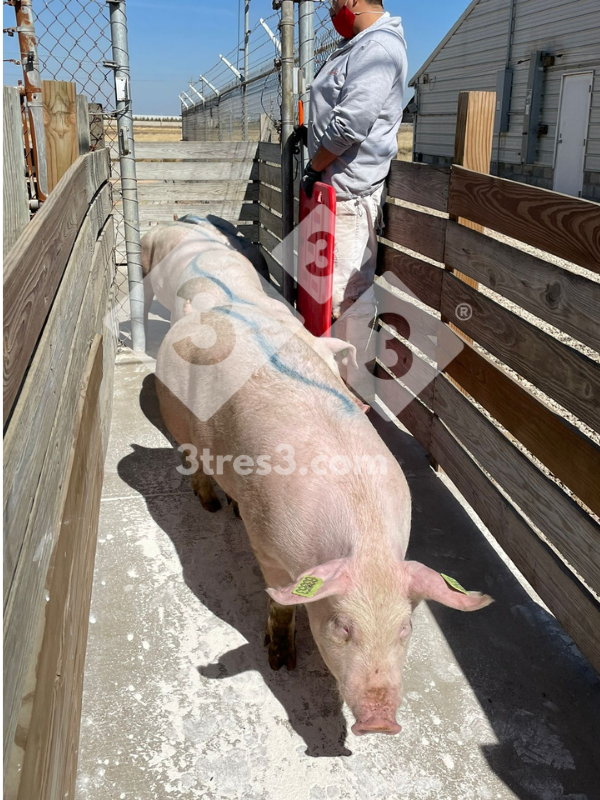
Modern barns and automation (feeding, ventilation, and waste management) reduce working hours, freeing up time for more attentive care of the animals’ needs.
The success of a pig farm today depends on its ability to operate efficiently at all hours of the day. Therefore, facilities must include adequate support structures: storage rooms, rest areas, restrooms, staff changing rooms, climate-controlled storage for veterinary products, specialized insemination equipment, etc. A design that facilitates movement, adheres to sanitation protocols, and minimizes distances is not a luxury—it is an investment in long-term sustainability.
By reducing animal stress and optimizing staff's time, we are building a farm that is not only more efficient and focused on animal welfare but also significantly more profitable.