
Feeding the DanBred gilt for prolificacy and longevity (1 of 2)
26-Jan-2026 (ago 8 months 5 days)
Management of the future breeding gilts, including nutrition, is a key area to ensure their lifetime performance. When producers have the goal of reducing sow mortality, it is key to review how gilts are fed.
Rearing modern gilts with a high drive to grow very fast and very lean
DanBred animals are genetically selected to give the best results for growth, feed conversion, and lean meat. Feed composition and feeding strategy for growers ensure that these genes are expressed and fulfill the excellent potential for productivity.
DanBred animals are also breeding animals, so feed composition and feeding strategy must be adapted to ensure that both sows and boars have the right body condition for a long lifetime performance with many piglets born and weaned. If this is not taken into account, the breeding animals will become too large and lean, which affects both productivity and longevity.
Big and lean gilts as future breeding sows? No, thank you!
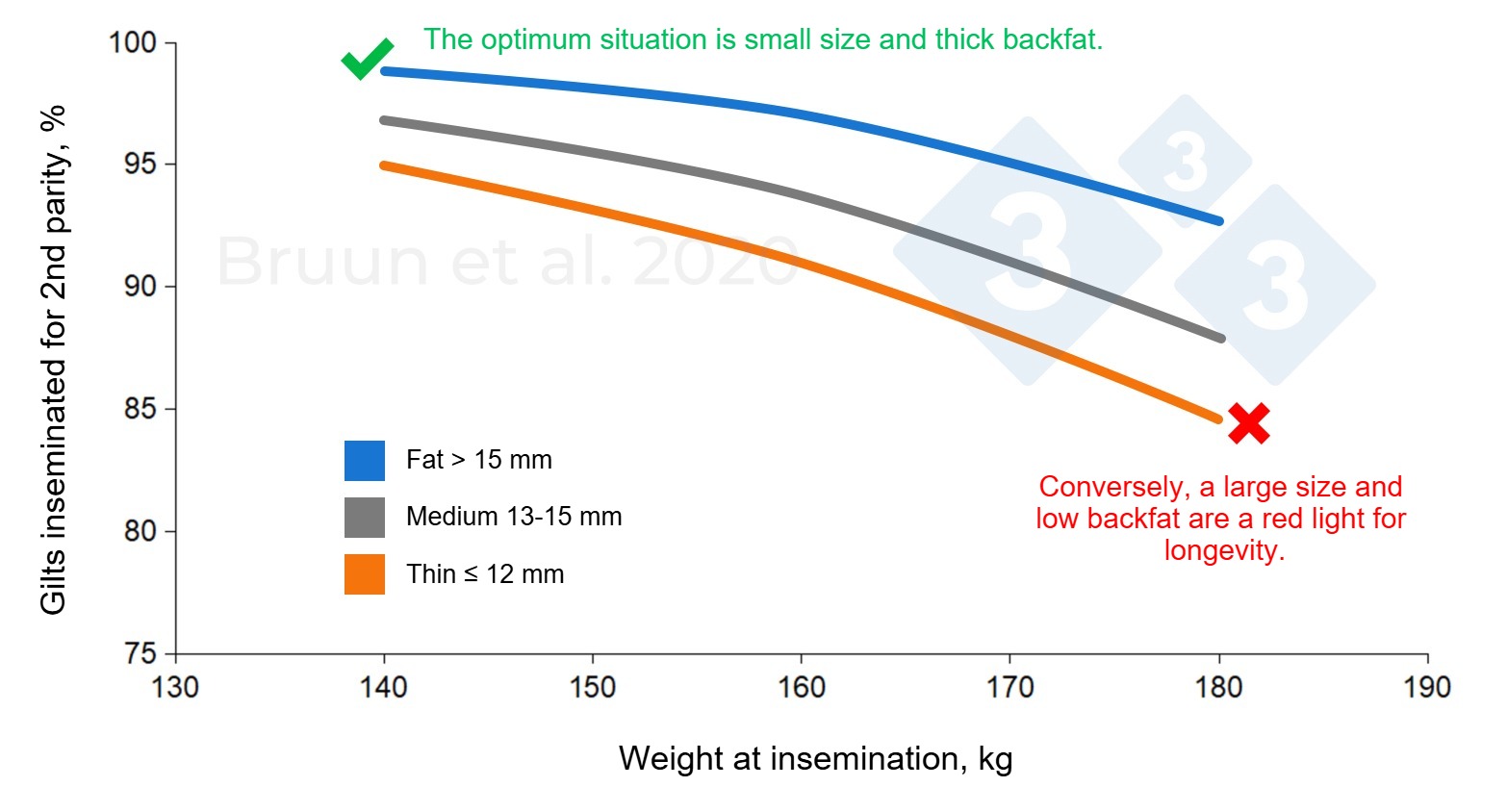
Smaller and fatter is the objective
There is plenty of evidence that the weight and backfat level of the gilt at first mating is strongly related to her productive life and longevity.
How can we modify the body composition of the gilts?
Growth rate and fat level of the gilt are related to the amount of protein and energy supplied.
If the gilts are provided with high protein and high energy, gilts will grow very fast and very lean with low levels of back fat and therefore lower energy reserves. Their FCR will be very good as the development of muscle requires less energy than that to grow fat.
High protein diets will lead to high weight and low backfat gilts at first service, resulting in:
- Increased pressure on their legs and feet --> reduced longevity.
- Higher weight during her lifetime --> higher maintenance needs.
- Lower backfat levels as energy is used mostly to grow muscle, considering that there is available protein.
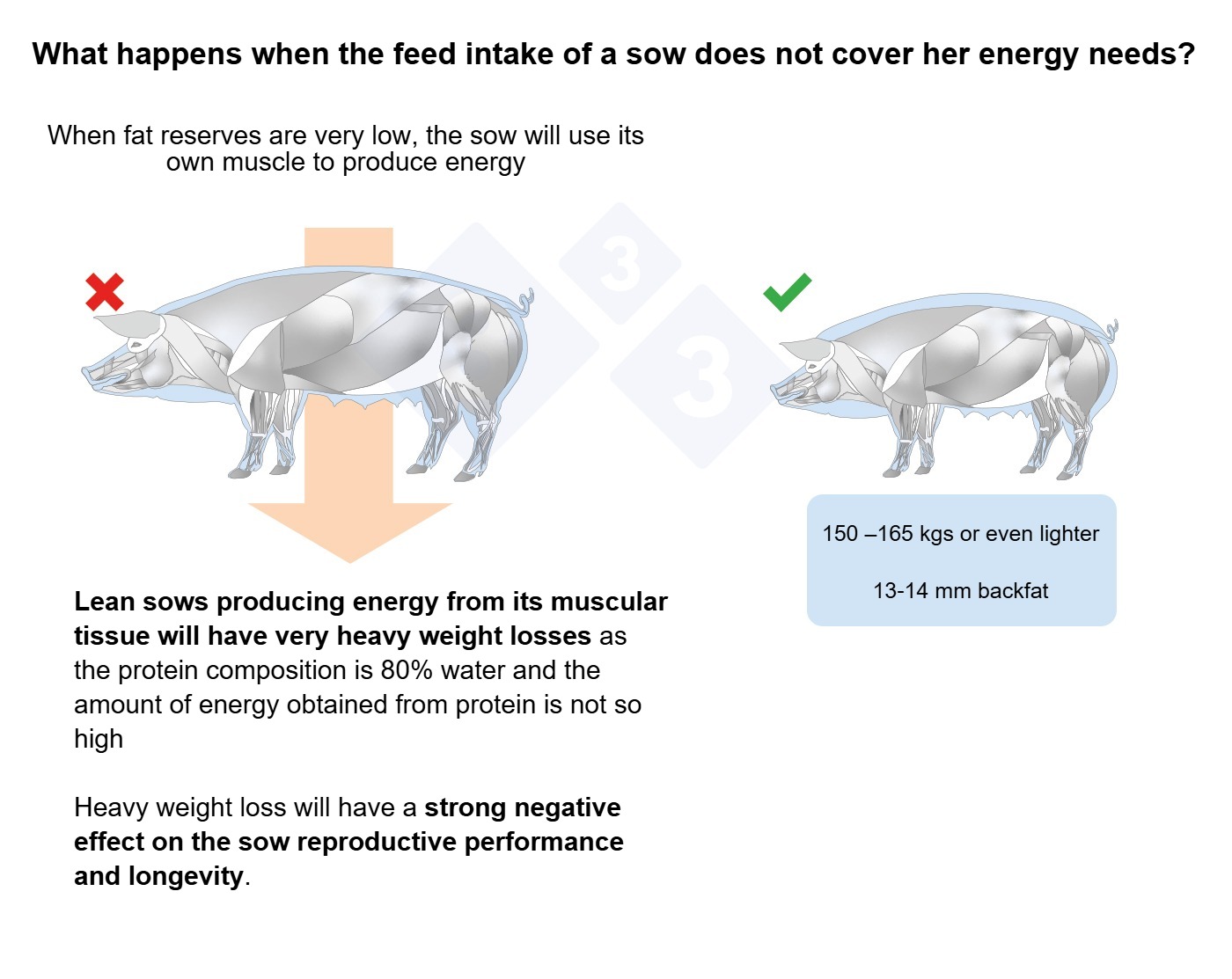
Objective: to control the weight gain of the gilt and increase her fat reserves
If the diet for the growing gilt until first service provides a limited amount of protein, but the animal maintains its feed intake, this extra energy will be used to grow fat, and the weight of the animal will be reduced.
The actual nutritional recommendations for the future breeding DanBred gilts are:
| 30-60 kg | 60 to 110 kg | >110 kg | |
| SID lysine/kg | 8.0 | 6.3 | 4.2 |
| SID CP/kg | 120 | 105 | 85 |
| Kg feed/day | 1.4-2.2 | 2.2-3.1 | 3.25 |
| Diet similar to | Lactation | Lact.-Gest. mix | Gestation |
The feeding program is designed to achieve this objective at the first mating:
- 150-165 kgs or even lighter
- 13-14 mm backfat (depending on the measuring tool)
- 30-33 weeks (210-230 days)
Regarding vitamins and minerals, DanBred provides specific recommendations, and for most of them there is no major issue if there is an oversupply, but it is very important to keep a close eye on the level of three key elements for bone development that have strong interactions: Vit D, calcium, and phosphorus. Excessive vitamin D levels can interfere with the metabolism of calcium and phosphorus. Also, excessive calcium levels can significantly reduce the digestibility of phosphorus. Those three elements are a clear example that more is not always better!
What happens if we maintain the total protein supplied by reducing the amount of feed provided?
This is not a good option. If the daily amount of feed provided is too low, there will be many different negative impacts, such as an increase in vices like tail biting, ear suckling problems, competition, fighting for the feed, etc., and also an increase in the heterogeneity of the group, the opposite of our objective.
Ad libitum or restricted feeding during the rearing of the growing gilts?
There are several benefits to feeding the rearing gilts 2 or 3 meals a day instead of providing constant access to the feed:
- Animals fed ad libitum tend to have smaller and frequent meals. That leads to them having smaller stomachs, and it will also relate to a higher incidence of stomach ulcers.
- Feeding the gilts 2-3 meals a day will also allow the farmer to evaluate all the gilts at feeding time, improving early detection of problems.
Moving from ad libitum to 2-3 meals a day in rearing gilts can be challenging for some systems, but changes need to be made to improve longevity.
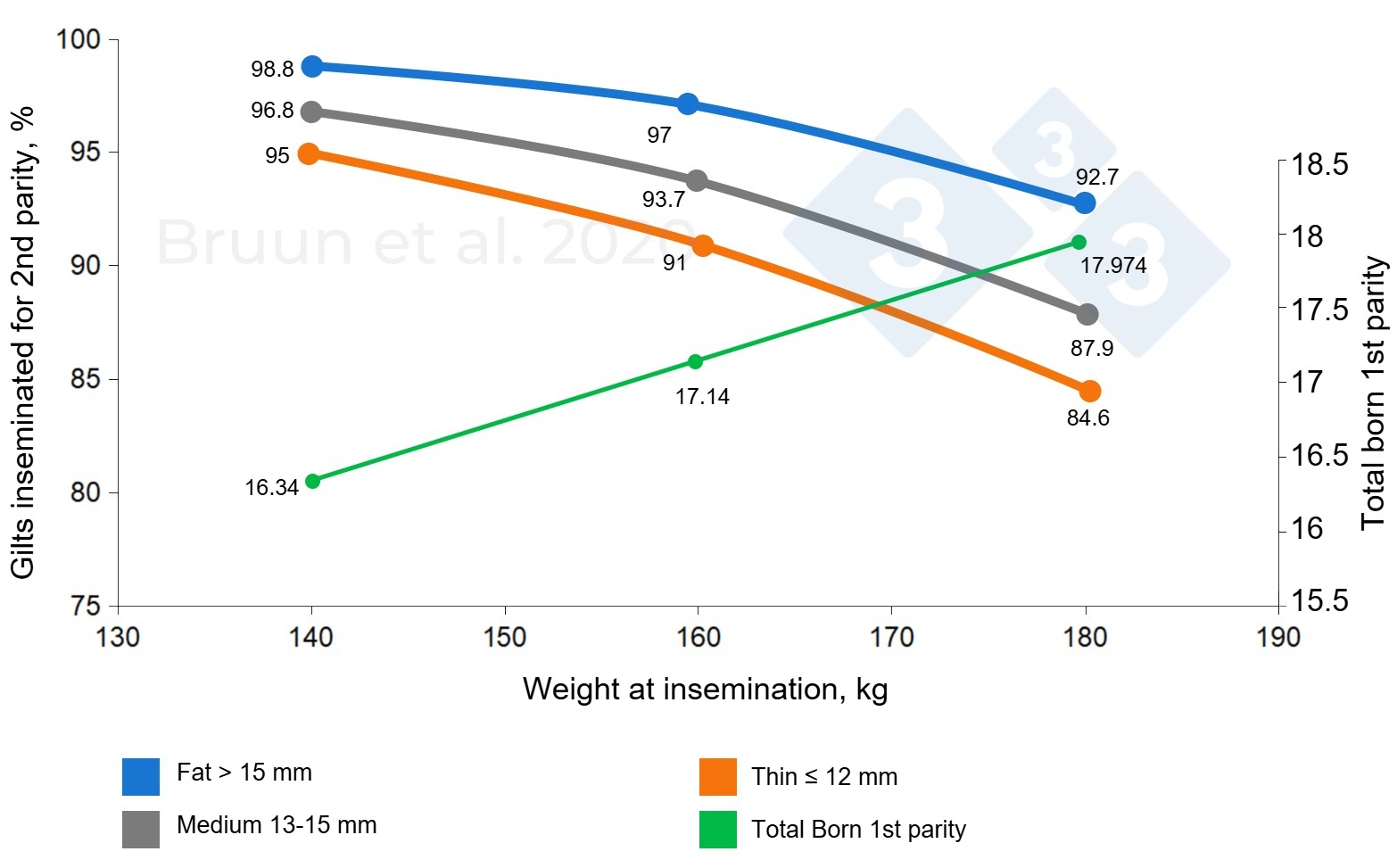
Bigger gilts have bigger litters, but it comes with a cost. Is it worth it?
Different studies have shown that with every extra 10 kg at first service, the first litter will increase in total born by 0.4, but there is also strong evidence that this extra weight will reduce her longevity.
Considering the actual level of total born, this 0.4 increase does not compensate for the reduction in longevity that comes with it.
After reviewing the basic nutritional recommendations to achieve the best quality DanBred gilt at first mating, the next article will focus on gestation and transition diet.
Further information: DanBred feeding manual