
Clinical case: Food poisoning by alkaloids in fattening pigs
09-Dec-2014 (11 years 10 months 11 days ago)
On Tuesday, 20 August 2013 we are called because of an important percentage of sudden deaths in several integrated fattening farms pertaining to a Spanish company; specifically, six farms on which new feed batches were supplied between Friday 16 and Tuesday 20 August. Notice that new feed is introduced in bins that still contain some leftover from previous batch, falling gradually in a cone fashion, so the consumption of new feed takes between a few hours to 3-4 days.
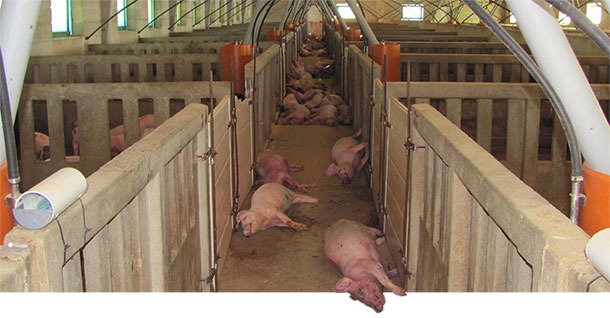
Development of the study on the farm
When going to these farms and carrying out the anamnesis and the clinical case study, from the standpoint of the symptoms and the lesions of the sick and dead pigs, we found:
- A partial rejection of feed by the pigs. Until that moment, the feed consumption by the pigs was appropriate according to the feeding curves of the company.
- Presence of vomits in a high number of pigs.
- Faeces with a different appearance and a higher liquid content.
- Depression, apathy and prostration.
- Death of a high percentage of pigs.
- Meteorism, that was confirmed when finding gases in the small intestine of the necropsied pigs.
- Vascular congestion in the small and large intestine.
- No other digestive, respiratory, locomotive, cutaneous or nervous organ was affected.

Blood-containing watery faeces.
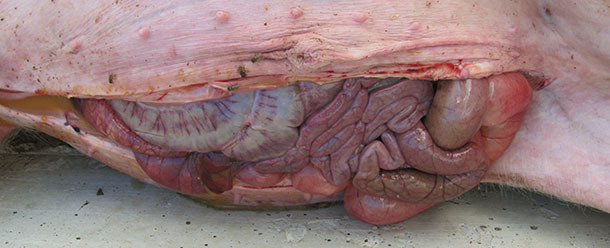
Vascular congestion in the small and the large intestine.
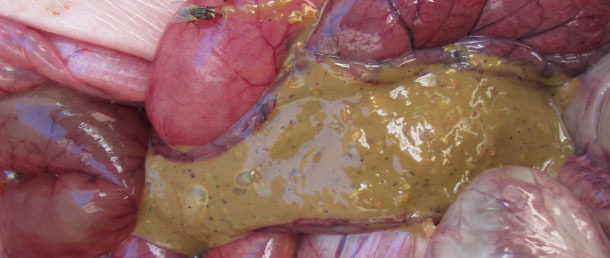
Watery faeces.
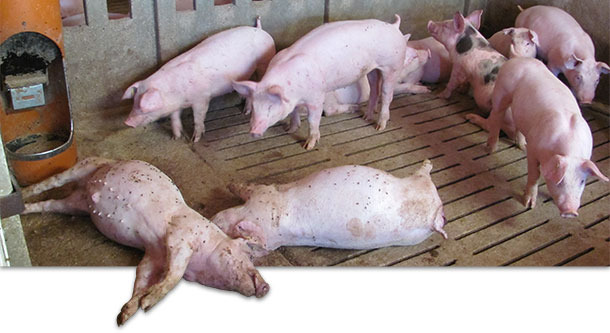
Death of a high percentage of pigs.
In the face of this clinical picture (part of it is compatible with a food poisoning process), and considering the different farms had nothing more in common than the entrance of the new feed, had not provided antibiotic treatments through any route (water, feed, systemic injectable drugs), and no general vaccination had been applied, we agreed to stop the supply of new feed batch on the six farms, following these guidelines:
- Closure of the hoppers that provide the feed.
- Emptying of the hoppers.
- Emptying of the bins in which the feed is stored.
- Putting of the feed into bags.
- A new order of feed, but with the formula used in the previous feed batch (the one consumed until August 20th).
- Reception of the feed in the empty bins.
- Opening of the hoppers so the pigs start to eat the new feed.
The clinical picture,that was more or less severe depending on the farm, started to subside after 36-48 hours, and we considered the case came to and end as of August 24th.
Development of the extra-farm study
As we suspected the new feed batch was the most likely origin of our problem, we carried out the following studies:
- Nutritional analysis of the suspicious feeds with the NIR technique: normal values were obtained.
- Microbiological analysisof the suspicious feeds: normal values with culture techniques using specific media were obtained.
- Mycotoxin levels analysis of the suspicious feeds (Auto-Scan ELISA techniques): values below the lower limits.
- Global analyses of the raw materials with the NIR technique: normal values were obtained.
- Request for the feed formulas and the production reports to the feedmill that provided the feed. We focused on a specific raw material, the only one that was present in the second feed formulation, and not in the previous ones. This raw material was lupin, which is mainly used as a vegetable protein source.The sample of this raw material obtained in the feedmill consisted of a mix of Australian (small and spotted) and Spanish (big, flat and pale) lupin in a variable percentage. The inclusion level was 5% and 7.5% in the growing and finishing feeds, respectively. Levels of alkaloids (antinutritional factors) were analysed as a possible cause of the problem and the result was 0.91% (measured with HPLC), when the maximum tolerance level in pigs is 0.20%.
- We concluded that it was a case of feed poisoning by alkaloids.
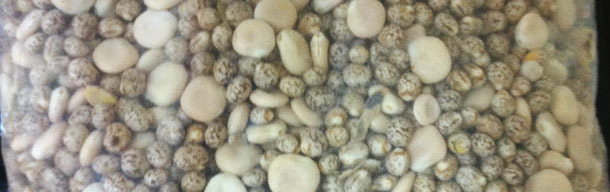
Mix of Australian and national (Spanish) lupin.
Evaluation of the clinical picture
Mortality: Farm no. 5 had the lowest weight pigs, and they started to eat the problematic feed on the same day of delivery (August 16th) as they had finished the previous one. First losses occurred on August 19 and increased on August 20th. This farm was the most affected one, but it served as an alarm to remove the feed on the other farms and thus lowering the mortality rate (> 20% vs < 2 %).
Table 1. Number of losses per farm.
| Farm | Number of losses | Weight of the pigs (kg) |
| 1 | 20 | 80 |
| 2 | 16 | 100 |
| 3 | 27 | 90 |
| 4 | 12 | 45 |
| 5 | 223 | 25 |
| 6 | 11 | 95 |
| 309 |
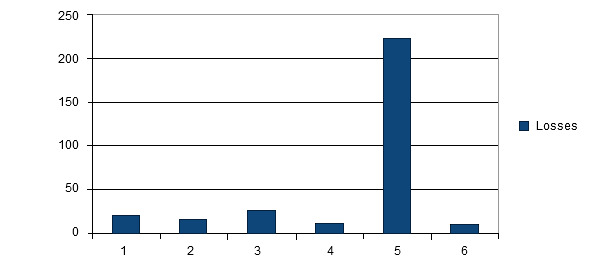
Graph 1. Number of dead pigs per fattening farm.
The KEY POINTS of this clincal case are:
- Sudden deaths on several farms at the same time with the same clinical signs must be analysed as a whole.
- We must distinguish between a peracute infectious disease and a feed poisoning case (fever?).
- Bear in mind those variables that are common to all the pigs at the same time.
- Both the clinical signs and the lesions (necropsies) are essential in guiding the analytical studies.
The GOAL in sharing this clinical case is:
- Feed poisoning cases are unlikely.
- When we find hyperacute symptoms without an infectious clinical picture, feed must be scrupulously analysed.
- The collaboration between the farmer, veterinarian, feedmill and nutritionist are key for solving the problem quickly, minimising the economical impact.