
PIC genetic improvement program for Iberian pigs (2/2)
23-Oct-2026 (yesterday)
Program implementation
From production data to genetic progress
The foundation for implementing a genetic improvement program is accurate recording of production and pedigree information at the genetic nucleus and multiplication farms. The necessary data can be grouped into three categories:
- Production events: mating, farrowing, weaning, arrivals and removals. For populations participating in improvement programs, it is also essential to correctly identify the boar used in each mating.
- Pedigree information: All purebred Iberian animals must come from purebred matings using semen doses from a single sire to establish their pedigree. It is essential that the improvement program has individual identification of breeding animals, ensuring traceability of the sire and dam from birth.
- Specific features of the selection program: Variables recorded based on improvement goals, such as total born, stillborns, and mummies; the number of teats on future breeding sows; the individual birth weight of piglets; and the mortality causes during lactation. All this data is recorded in the farm management software and synchronized with PICTraq®, where it is validated and integrated with both production history and pedigree records—both of which are essential for genetic evaluations. This process is performed weekly and allows each breeding animal’s updated genetic index to be calculated.
Based on these evaluations, genetic reports are generated to support decision-making on the farm:
- Iberian females with high genetic value are bred in purebred crossings with Iberian males to create the replacements for the Iberian pyramid.
- Iberian sows with average genetic value are crossed with Duroc boars to produce the commercial ♀ IB x ♂ DU product for slaughter.
- Iberian females with low genetic value will be candidates for replacement.
Figure 1 shows a real-world example of weekly feedback used to support the implementation of the on-farm genetic program, reviewing both the quality of the data recorded in PICTraq® and the proper assignment of sows with the highest genetic index to purebred matings.
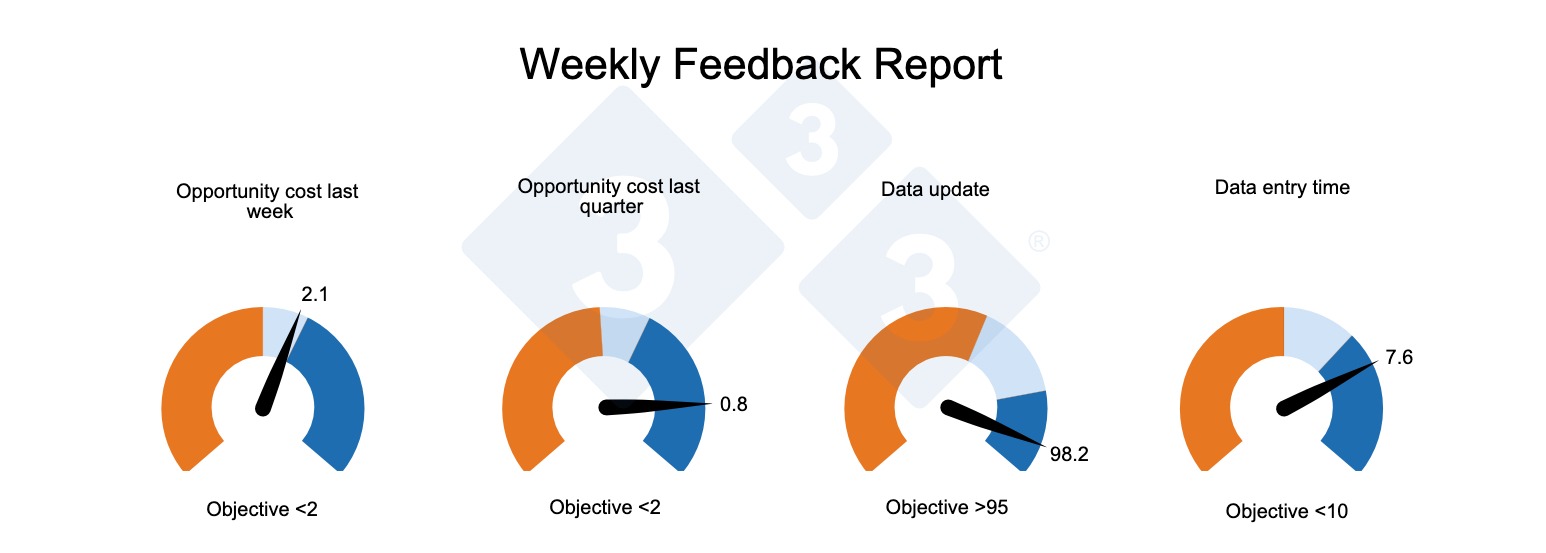
| Weekly index summary | |
| Line | 82 |
| Opportunity cost in index points | 2.1 |
| Herd average | 108.4 |
| Top 15% of herd | 136 |
| Average purebred matings | 124.1 |
| Potential average for purebred matings | 126.2 |
| Precision diagnostic report on matings | |||||||
|---|---|---|---|---|---|---|---|
| Line | Day of the week | Dam | Dam index | Parity | Note | Sire | Comments |
| 82 | M | 46956 | 142 | 1 | 15733 | ||
| 82 | M | 46878 | 142 | 1 | 15733 | ||
| 82 | M | 47074 | 126 | 1 | 15733 | ||
| 82 | M | 41068 | 126 | 4 | 15733 | ||
| 82 | M | 44784 | 126 | 2 | Duroc-280 | Hybrid mating; it could have been a purebred mating | |
| 82 | M | 46864 | 116 | 1 | 15733 | ||
| 82 | M | 44543 | 114 | 2 | Duroc-280 | Hybrid mating; it could have been a purebred mating | |
| 82 | M | 40661 | 100 | 4 | 15733 | Hybrid mating; it could have been a purebred mating | |
| 82 | M | 46816 | 142 | 1 | 19600 | ||
| 82 | M | 39522 | 128 | 5 | 19600 | ||
| 82 | M | 46488 | 121 | 1 | Return to estrus | 19600 | |
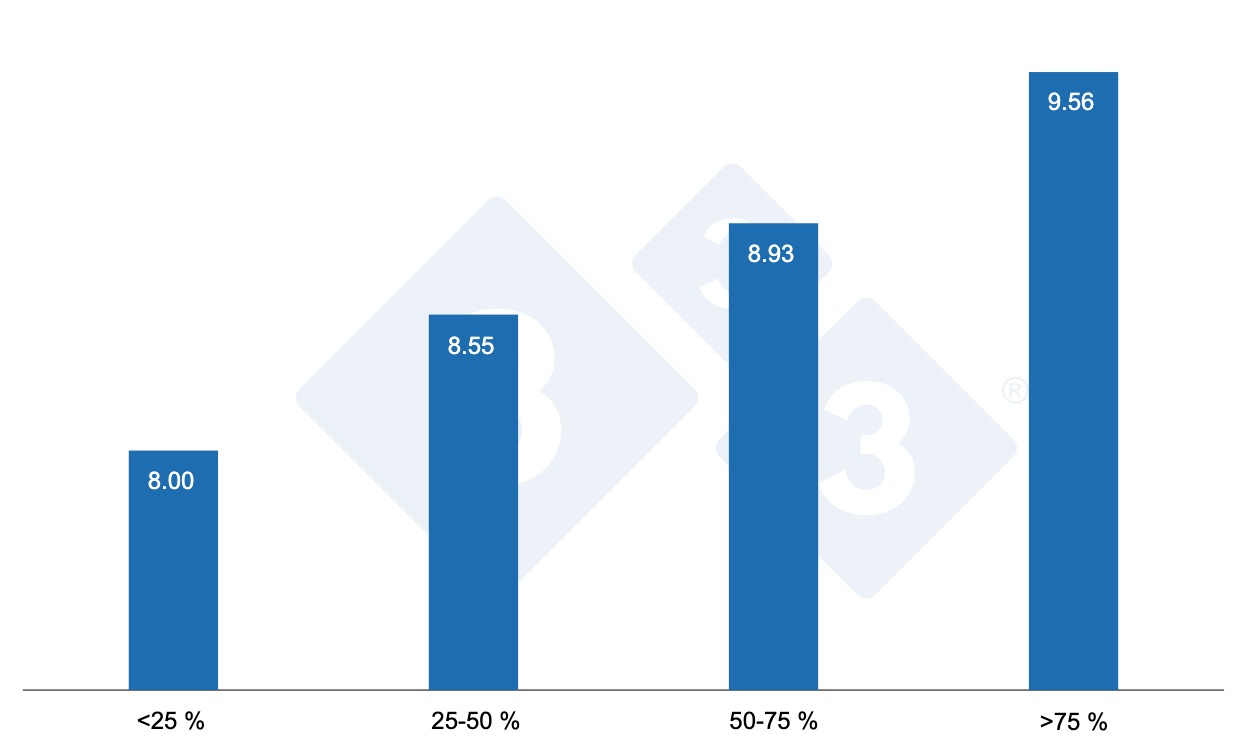
Approximately 15,000 Iberian sows from genetic nuclei routinely synchronize their production data with PICTraq®. These populations are part of a program that currently impacts more than 50,000 sows distributed throughout the production pyramid. The significance of this implementation lies in the close relationship between genetic index values and the production results observed on the farm. Figure 2 shows a real-world example of a multiplier with a selection program focused on prolificacy. In this case, sows in the top 25% of the genetic index produced, on average, 1.56 more total liveborn piglets per litter than those in the bottom 25%. This relationship between index level and production performance is consistently observed in nucleus herds and reinforces the usefulness of the genetic index as a practical tool for guiding selection and supporting the implementation of the improvement program.
Management of inbreeding and genetic variability
The balance between genetic progress and long-term viability
Inbreeding management is a key element in implementing genetic improvement programs for Iberian pigs. Its importance is not limited to preventing the adverse effects associated with increased inbreeding, but also extends to preserving the genetic variability necessary to maintain the program’s capacity to improve current and future traits. This aspect is particularly relevant in populations that, due to their size and structure, tend to have a limited degree of genetic exchange.
The recommendations from the Genetic Services aim to strike a balance between maximizing genetic progress and preserving the long-term viability of populations. To this end, the following actions are implemented in parallel:
- Identification and management of different genetic families.
- Flagging of matings to be avoided due to the risk of inbreeding.
- Periodic monitoring of genetic variability.
- Advice on exchanging breeding stock between different production pyramids.
Conclusion
Beyond calculating genetic values, the true impact of an improvement program lies in its proper implementation and monitoring on the farm. PIC’s accumulated experience with Iberian populations confirms that a structured, data-driven approach enables significant production improvements while maintaining the identity and quality of the final product. In a context where efficiency is key, using robust genetic programs stands out as one of the most effective tools for ensuring the long-term profitability and sustainability of the Iberian breed.