
Leading with connection: Building authority and promoting well-being on pig farms
05-Oct-2026 (12 days ago)
On pig farms, where work is fast-paced and decisions must be made with precision, the team's emotional climate directly impacts both efficiency and animal welfare. Yet many leaders still ask themselves:
To what extent can one be close to or friends with staff without losing authority?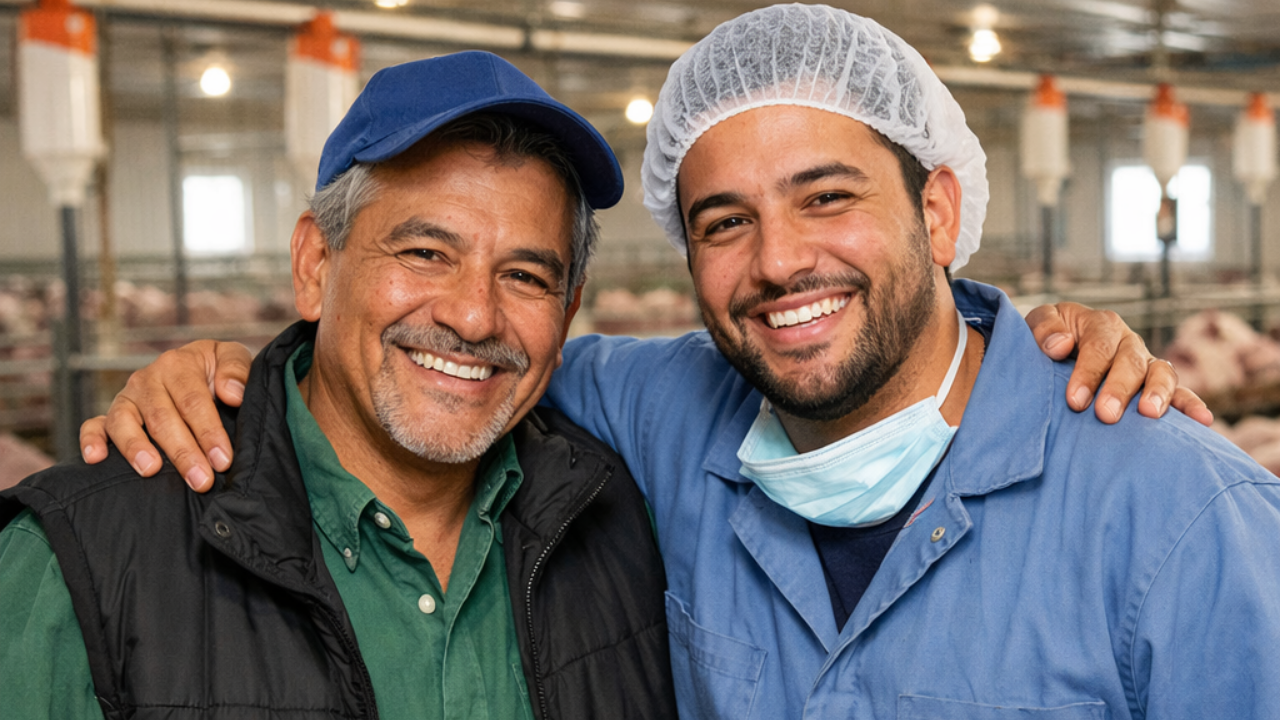
The answer is not to choose between distance and friendship, but to learn how to build relationships based on trust—relationships that uphold discipline without sacrificing humanity.
The human needs behind leadership
Beyond positions or roles, all human beings share the same basic psychological needs (Deci and Ryan 2000): to feel safe, valued, and part of a group that respects us. When leadership recognizes these needs, it creates an environment where people are committed to their work, communicate mistakes promptly, and take care in what they do.
Conversely, when leaders remain distant, people may choose to hide failures or act out of fear, which affects the quality of work and increases risks in critical tasks such as managing farrowings, vaccination, or sanitary control.
Being close doesn't mean being permissive
Having a close relationship does not mean giving up authority or blurring boundaries. It means showing genuine interest in the people behind the uniforms, listening before correcting, and supporting them through difficult times while still holding them accountable to standards.
When leaders strike that balance between warmth and clarity, their teams understand that high expectations come from a place of care, not punishment.
What about friendship?
On many farms, "being friends with the staff" is associated with favoritism or a loss of respect. But true workplace friendship isn't about sharing private life; it's about building a relationship based on trust, consistency, and fairness.
The difference lies in the purpose: functional closeness aims to strengthen the work and the collective well-being; dysfunctional friendship blurs roles and can undermine authority.
Table 1. Functional closeness vs. dysfunctional friendship in leadership.
| Aspect | Functional closeness | Dysfunctional friendship |
|---|---|---|
| Purpose | Fostering trust and communication | To seek acceptance or personal sympathy |
| Limits | Clear, in line with the rules | Unclear, affinity-based decisions |
| Effect on authority | Strengthens the leader's credibility | Creates perceptions of favoritism |
| Effect on the team | Increased collaboration and transparency | Causes division and resentment |
| Impact on animal well-being | Promotes calm and coordinated work | Increases tension and human error |
Closeness also protects the animals
The quality of leadership not only influences people but also animals. Several studies have shown that pigs perceive and react to the emotional tone of their caregivers.
When workers are treated with respect and peace, their communication with the animals improves: sows are calmer, farrowings flow with fewer complications, and levels of physiological stress are reduced (Hemsworth & Coleman, 2011; Camerlink et al., 2018).
A leader who creates an environment of respect and trust not only improves the work environment but also directly impacts productivity and animal welfare.
Conclusions
- In modern pig production, leadership is not measured solely by results, but also by the ability to create humane and stable environments.
- Being close doesn't weaken authority: it makes it more legitimate.
- Teams that trust their leader communicate better, learn faster, and face pressure with composure.
- In a job where life and well-being are at stake every day, leading with closeness is not a luxury: it is a strategy of safety and commitment.