
Long-standing mystery solved: What causes ear necrosis?
06-Jul-2026 (3 months 21 days ago)
Porcine ear necrosis (PEN) - also known as ear‑tip necrosis or ear necrosis - has frustrated producers and veterinarians for decades. This disease is found worldwide, and is linked to poor welfare, secondary infections, and economic losses from reduced growth. But despite numerous theories and decades of research, the true cause of PEN has remained unclear.
A new study provided evidence that Fusobacterium necrophorum can directly induce PEN‑like lesions in pigs, resolving a long‑standing debate about the cause of the disease.
This research marks an important step forward for producers and veterinarians seeking more targeted strategies to manage the condition.
What’s ear necrosis, and why should we care?
PEN was first described in 1976, although it was informally reported decades before. It is a disease that has intrigued (and frustrated) the swine industry for its relatively slow progression, yet significant result: ear mutilation. For years it has been associated with a long list of potential contributors (multi-factorial): mycotoxins, Staphylococcus hyicus, Treponema pedis, PCV2, PRRS, Streptococcus, environmental stressors, air quality, humidity, or pig behavior. However, the disease has never been reproduced – meaning we didn’t know what caused it. In a previous attempt, scientists partially replicated the disease by exposing healthy pigs to lesions from sick pigs. This initial study provided the initial steps towards clarifying: what actually causes ear necrosis in pigs?
What was done, and what were the results?
Researchers ran three controlled, single‑blinded animal trials where the treatment each animal received was unknown to those monitoring the pigs, reducing bias:
- Trial 1: Staphylococcus hyicus
- Trials 2 & 3: Fusobacterium necrophorum
Every trial followed a similar design: 5‑week‑old pigs per trial, sourced from a high‑health commercial herd with no prior history of PEN. Pigs were inoculated intradermally, into the tip of one ear while the opposite ear received a sterile injection. The goal of the intradermal inoculation was to mimic ear biting. Sentinels were also included to ensure PEN did not spontaneously develop.
Staphylococcus hyicus did NOT cause lesions
In Trial 1, no PEN‑like lesions occurred in any pigs inoculated with S. hyicus.
→ This helps eliminate one of the commonly suspected agents.
Fusobacterium necrophorum reproduced classic ear necrosis (Figure 1)
In Trials 2 and 3:
- 4 out of 10 pigs in Trial 2 developed lesions identical to PEN.
- 7 out of 9 pigs in Trial 3 developed PEN‑like lesions.
- Lesions ranged from skin reddening to scab formation, progressing to complete tissue death and peeling off the ear, the exact presentation seen in field cases.
- Reddening of the skin developed within hours, usually followed by a purple coloration.
- Approximately 2 days after inoculation, scabs were visible.
- Necrosis took about 4–6 days to develop.
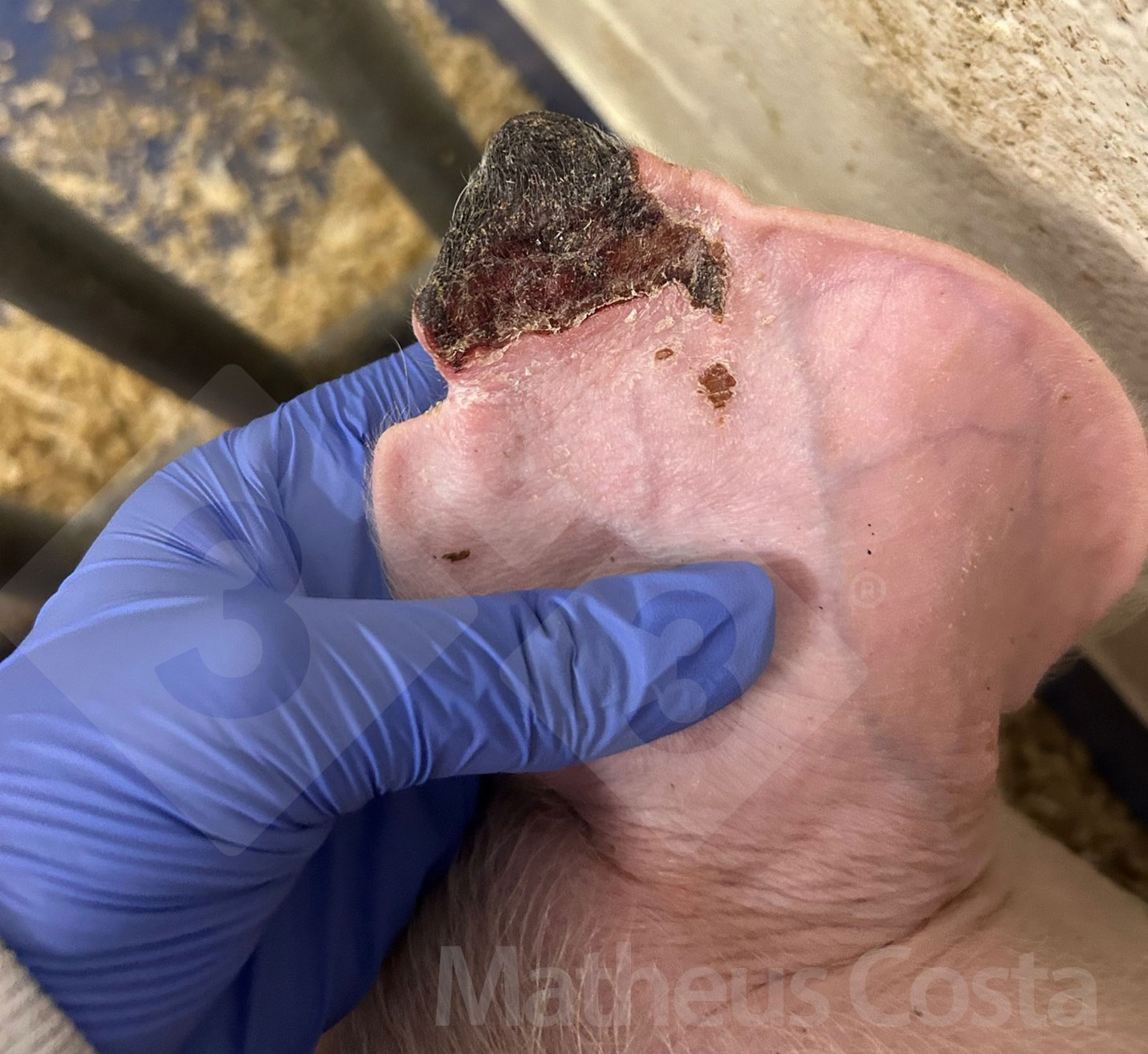
This is the first reproduction of PEN in naïve pigs.
F. necrophorum was isolated from the inoculated ears of affected pigs in both trials. In some animals (10%), the opposite, uninoculated ear also developed lesions, suggesting possible spread via blood.
Microscopic lesions matched field outbreaks
Tissue samples from necrotic ears showed:
- “repair” tissue;
- loss of skin;
- thick crusting with and inflammation;
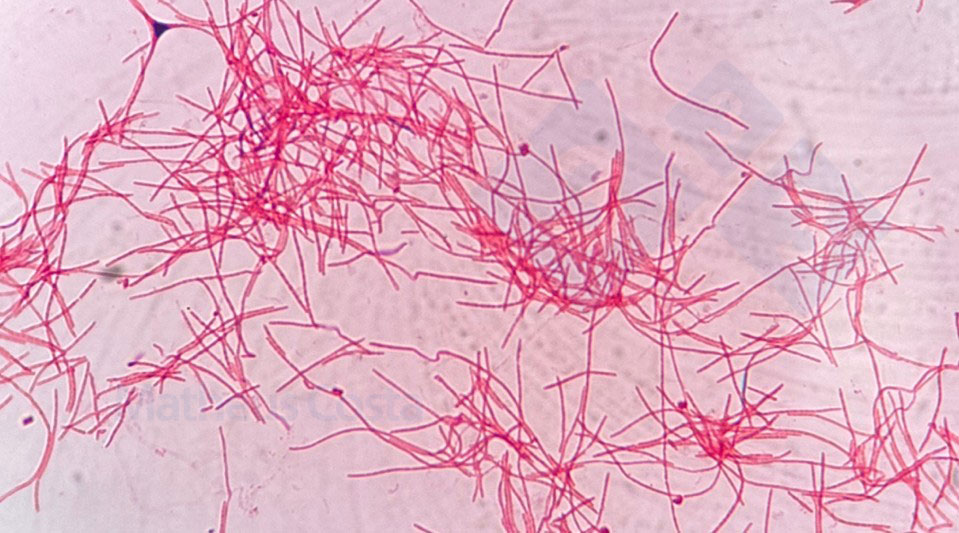
- filamentous structures consistent with Fusobacterium spp.
Implications for the Swine Industry
It is now established that ear necrosis in pigs has an infectious cause: Fusobacterium necrophorum (Figure 2).
- Identifying a causative agent opens doors to targeted prevention
Producers and veterinarians can now focus on management strategies that reduce F. necrophorum exposure or entry via skin trauma - similar to how we approach foot rot in cattle. - Ear trauma + bacterial exposure = highest risk
Our findings support a model where ear chewing, abrasions, or environmental injuries create the entry point needed for infection.
It is important to know that Fusobacterium is shed in feces and can be found in the saliva of healthy pigs. It remains unclear if any F. necrophorum is capable of causing disease, or if specific types are more aggressive than others (similarly to E. coli or Streptococcus suis). - PEN should be perceived as infection
Environmental stressors may still contribute, but they are not the sole cause. The bacterial agent is a required factor. - Biosecurity adjustments may help
Because F. necrophorum is common in manure of farms experiencing issues with PEN may consider:- reducing stocking density,
- strengthen sanitation around feeders/waterers,
- minimizing opportunities for ear trauma, including the identification of bully pigs and removal from pens,
- A pathway toward vaccine development or therapeutics
With a definitive agent identified, tools targeting Fusobacterium could become viable future options.
Take home message
This study represents a major breakthrough: F. necrophorum is the primary cause of porcine ear (tip) necrosis.
The ability to reproduce PEN in a controlled research setting a solid foundation for future research on how to tackle this issue at the barn level. By focusing on managing bacterial exposure and preventing ear trauma, producers may finally be able to reduce the incidence and severity of this welfare‑related condition.
This work was funded by the Saskatchewan Agriculture Ministry (Agriculture Development Fund), and Result Drive Agriculture Research.