
One outbreak, two outcomes: how the contingency measures sped up the recovery of a boar stud
27-Apr-2026 (5 months 19 days ago)
The internal monitoring system for PRRS in place at the Gene Transfer Center (GTC) is based on:
- Weekly sample size: to achieve 95% confidence level in detection for an estimated prevalence of 2%. Samples are taken spread over three days a week.
- Sample type: blood from the saphenous vein, as this is considered the most sensitive sample (see article Detect PRRS infection in boars by sample type)
- Tests carried out: PRRS PCR
Introduction: when PRRS manages to sneak in
On 7 April 2024, during routine monitoring at the GTC, two PCR samples tested positive for the Porcine Reproductive and Respiratory Syndrome virus (PRRSv) in boars from one of the two buildings and triggered the immediate activation of the emergency protocol:
- Health closure of the GTC
- Withdrawal of all semen doses produced
- Testing of semen doses withdrawn by PCR with negative results
- Implementation of the contingency plan to ensure customers' supply of doses
The fact that a laboratory was available to work through the night meant that progress on the testing could be made quickly. The results of the tests carried out between 7 and 8 April on 100% of the boars confirmed the fears:
- 11 out of 261 boars in Barn 2 (B2) tested positive for the virus by PCR
- By contrast, none of the 267 animals in Barn 1 (B1) tested positive.
This finding marked a turning point: from that moment on, we began a race against time to achieve the following:
- Contain the outbreak by preventing the virus from spreading from B2 to B1
- Preserve the genetics
- Resume production as soon as possible
B1 has a deep straw bedding system, while B2 has a full slatted floor. Both buildings are identical and are located next to each other. The distance between them is 10 metres. Both have negative pressure ventilation with exhaust vents at the end of each building and cooling units at the side air inlets, but the air is not filtered.
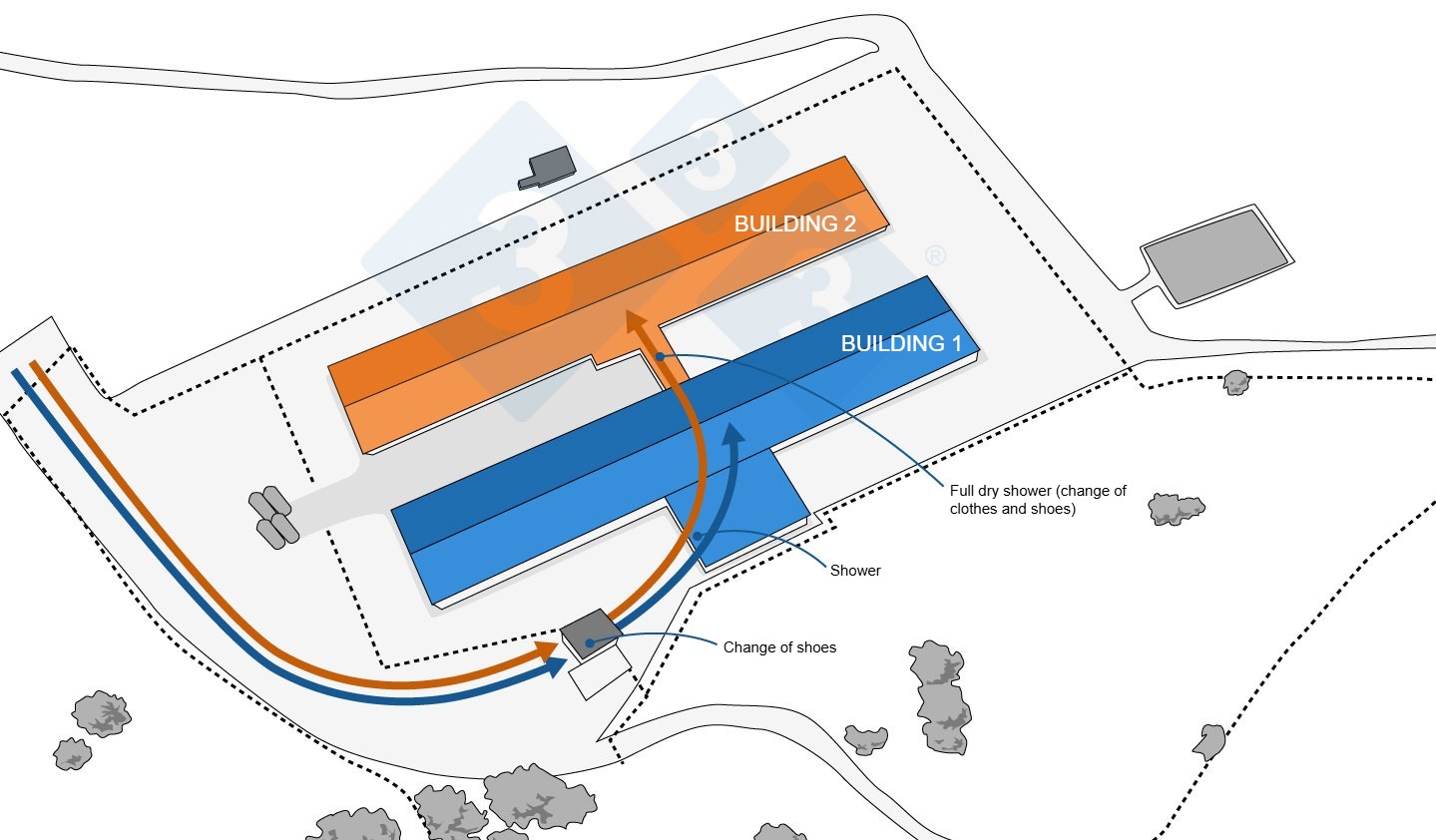
Before the outbreak, the staff working in each building were separate, but the entry route was the same for everyone, with a shower at the entrance and exit of the GTC and access to B1.
Workers from B2 would then proceed to their barn wearing "transit" clothing and footwear. At the entrance of B2, staff had a Danish entry to perform a full dry shower (change of clothing and footwear) in a changing room with clearly separated clean and dirty zones (Figure 1).
Surgical contingency measures
From day one, the priority was clear: to keep B1 PRRS-free so that production could resume as soon as possible. To achieve this, a number of high-precision measures were taken:
Immediate isolation and internal zoning
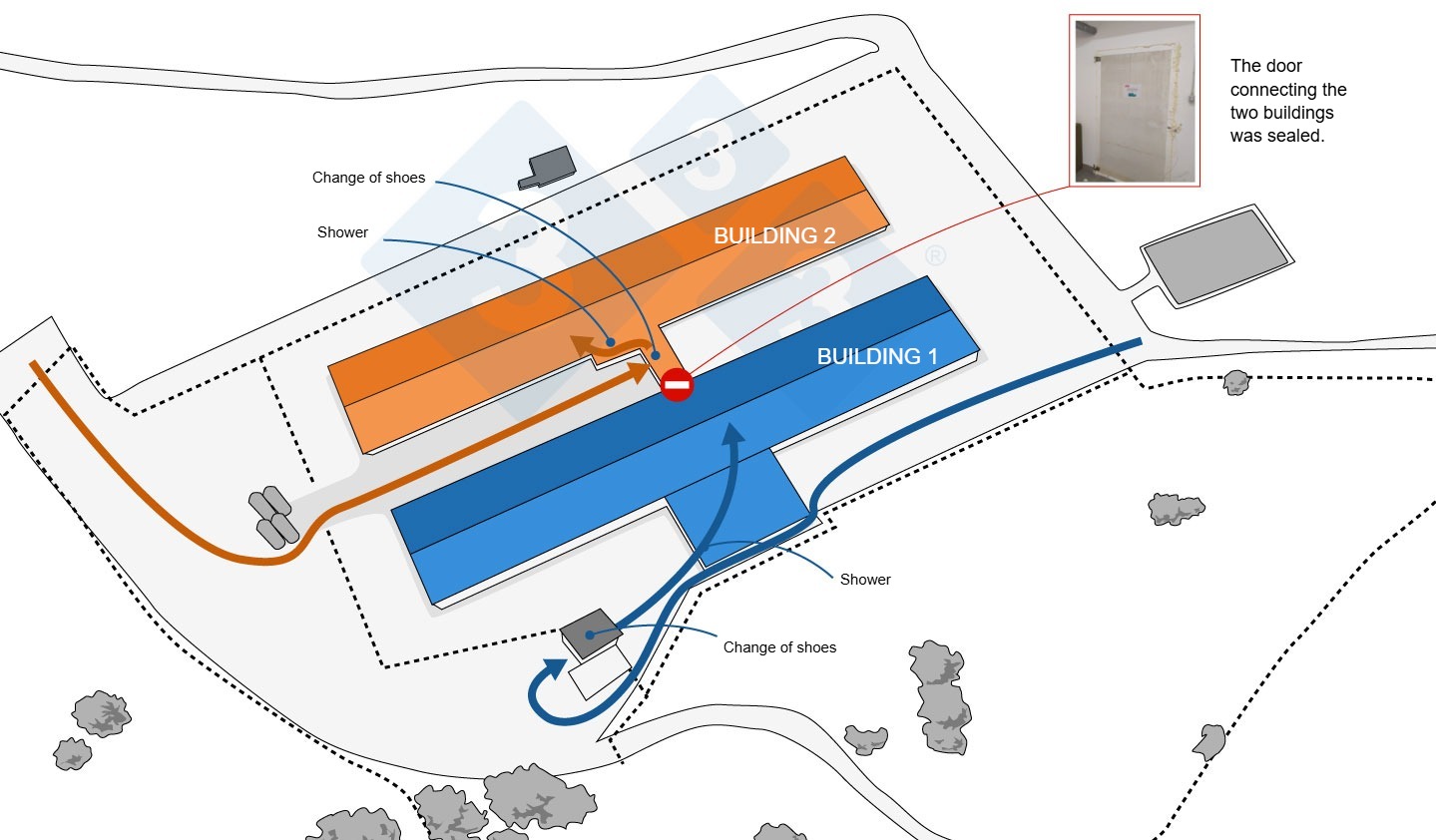
- Communication between B1 and B2 was completely cut off from the moment the first positive result appeared.
- Separate, independent flows were put in place for workers, tasks, materials and waste. From 8 April, access to B2 was from the exterior, and entry and exit showers were put into operation (Figure 2).
- B2 culled all boars between 9 and 12 April by means of a major logistical effort.
Structural and environmental biosecurity after depopulation of B2
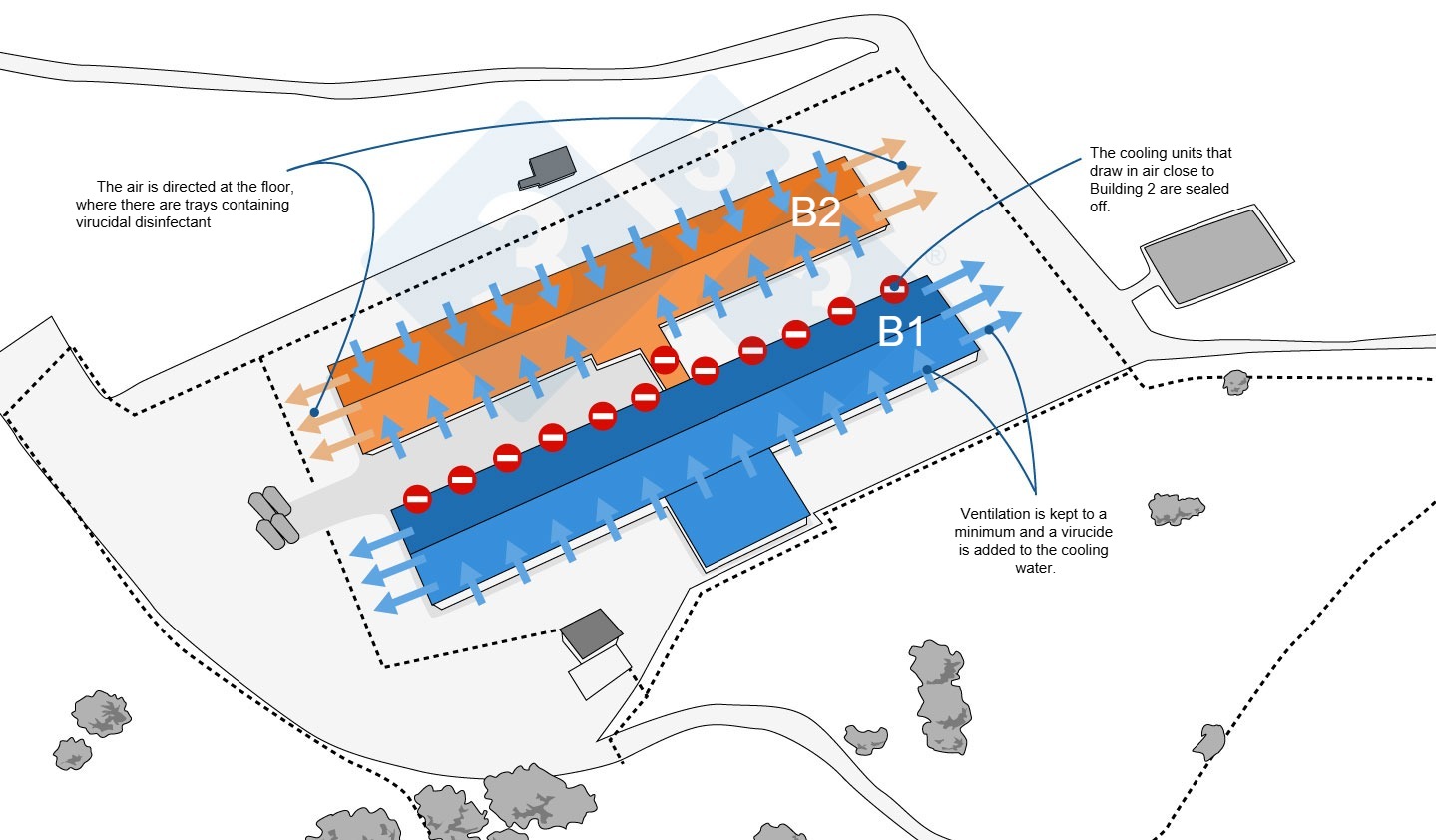
- Ventilation was shut off completely in B2 and reduced to a minimum in B1 (Figure 3).
- The decision was made not to start cleaning B2 immediately using the traditional method (high-pressure water) in order to prevent the formation of aerosols that could get into B1. Organic matter was removed from the slatted floor manually and dumped into the slurry pits. The barn was cleaned manually during the first week it was empty.
- In the second and third weeks after the depopulation of B2, workers began to disinfect it without washing or using high pressure. The aim was to reduce the viral load in the environment before deciding to wash with water at high pressure. In the third week, environmental samples (38 swabs) were taken, focusing on the pens housing the infected boars, and individual PCRs were carried out on the samples, all of which tested negative.
- In the fourth and fifth weeks after the removal of the boars, all the surfaces in B2 were treated using industrial blowtorchs, and at the end of the fifth week, further environmental samples (25 swabs) were taken, all of which tested negative.
- In the fifth week, semen sales started from B1 after performing two official blood tests on 100% of the existing boars and weekly tests on 50% of the males, all of which returned negative for PCR and ELISA. Until the cleaning and disinfection of B2 was fully completed, all boars collected in B1 were tested by PCR before the doses were dispatched.
- In the sixth week, the facilities were cleaned thoroughly using high pressure water.
- In the seventh week, with B2 cleaned and disinfected, the downtime started.
Cleaning management: bio-containment
- Pipes and slurry pit drainage systems in B2 were physically sealed to prevent aerosols from escaping when cleaning began and the slurry pits needed to be opened.
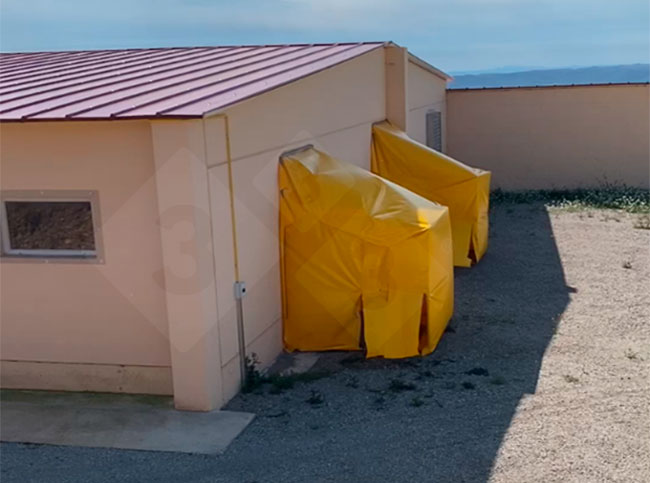
- A plastic frame was fitted to the four exhaust fans in B2 to redirect the outgoing air to the floor, where large trays containing a virucidal disinfectant were placed (Photos 1 and 2).
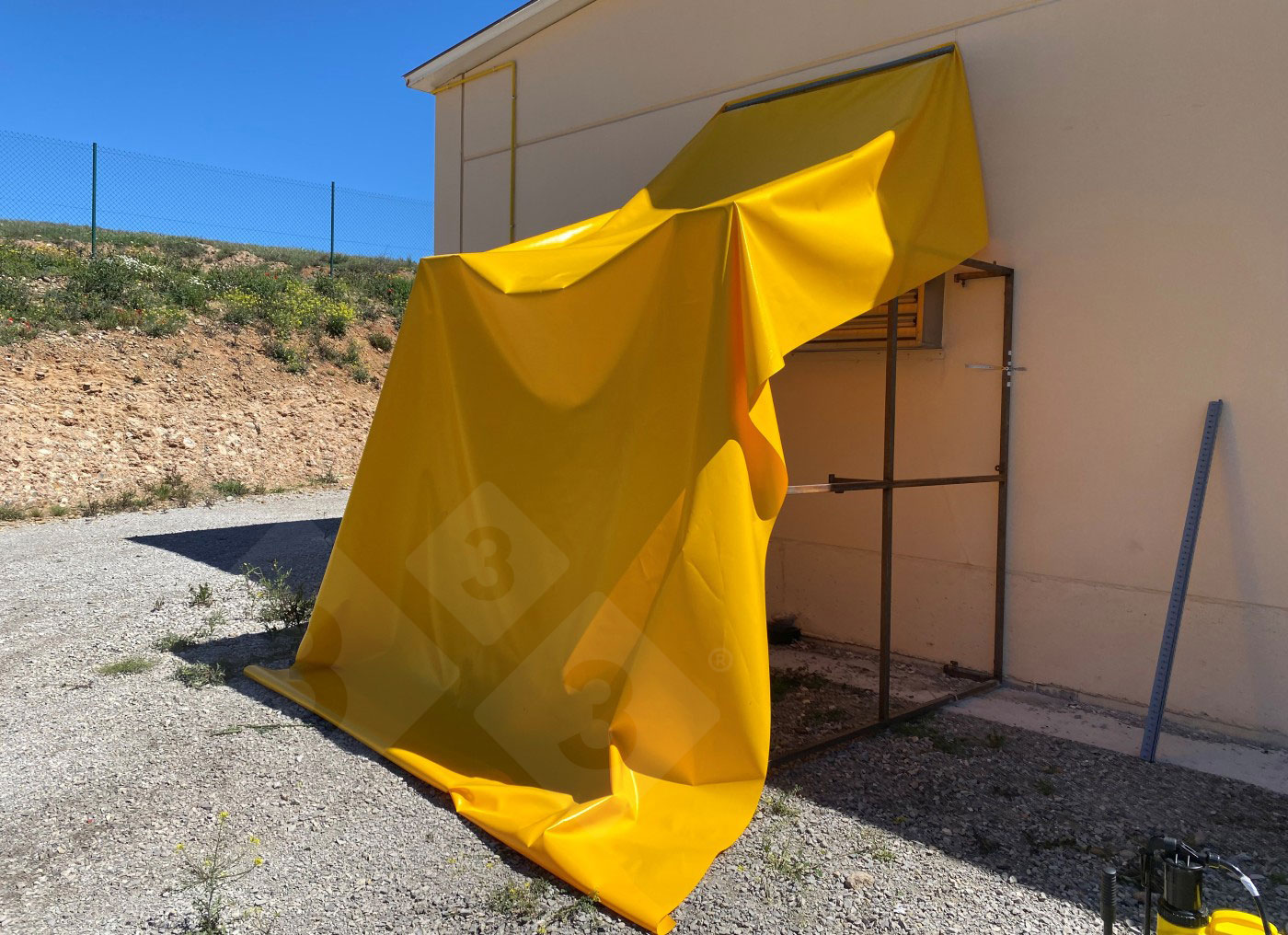
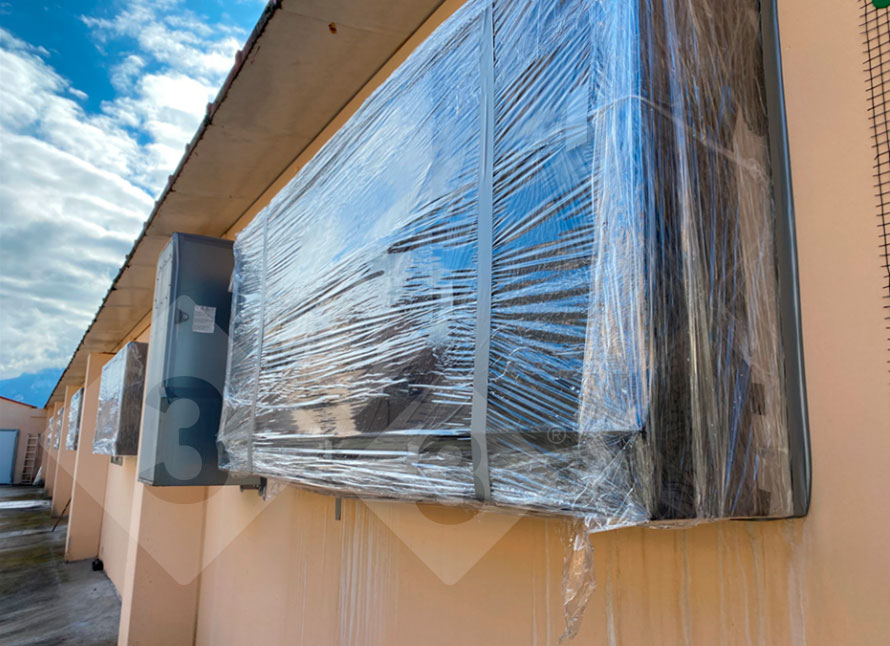
- In B1, all the air inlets (with coolings) on the wall opposite to B2 were sealed with plastic to prevent air and particles from entering (Photo 3). On the opposite wall, where air entered B1, the cooling systems were switched on, but with a virucidal disinfectant added to the circulating water, which was changed every four days.
Step-by-step return to operations
- On 12 May, the GTC (boars from B1) was officially authorised to sell semen doses.
- B2 remained inactive until it had been cleaned and disinfected, followed by a downtime period, introduction of sentinel animals and new entry of boars.
| Week | BARN 1 | BARN 2 |
|---|---|---|
| 0 | 7 April: 0 PCR-positive 8 April: 0 PCR-positive out of 267 boars |
7 April: 2 PCR-positive withdrawal and testing by PCR on all doses produced (which tested negative), activation of the contingency plan to ensure customers received semen doses. |
| 1 |
100% of the boars officially tested by PCR + 50% of boars privately tested by PCR and ELISA, with negative results |
Manual removal of organic matter to the slurry pit |
| 2 |
100% of the boars officially tested by PCR + 50% of boars privately tested by PCR and ELISA, with negative results |
Disinfection without washing and not using high pressure water to prevent the formation of aerosols |
| 3 |
50% of boars privately tested by PCR and ELISA, with negative results |
Collection of 38 environmental samples and individual PCR testing, all with negative results Objective: sample the pens in which the positive boars were kept. |
| 4 | Private PCR and ELISA tests on 50% of the males, with negative results. 12 May: The sale of doses from Barn 1 was officially authorised |
All surfaces treated with a blowtorch 25 environmental samples taken and individually tested by PCR, with negative results |
| 5 | Private testing of 100% of male animals sampled for PCR and ELISA testing prior to the release of the doses | |
| 6 | Private testing of 100% of male animals sampled for PCR and ELISA testing prior to the release of the doses | Starting the deep cleaning process with high-pressure water. |
| 7 | Start of the downtime period | |
| 8 | ||
| 9 | Sentinel programme: transfer of 12 boars for culling from B1 to B2 Rotation through 100% of the pens |
|
| 10 | Negative PCR and ELISA results from the sentinel animals | |
| 11 | Barn refilled with animals |
* all blood tests.
Monitoring of the weekly sample size for a 95% confidence level and 2% prevalence, spread over 3 days of sampling. Sample type: saphenous vein blood, Test: PCR.
The investigation: tracing the invisible path of the virus
A detailed epidemiological investigation was carried out, focusing on the days before the detection of the virus. Staff entries, technical visits, animal transport, the removal of carcasses and internal movements were analysed, as well as weather conditions.
Several elements emerged as potential entry points:
- The use of a new tractor (brought in on 16 March) to transport carcasses from both barns to the collection point 500 metres outside the premises, with potential for errors when moving between the dirty and grey zones of the farm and accessing the carcass container.
- Maintenance work on the cooling systems on 19 and 26 March, involving workers using entrances and exits in critical areas on several occasions.
- In the days leading up to the detection of the infection, there had been rainfall and a drop in temperatures, which would have helped the virus persist in the environment if it had been carried close to the farm.
Despite our best efforts, we were unable to identify a single source. The genetic sequence of the virus isolated at the GTC was entered into GenBank and matched strains from a farm located in a village 38 km away, situated in an area with a high density of pigs.
Lessons learnt: preventive measures for the future
The outbreak highlighted operational shortcomings that have led to a comprehensive plan for continuous improvement:
- Changes in the method for carcass disposal: The traditional collection system, which was carried out by an external company, was abandoned in favour of a hydrolysis process.
- New CCTV cameras: The images are transmitted in real time to the Health Assurance team's mobile devices, improving the tracking of traffic outside the buildings and at the external access points.
- Redesign of access points: Since the outbreak, the two barns have remained completely separate in terms of access for workers, materials, etc.
- On-site veterinarian: The parent company's veterinarian is now based at the GTC, which improves day-to-day supervision.
Conclusion: Containment was possible because there was a plan
The case of this GTC demonstrates that, even when faced with a silent and potentially devastating infection such as PRRS, a combination of rapid response, surgical measures and adaptive biosecurity can make all the difference. Staff awareness throughout the process of depopulation, cleaning, disinfecting, restocking and reopening the centre was crucial.
Thanks to preserving the health status of B1, the GTC reduced its non productive period significantly and avoided disrupting the supply of genetic material.
In an environment characterised by high pig density, constant movement and highly contagious viruses, farms must be prepared for the unexpected. Having a highly practical contingency plan is not optional; it is the lifeline of any operation.