
Practical experience: Ability to detect PRRS infection in boars by sample type
11-Apr-2024 (2 years 5 months 9 days ago)
One possible transmission route of PRRS virus and the one that has the greatest impact, is introducing semen doses from infected boars. One key to reducing the risk posed by this transmission route is an adequate monitoring program at the boar stud. Generally, the PCR technique is used to determine the presence or absence of the virus in biological samples from boars, and the type of sample chosen to be analyzed is probably one of the critical points that will determine the success of the program implemented in the boar stud.
Different scientific publications indicate the following particularities in the dynamics of infection and excretion of PRRS virus in boars:
- Detection in blood generally happens before detection in semen.
- Excretion by seminal route is:
- Erratic: the virus is not detected in the semen of all viremic boars.
- Intermittent: the excretion phase can last for months.
Due to semen characteristics such as the presence of PCR inhibitors, it can be difficult to perform the PCR technique.
Thus, it would seem that the ideal sample would be blood collection, but conventional blood collection via the femoral vein on a routine and frequent basis can cause welfare problems for boars due to the risk of phlebitis at the puncture site.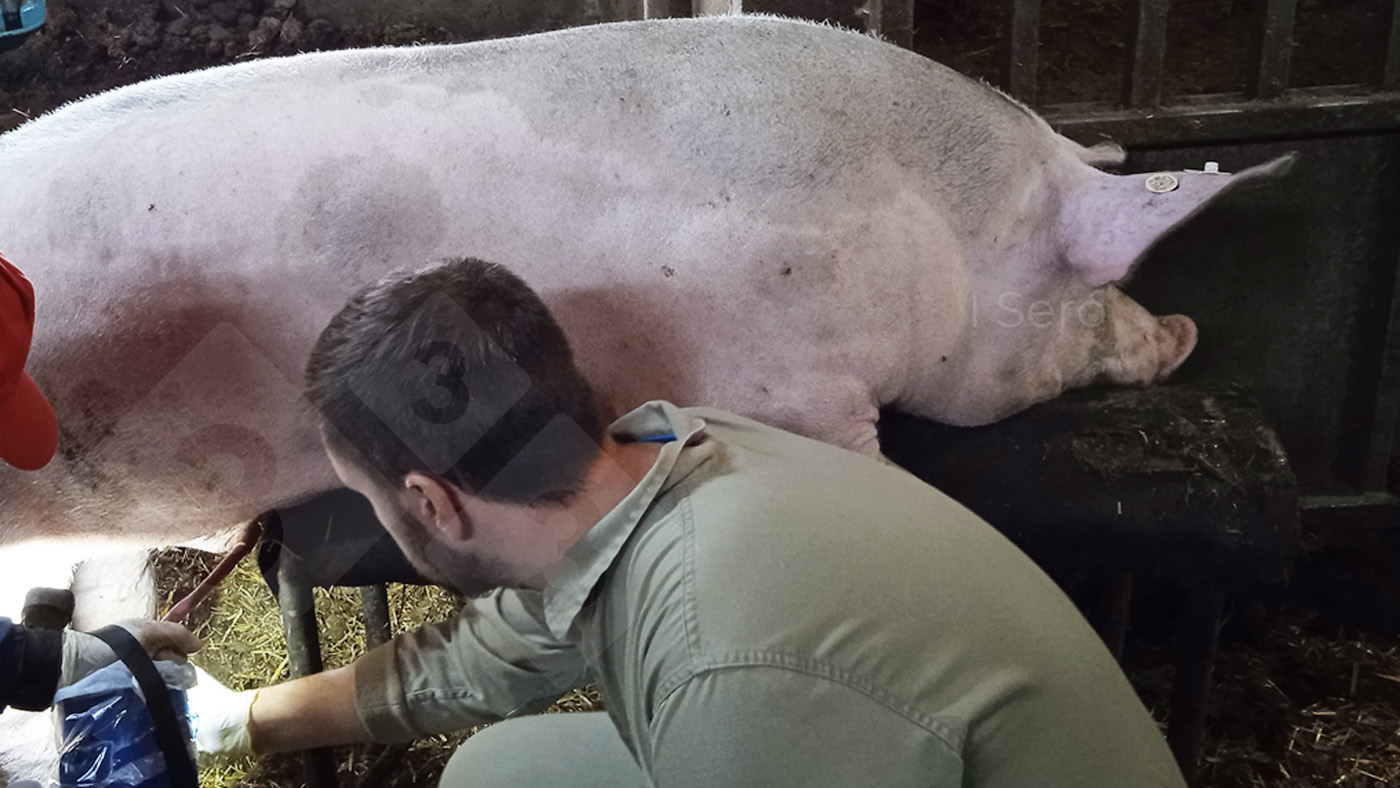
To reduce this problem, there are possible alternatives to this type of sampling, such as:
- Nasal or oral swabs
- Puncture with a low gauge needle and subsequent collection of blood with a swab without medium
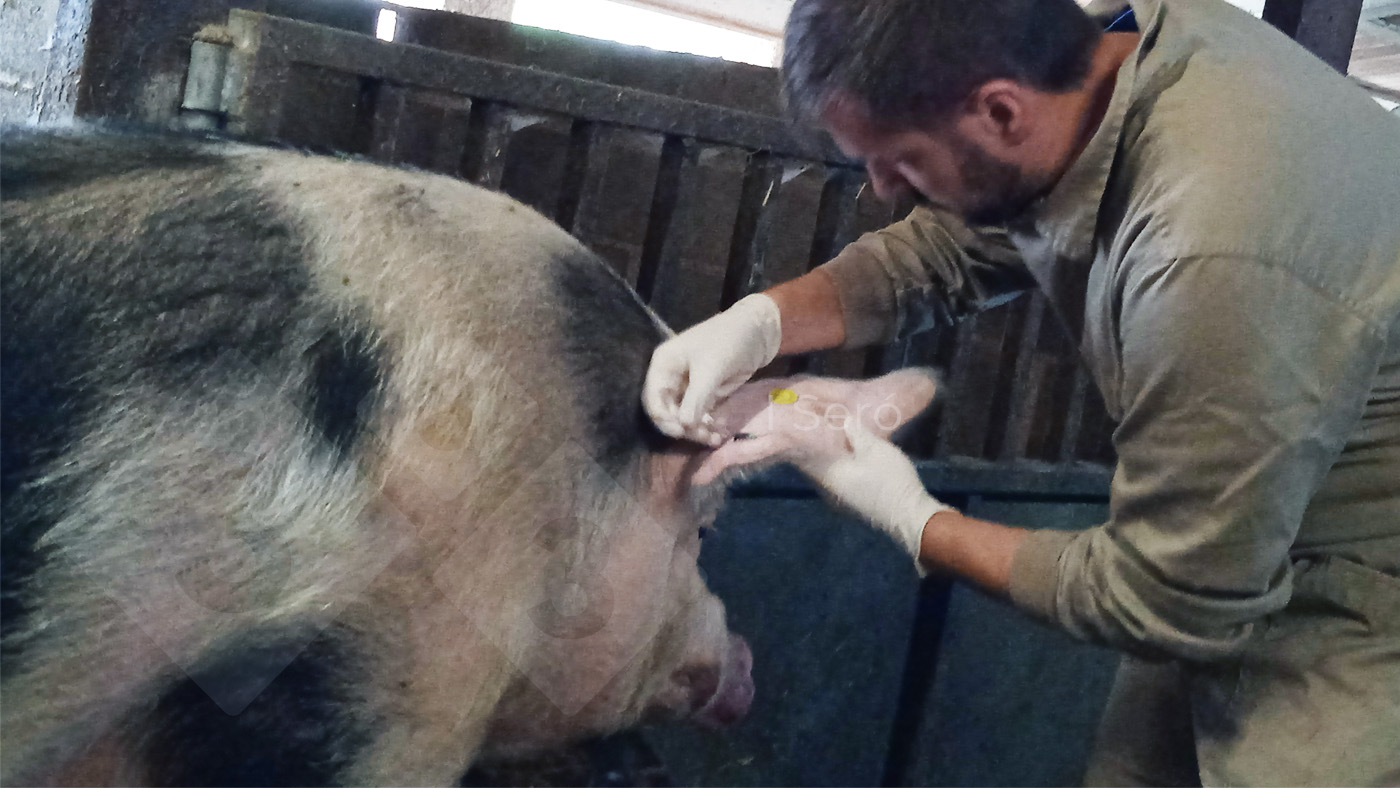
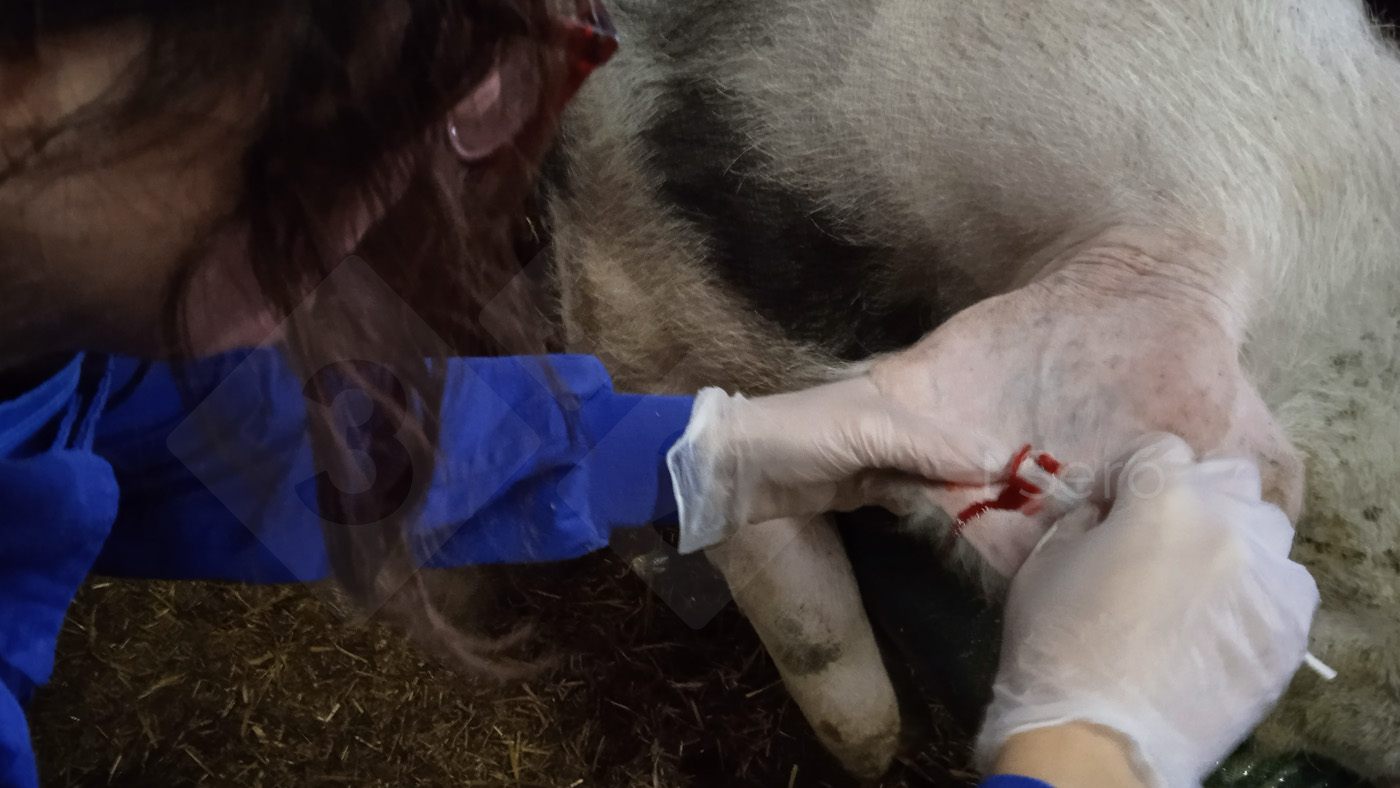
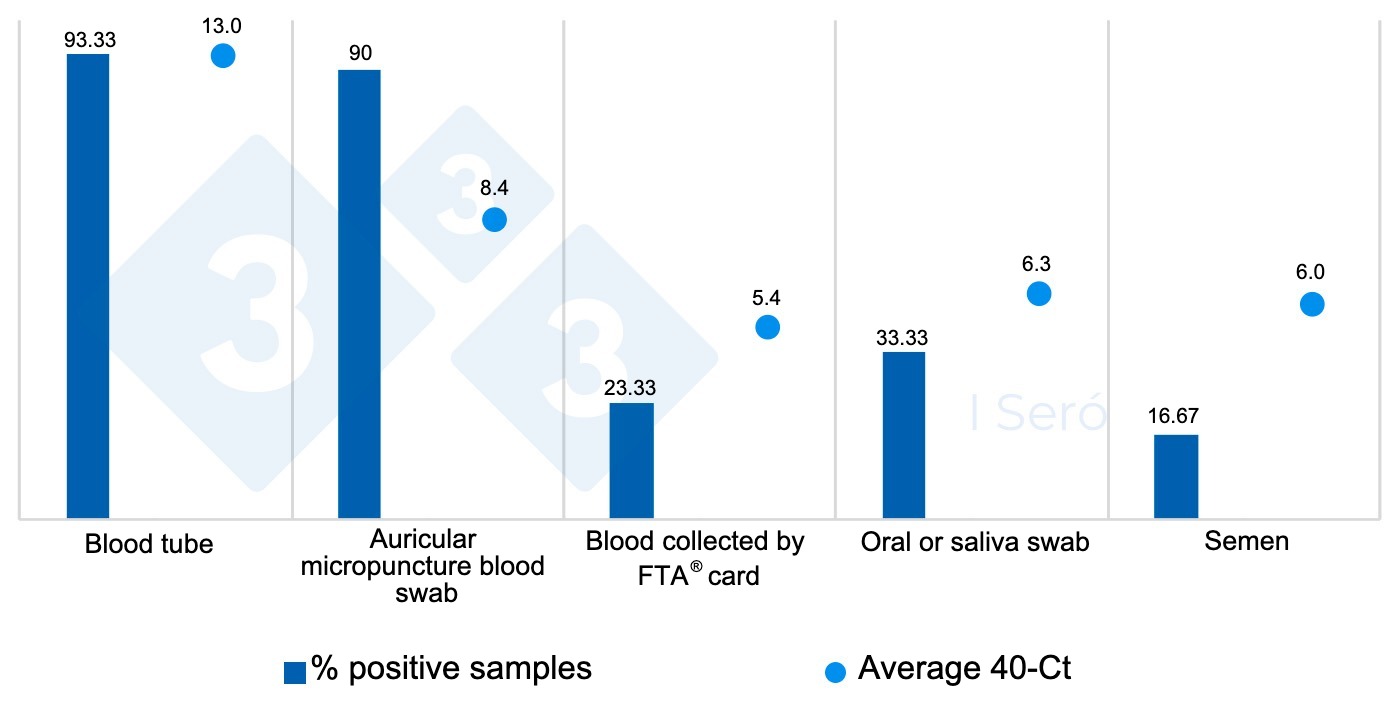
To assess the effectiveness of possible samples and techniques to be introduced in a boar monitoring program, positivity and viral load were determined individually with the PCR technique from the following samples in a batch of 30 boars from a farm that had been infected with PRRS virus:
- Conventional blood collection with a vacuum tube via femoral vein puncture (Photo 1).
- Blood swab obtained by micropuncture in the auricular vein and introduction of the swab in 0.5 ml of sterile saline solution (Photo 3).
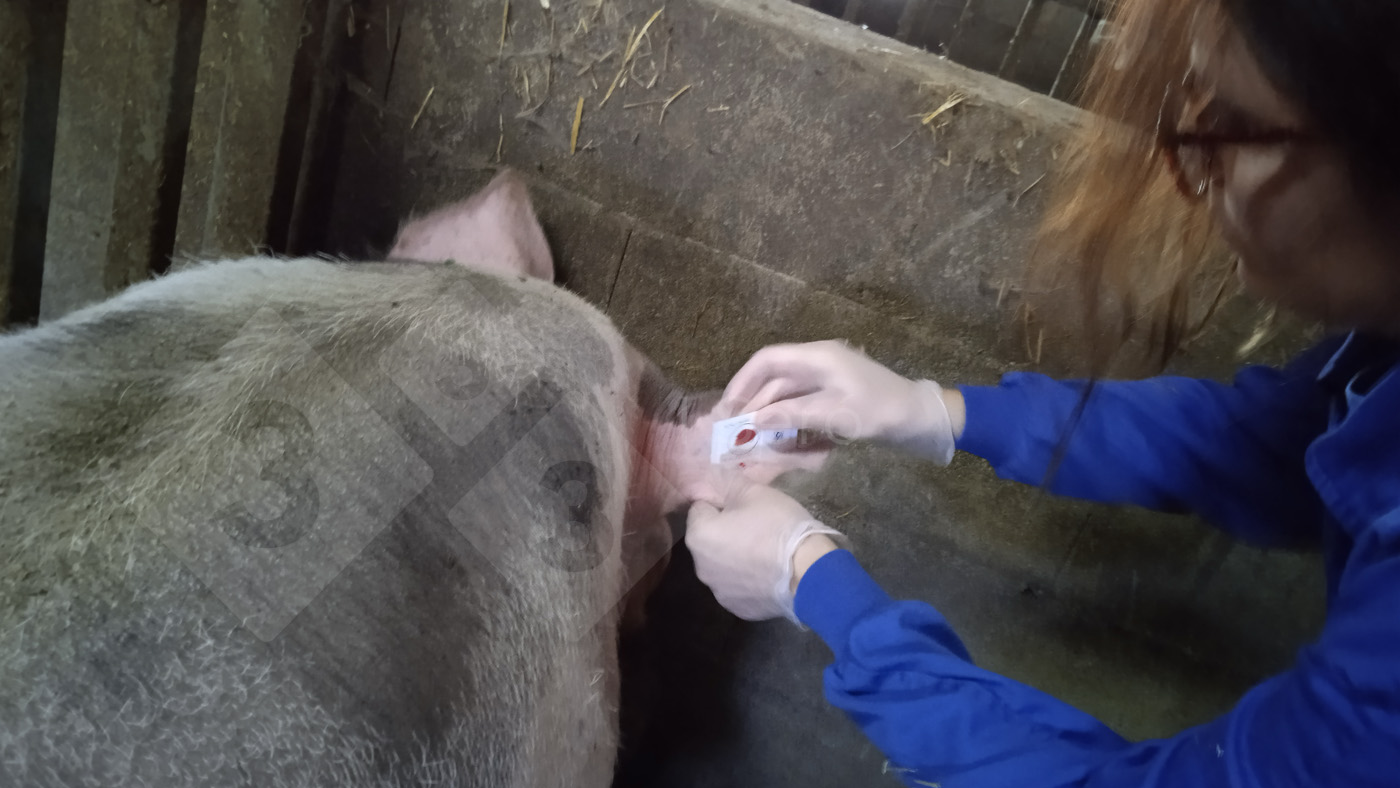
- FTA® card with a blood sample obtained by micropuncture in the auricular vein (Photo 4).
- Oral or saliva swab.
- Undiluted semen.
 The results determined that:
- 93% of the boars tested positive with the conventional femoral vein blood sampling.
- 90% of the boars tested positive with the micropuncture blood swab. Viral loads were lower than those obtained with the blood tube and one boar tested positive with the conventional blood draw and negative with the blood swab.
- 25% of the semen samples tested positive. The semen-positive boars were all viremic and were also the ones with the highest blood viral loads. The semen viral loads were lower compared to the blood viral loads of the same boars.
- 33% of the boars tested positive with the oral swab. The viral loads of the positives were lower than the blood viral loads.
- 23% of the FTA® cards were positive with low viral loads. As with the semen samples, the animals that tested positive with the FTA® cards had the highest viral loads in the blood samples obtained by the conventional method.
 Conclusions and future outlook
- For early detection of virus presence, a program based on semen sampling alone can delay virus detection.
- Low viral loads in semen samples can cause false negative PCR results depending on factors such as dilution of the collected semen, homogeneity of the collected sample, detection capability of the PCR kit, PCR protocol used, etc.
- The blood swab obtained by micropuncture can be a good alternative to conventional blood sampling. Future studies can determine how to increase the detection capacity according to the type of swab used to achieve higher blood absorption and according to the amount of sterile saline where the swab is introduced to reduce dilution.
- FTA® cards do not appear to be a good sample type based on the results of this study, although the fact that positivity is detected when the blood viral load is high encourages future studies focused on improving the sampling protocol and extraction of the blood fraction from the card.