
What is the best age for weaning piglets?
24-Jul-2023 (3 years 3 months ago)
In 2009, this same web page published a series of three articles in which J. Barceló explained the best age to wean piglets in his opinion. In the first of these articles, he said:
If we had asked this question to veterinarians, specialized technicians, and swine producers a few years ago, the immense majority would almost certainly have answered that the best age for weaning is at three weeks. However, there are continuous changes in swine production and its evolution questions this old belief with respect to the weaning age. In this article I will try to explain why in many production systems the weaning age is being put back to 28 days in order to achieve the objective of producing a minimum of 200 kg of weaned weight per productive sow and year."
We could write the same thing today and it would still be relevant. The average age at weaning has not yet reached 28 days in Spain.
Since 2017, mortality in the post-weaning phase (6-20 kg) has not stopped increasing, reaching a record high in 2022 of 8.4% according to SIP data. Given this scenario, it would seem that one of the first measures to apply would be to have more mature piglets at weaning that could better withstand the stress of weaning and subsequent housing conditions. However, we still are not weaning at 28 days Why?
Surely, the reasons for keeping the average age at weaning below 28 days have not been the same for all producers, but I will try to present the ones that, in my opinion, are the main ones:
- The use of highly prolific genetics forces us to use nurse sows in order to have a greater nursing capacity. This leads to pre-weaning piglets at ages under 28 days and even 21 days, which has an impact on the average weaning age, not allowing the piglets to reach 28 days, despite having the necessary farrowing places available. But, what is worse is that this average age is associated with a high standard deviation (great variation in age) since we have piglets that are weaned very early and others much later.
- Continuing to wean piglets under 28 days, taking into account the restrictions on the use of antibiotics in the feed, has not caused major problems, as zinc oxide was still present in the first diets and exerted its protective effect until recently.
- The integration system has been the engine of our pig industry and we should be pleased about it, but it must be recognized that the interests of the different actors are not always the same. The integrated pig producer is paid on the basis of the number of piglets weaned and, therefore, this number continues to weigh heavily in decisions. Delaying weaning means increasing the number of farrowing room places or reducing the number of sows, and both decisions lead to a renegotiation of the integration contracts, which we try to avoid.
Since mid-2022 the use of zinc oxide in diets has been banned throughout Europe, the use of antibiotics has been restricted and this restriction will increase, as the consumption target imposed by the European Union for 2030 implies reducing the 2021 consumption by approximately 40%.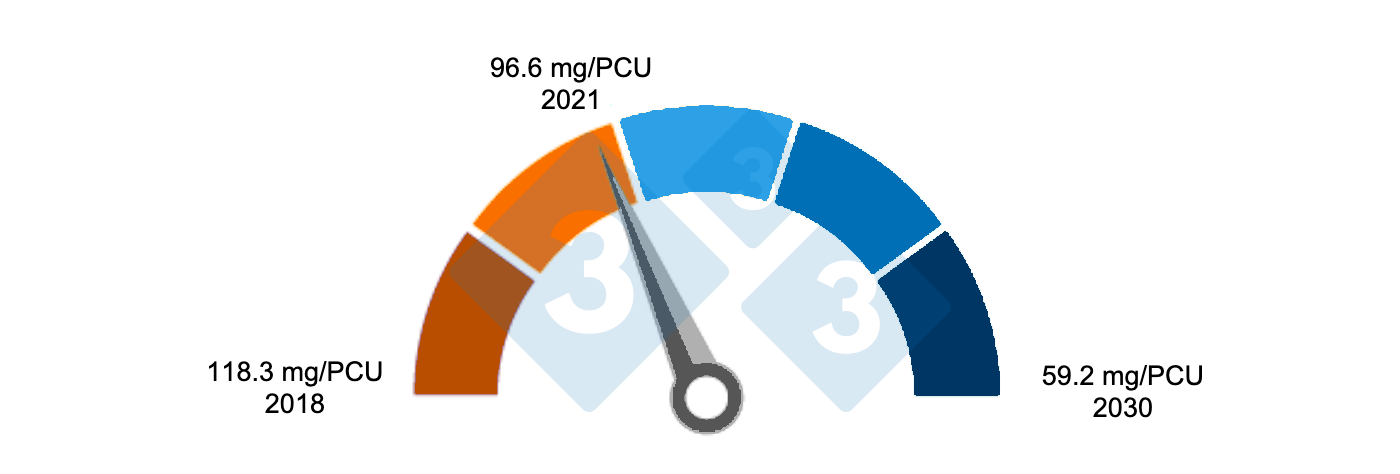
The direct consequence of these changes is that mortality increased a lot in 2022, doubling the percentages that were usual until 2017. It is true that the arrival of highly pathogenic PRRS strains has left its mark, but even in the areas of Spain where these strains had not yet arrived (northeast and southeast regions), mortalities also increased with respect to 2021.
Table 1. NE: Northeast zone, SE: South and East zones, NC: North Central zone. Data from: IX Jornada SIP. January 26, 2023.
| Nursery mortality | Finishing mortallity | ||||||||
|---|---|---|---|---|---|---|---|---|---|
| 2020 | 2022 | Variation 2020-22 | Variation 2015-19 | 2020 | 2022 | Variation 2020-22 | Variation 2015-19 | ||
| NE | 5.2% | 8.6% | +3.4% | NE | 4.2% | 6.0% | +1.8% | ||
| SE | 5.3% | 6.4% | +1.1% | SE | 4.2% | 4.6% | +0.8% | ||
| NC | 4.3% | 6.7% | +2.4% | NC | 4.3% | 6.7% | +0.3% | ||
| ES | 5.1% | 8.3% | +3.2% | +1.9% | ES | 4.2% | 5.7% | +1.5% | +0.3% |
In summary, we cannot use zinc oxide in post-weaning diets and there are no products on the market to replace it with the same efficacy; the use of antibiotics in feed is increasingly difficult and when it is used in drinking water it does not yield the same results; genetics keep improving producing larger litters every year which reduces weaning weights; and, last but not least, the highly pathogenic strains of PRRS are here to stay.
Against this background, what has changed is the motivation to wean older piglets. J. Barceló's goal of weaning 200 kg of piglets per sow per year matters little if those kilograms of piglets are never marketed. The motivation for weaning older piglets is now to control losses and, therefore, to ensure that what is produced is sold.
Some might think that the quality of the piglet at weaning is not so important in reducing mortalities, but the data we have show the opposite.
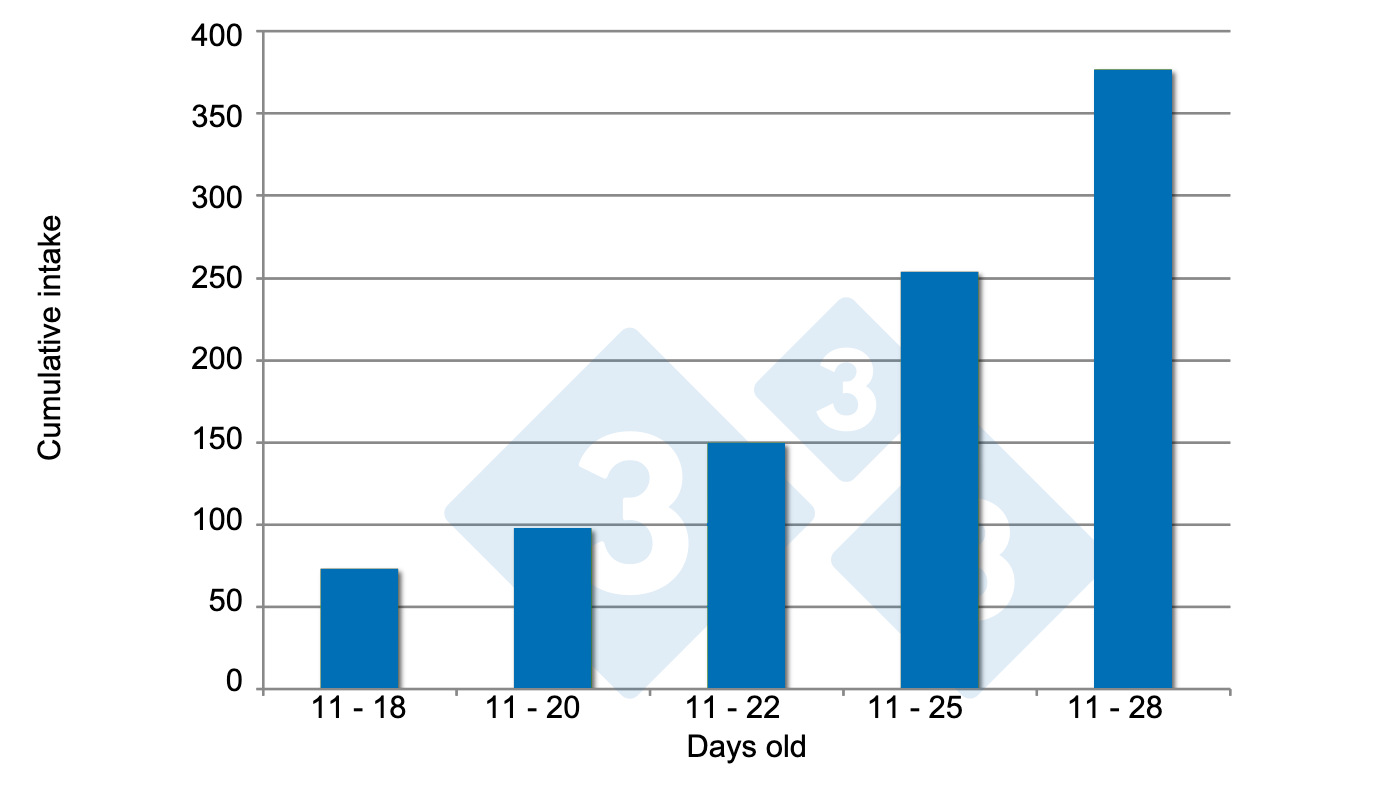
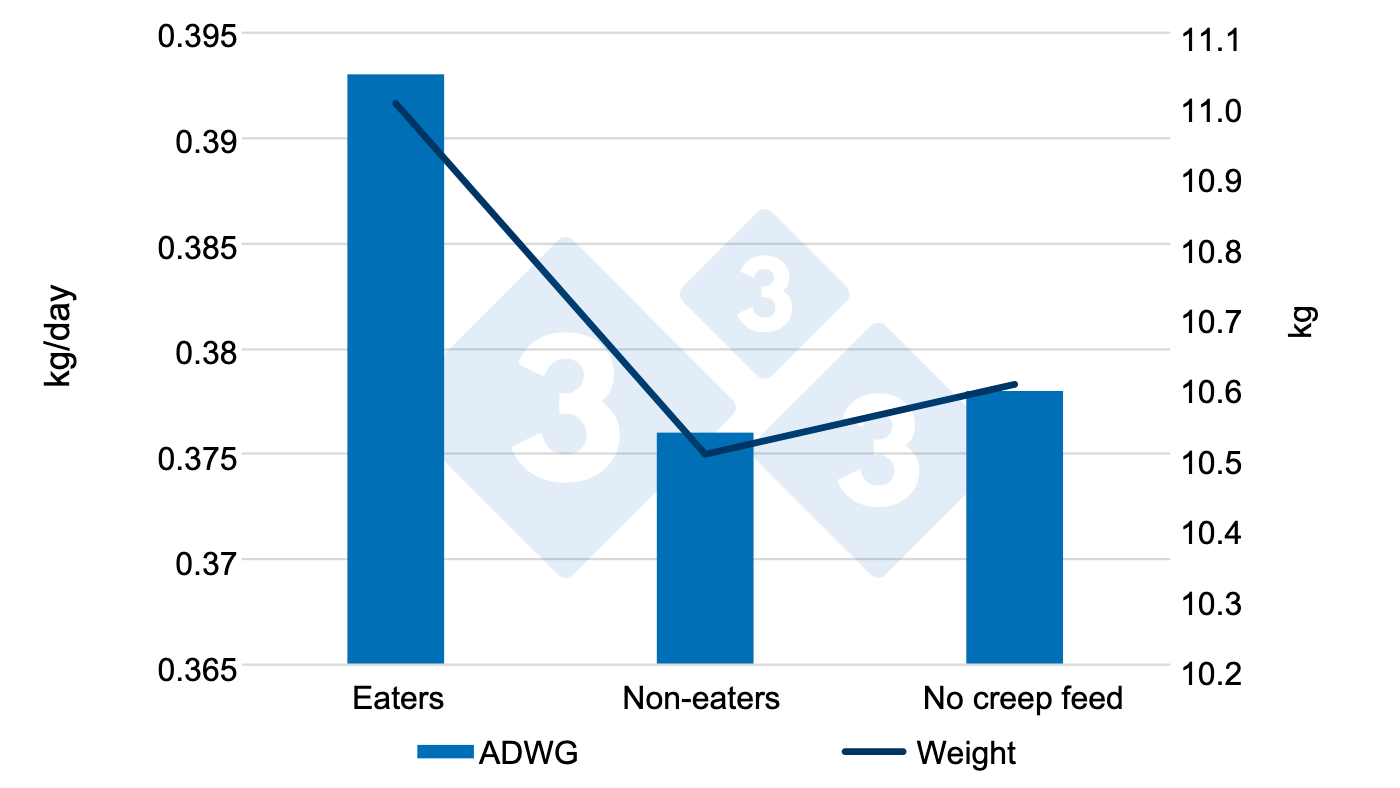
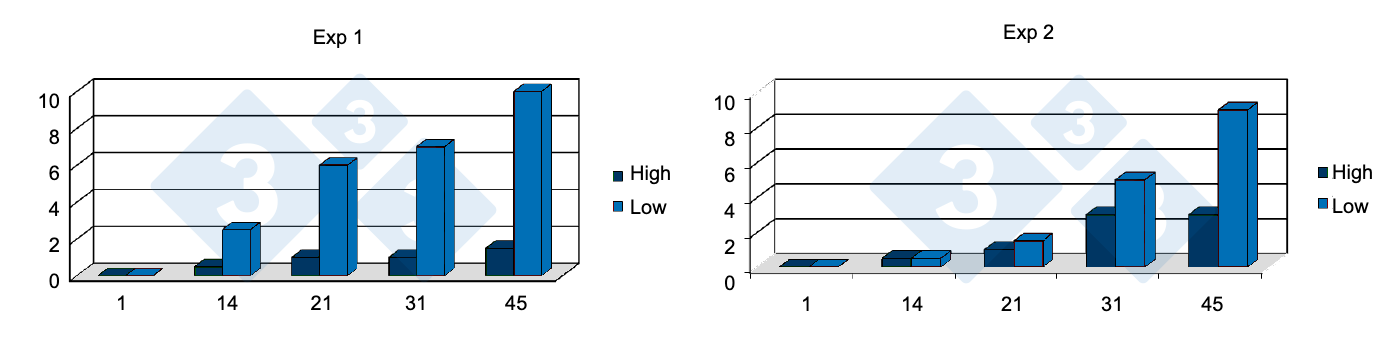
- Piglets weaned at 28 days or older have consumed much more solid diet prior to weaning. The highest intake occurs between 25 and 28 days.
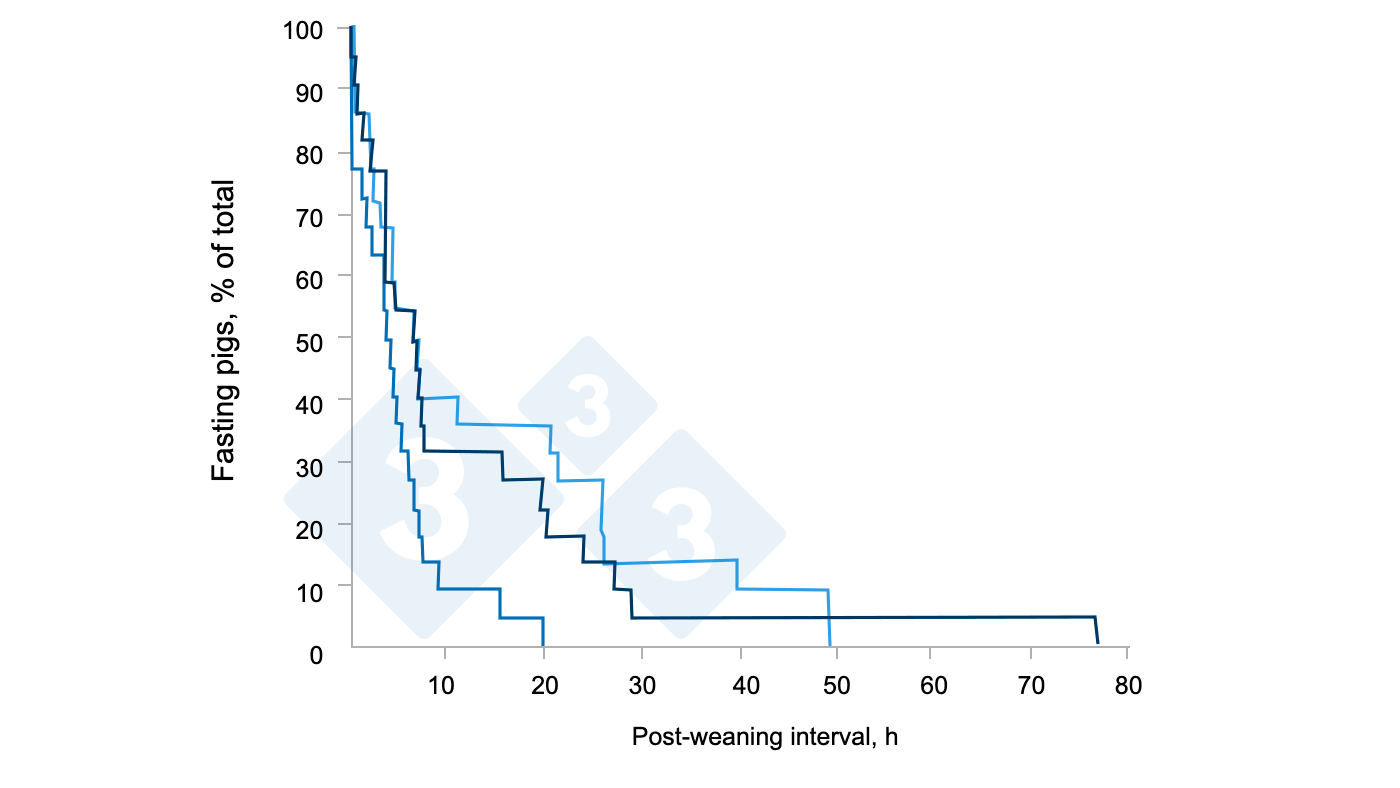
- Pre-weaning feed intake reduces the period of post-weaning anorexia, which is the main trigger for post-weaning diarrhea.
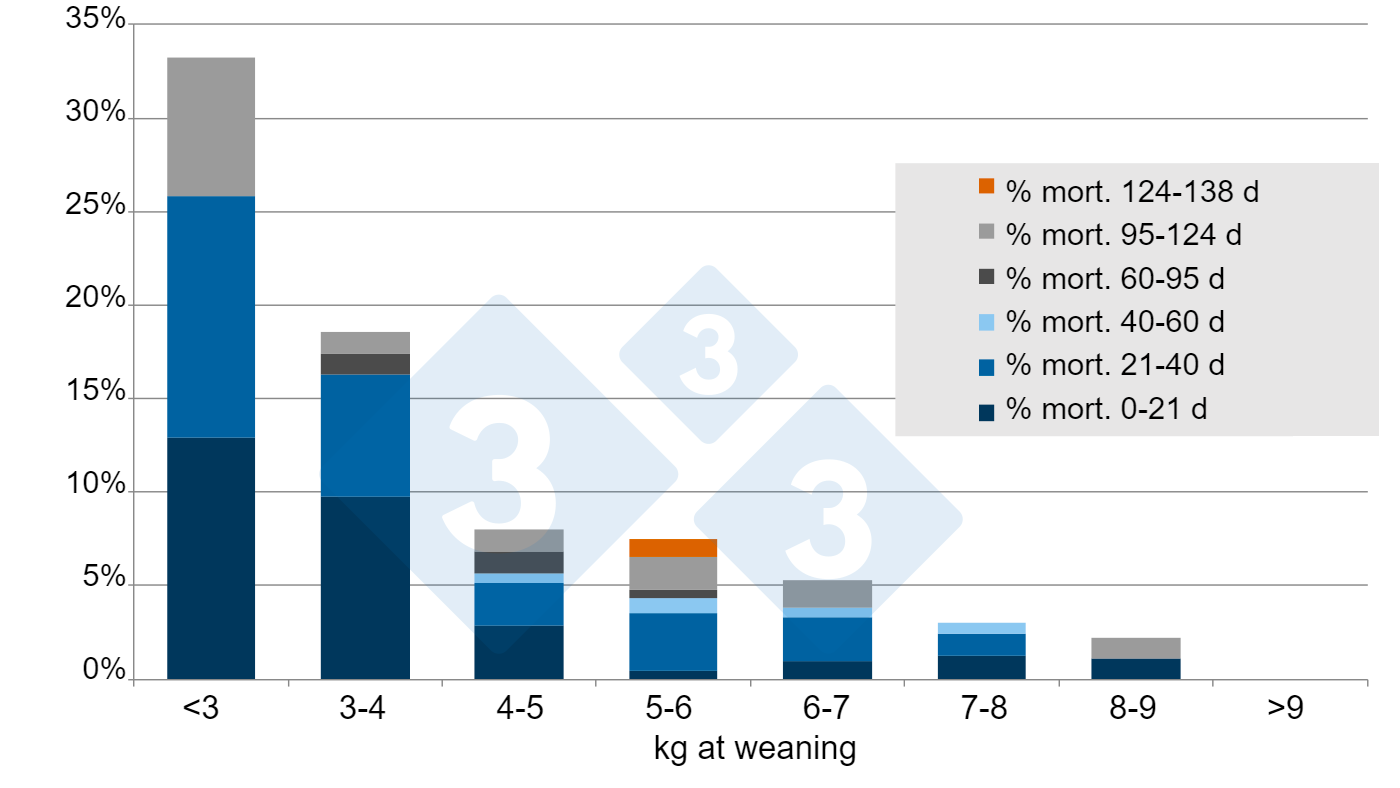
- Ages of 28 days or more at weaning ensure higher piglet weights. Heavier piglets withstand problems better, reducing losses not only during the post-weaning phase but also during the finishing phase.
- Piglets that know how to eat before weaning grow better once they are weaned.
- Piglets that grow well immediately after weaning are better able to withstand other pathologies, including PRRS.
- The need for antibiotics is reduced when problems are reduced.
Some European producers see weaning age as the solution to the problems caused by the withdrawal of zinc oxide and the reduction in the use of antibiotics, which is leading them to wean beyond 28 days. The decision should no longer be based only on economic terms as J. Barceló explained in his series of articles, but in terms of survival. If things do not change, and from what we see, it does not seem that they are going to change, by 2023 we will again lose, on average, 15% of weaned piglets. Will the consumer understand that 15% of weaned pigs are lost due to mortality? Is it sustainable to lose 15% of pigs?
We are late in reaching what was already being proposed by J. Barceló in 2009: delay the age at weaning, at least, until 28 days on average.