
Fiber in piglet feed
Francesc Baucells Alibés
08-Sep-2009 (17 years 1 months 5 days ago)
08-Sep-2009 (17 years 1 months 5 days ago)
Introduction
The term fiber can be defined according to the following criteria
• Physiological (dietary fiber): heterogeneous mix of polysaccharides (structural and not) and indigestible lignin on the part of the endogenous enzymes of the animal.
• Botanic: structural polymers of the plant cell wall.
• Chemical: there is currently no chemical definition or comprehensible analytical methodology that completely includes all the requirements. Therefore its quantification will depend on the analytical methodology used:
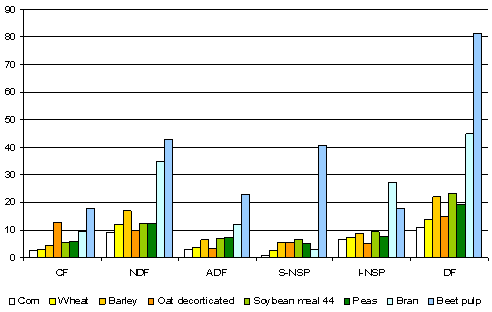
Figure 1. Typical analytical values of the most habitual raw materials (%)
Therefore, fiber includes a great variety of components with different physicochemical properties that will affect the digestive processes, separately or by combining, in properties such as solubility, viscosity, formation of gels, water retention capacity, bulkiness, endogenous secretions, nutrient absorption, fermentations, intestinal transit, etc.
Formulation and manufacture of the feed
Increasing the levels of fiber in the piglet diet can lead to:
• Decrease in the energy and nutritive content of the diet, or complementation with higher levels of very digestible protein and fat.
• Determination of the quantity (CF 2-5%, NDF 5-10-15%) and the type of fiber (soluble vs insoluble vs lignified)
• Incorporation of fibrous raw materials that may reduce the palatability of the feed
• Use of certain purifying ingredients or additives that can be costly.
• The level of molturation of the feed will have effects on its digestibility and influence on some of the properties of the fiber included in the diet.
Effect on the digestive processes in piglets
The fiber in the diet will have effects on different sections and processes of the gastrointestinal tract, the most relevant in the case of piglets are the following:
Stomach: slows down gastric emptying.
Small intestine: effect of viscosity and decrease in the absorption ratio of nutrients (protein, fat, minerals, etc). Especially with diets that are rich in soluble fractions of fiber and pectins. The level at which the different compounds of fiber benefit will depend on their structure and on the microbial activity, being quantitatively limited and varying in ranges of 15-70%, the products of fermentation will be lactic acid and VFA. In the same way, fiber will increase the enzymatic secretions and endogenous losses from the intestinal wall.
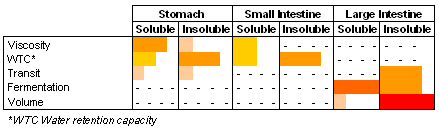
Figure 2. Effects of dietary fiber (soluble and insoluble) on the gastrointestinal tract.
The term fiber can be defined according to the following criteria
• Physiological (dietary fiber): heterogeneous mix of polysaccharides (structural and not) and indigestible lignin on the part of the endogenous enzymes of the animal.
• Botanic: structural polymers of the plant cell wall.
• Chemical: there is currently no chemical definition or comprehensible analytical methodology that completely includes all the requirements. Therefore its quantification will depend on the analytical methodology used:
o Crude Fiber (CF): the first to develop, frequently used, quite unspecific.In the following figure the fractioning of the fiber is presented according to different analytical techniques, with the included components being specified, and the following table shows the typical analytical values of the most habitual raw materials.
o Neutral Detergent Fiber (NDF), Acid Detergent Fiber (ADF) and Acid Detergent Lignin (ADL) (Van Soest). Much more specific method for determining the different fractions of the fiber, although there are certain over- and under-estimations for losses of soluble fractions of Non-Starch Polysaccharides (NSP), pectins and contaminations from the remains of starch, protein and hemicellulose.
o Enzymatic and/or chemical: more modern and specific. Sugars with low molecular weight, Non-Starch Polysaccharides (NSP, total, soluble, insoluble) and the composition in sugar monomers of the distinct fractions.
| Fiber analysis | |||
| Crude fiber | NDF, ADF, ADL | Enzymatic-chemical | |
| Cellulose Lignin Hemicelluloses |
Hemicelluloses Cellulose Lignin |
Total NSP Soluble NSP Insoluble NSP Low molecular weight sugars Monomers |
Cellulose Pectins ß-glucans Pentosans Xylans etc. |
Figure 1. Typical analytical values of the most habitual raw materials (%)
Formulation and manufacture of the feed
Increasing the levels of fiber in the piglet diet can lead to:
• Decrease in the energy and nutritive content of the diet, or complementation with higher levels of very digestible protein and fat.
• Determination of the quantity (CF 2-5%, NDF 5-10-15%) and the type of fiber (soluble vs insoluble vs lignified)
• Incorporation of fibrous raw materials that may reduce the palatability of the feed
• Use of certain purifying ingredients or additives that can be costly.
• The level of molturation of the feed will have effects on its digestibility and influence on some of the properties of the fiber included in the diet.
Effect on the digestive processes in piglets
The fiber in the diet will have effects on different sections and processes of the gastrointestinal tract, the most relevant in the case of piglets are the following:
Stomach: slows down gastric emptying.
o Greater acidification of the ingestion.
o More constant intestinal flow with time.
o Decrease in the ingestion capacity caused by satiation due to gastric filling.
Small intestine: effect of viscosity and decrease in the absorption ratio of nutrients (protein, fat, minerals, etc). Especially with diets that are rich in soluble fractions of fiber and pectins. The level at which the different compounds of fiber benefit will depend on their structure and on the microbial activity, being quantitatively limited and varying in ranges of 15-70%, the products of fermentation will be lactic acid and VFA. In the same way, fiber will increase the enzymatic secretions and endogenous losses from the intestinal wall.
o Fermentable compounds may have beneficial effects on the microflora, both in quantity and quality (selective growth and competitive exclusion).Large intestine: the time spent in this part of the intestine is much greater which allows the bacteria to grow from the substratum present. The cecum and colon are the places with greatest activity and where the majority of carbohydrates will be fermented, with digestibility values of 50-95%. As fermentation products we will obtain short-chain VFA, the most important being propionic, acetic and butyric. The greater availability of fermentable carbohydrates reduces the production of potentially toxic compounds from the degradation of protein.
o The very viscous compounds may negatively affect the digestion of other nutrients, although this does not seem important in pigs due to the high rate of dilution of the diet.
o Very high content of oligosaccharides may have a negative effect on the osmotic equilibrium, and can cause diarrheoa.
o Butyric acid has been described as being beneficial for the enterocites and mucosal integrity.
o The VFA are absorbed quickly through the intestinal wall, at the same time facilitating the absorption of water and sodium (consistence of the faeces).
>> Energy contribution with lower efficiency than direct absorption of the sugars in the small intestine.
o Quicker transit, with faeces that are more voluminous with a greater capacity for water retention on the part of the remaining fiber. Increase in the number of daily defecations.
Figure 2. Effects of dietary fiber (soluble and insoluble) on the gastrointestinal tract.