
Biosecurity during the deadstock pickup process on the farm
25-Jun-2021 (5 years 3 months 21 days ago)
Pickup with specialized trucks remains one of the most common methods for managing deadstock on the farm in most pig producing countries of the world. Just like the swine industry, collection companies continually evolve to be more efficient and biosecure.
In this article we will review some of the biosecurity concerns regarding the carcass collection process and discuss solutions that are being implemented in the field to address them.
Do the contents of the container attract animals and insects?
It has been demonstrated that domestic animals (cats), wild animals (wild boars), and insects (flies and mosquitoes) can play a role in the spread of certain diseases (PRRSV, TGE, Aujeszky's disease, etc.). Therefore, to minimize this risk, it is essential to:
- Include the containers in the maintenance of the farm so that they are watertight at all times and that the lid does its job. Good hygiene is important while at the same time improving biosecurity, preventing leakage of liquid, fly escape, and animal access. It is essential to ensure that the area around the container is free of weeds, tall grass, and debris to prevent habitat for rodents and insects. Pictures 1 to 3 illustrate good examples. A good idea is to take advantage of existing unevenness to further mark the separation between clean and dirty areas.
- Have a sufficient number of containers to efficiently manage the average mortality for the type of production, thereby avoiding routinely leaving deadstock outside the container that can be accessed by both wild and domestic animals. The use of containers that are adapted to the size of the animals at the farm is especially important for sow farms. The following are recommendations: a 1000-liter container for every 1000-1500 pigs for finishing farms; a 500-liter container for weaning facilities that do not exceed 2000 pigs; or a 1500-liter container for a 500 head sow farm. (Image 4-6).
 The deadstock pickup vehicle goes from farm to farm. Is this a risk?
From a practical point of view, under normal sanitary conditions, these vehicles must follow a very efficient route without consideration to species, type of production, or health status. Traditionally, the deadstock pickup service has been seen as an increased risk of indirect transmission of pathogens to production farms, however, there is no scientific literature that proves this, and based on my experience as a veterinarian in one of the densest production areas of Spain, this fact is not 100% true. Further research is needed! Today, the most advanced deadstock collection companies have invested in biosecurity training for staff and state-of-the-art trucks equipped with a sealing system that uses an automated hydraulic closure system.These companies use good practice protocols that require periodic audits of their vehicles to guarantee 100% water and airtightness of the box (Image 7-10). Does this mean that deadstock pickup collection at the farm is not a risk? No. It is another risk, similar to the other vehicles that arrive at the farm with the difference being that these vehicles do not enter and always stay at the limit of the controlled zone. To minimize any risk related to the movement of vehicles, it is essential to: clearly define the dirty area and the clean area, place the container at the edge of the controlled area and the outside of the farm with access from both sides (double access), have an area designed for easy and safe access with specific entrances and exits for this type of vehicle, and carry out a series of simple biosecurity measures (boots, clothing, and gloves that are used exclusively for deadstock management).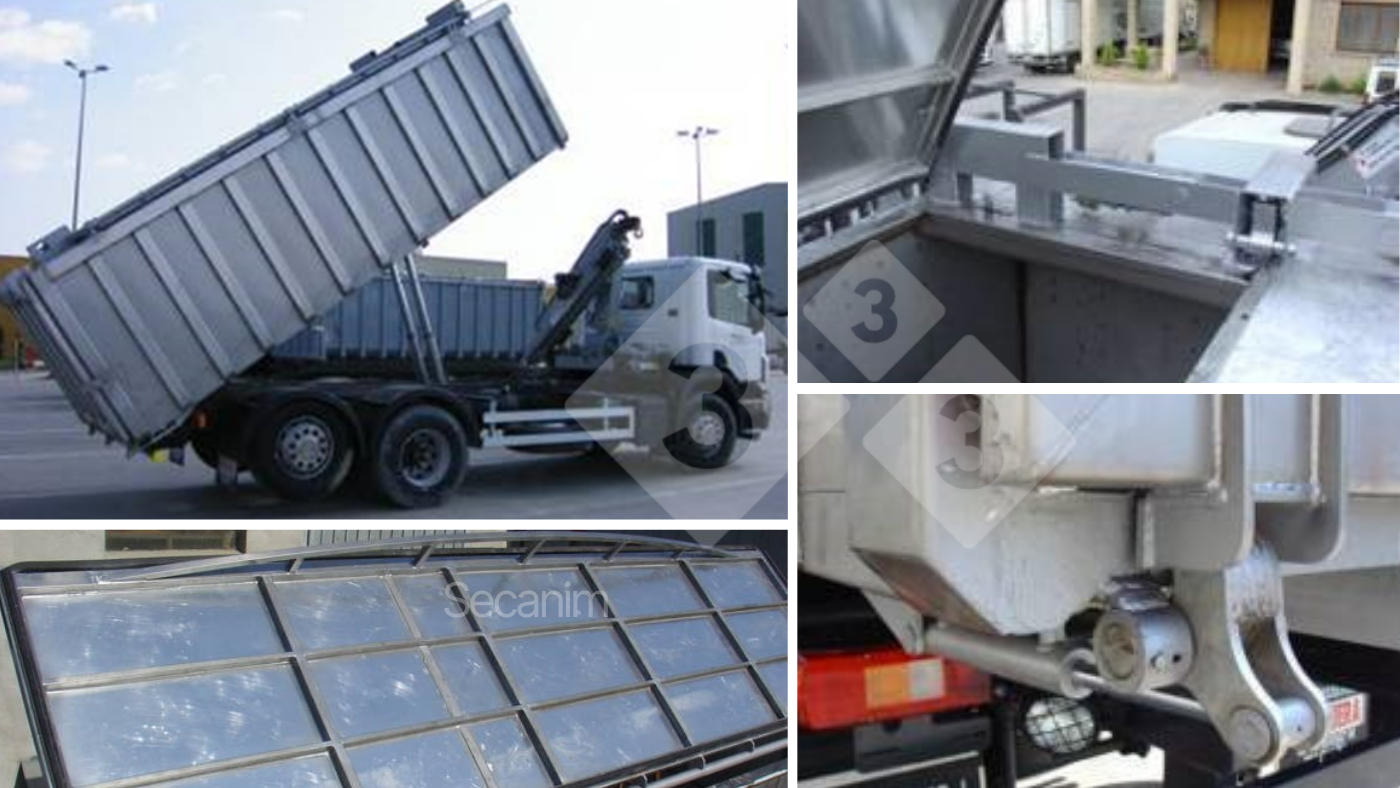
What role does deadstock pickup play during outbreaks of notifiable animal diseases?
The flexibility and adaptability of deadstock pickup collection companies, trucks, and processing plants allows them to collaborate in the control of outbreaks quickly and safely. In these cases, the conditions for the collection of deadstock will be set and audited by the relevant administration. Biosecurity measures in these situations include: creating a unique flow of trucks dedicated to collecting deadstock from positive farms, the use of treatment lines for these carcasses within the plant which are independent of the normal lines of work, and a specific downtime for the trucks and drivers involved in the collection of the positive farms.
In conclusion, deadstock pickup collection companies are an essential part of the pig industry's production chain and have evolved together with the animal industry through the application of advanced technologies and the best biosecurity practices.