
Clinical case: ...and trouble arrived with them
04-May-2018 (8 years 5 months 5 days ago)
The clinical case affected a 2000-sow farm working in a three site production system. The replacement animals come from a company owned multiplication unit with external gilt grow-outs to rear the future replacement gilts from 20 to 100 kg. After that, the gilts are introduced into the farm. A large part of the health and monitoring program is performed in these grow-outs, before the gilts enter the production farm. The recipient farm is producing 6-kg piglets and its health status is PRRS positive stable, negative for swine dysentery, mange and Atrophic Rhinitis.
The selection program is based on the following points:
- Gilt selection program
- All the female piglets weighing less than 1 kg at birth are not selected as future breeding animals.
- At 20 kg, and before moving them to the Grow-Out, another selection is made, assessing leg and feet soundness, teats and overall development.
- At the gilt GO, and before being sent to the production unit, another selection is performed checking leg quality, teats and external reproductive organs
- Replacement gilt health program.
- At weaning, weaner gilts are vaccinated, along with the male piglets, with PCV2 and Mycoplasma vaccines.
- During the rearing period, that goes from 20 to 100 kg, the following vaccines are applied:
- Vaccination at 10 weeks approx. and revaccination after 4 weeks:
- Aujeszky and influenza.
- Life modified PRRS vaccine.
- PCV2 and Mycoplasma. This vaccine is important because, since massive vaccination against PCV2 has been implemented, virus excretion has been significantly reduced and many gilts arrive at the end of the growing period showing a PCV2 negative status. Before the PCV2 piglet vaccination, all animals at the end of the GO period were Circovirus positive.
- At 27 weeks of age: PRRS inactivated vaccine.
- At 29 weeks of age and revaccination after 4 weeks: Parvovirus and erysipelas vaccine.
The idea is to complete the vaccination program by 36-38 weeks of age, one month before entering the mating area. For different health reasons, it was decided to stop the introduction of animals from the existing source farm and, therefore, the production farm was left without replacement animals (figure 1). The consequences of this decision were:
- Reduction of the weekly mating number due to lack of gilts.
- Culling was reduced to try to maintain the mating target: sows that in other situation would have been culled were maintained.
- The increment of sows with more than 7 parities increased the variability in the prolificacy and the quality of the piglets (sows have worse production and higher feed expenses).
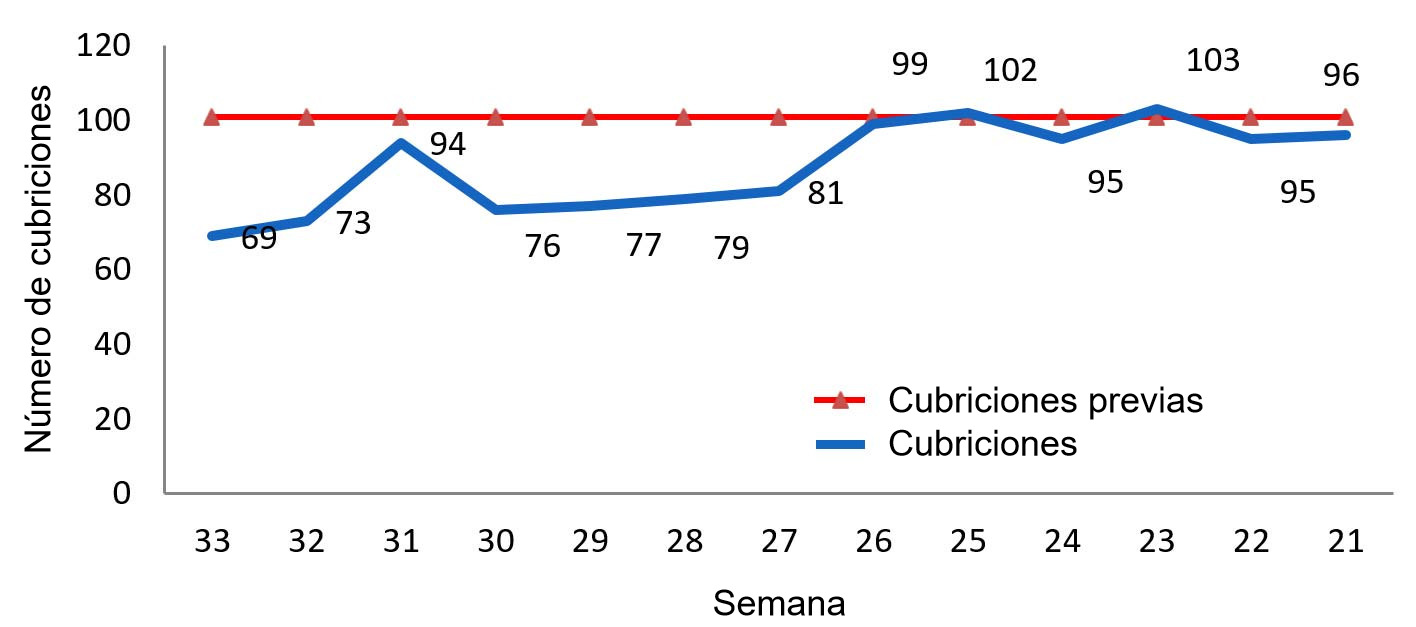
To reach the mating goals it was decided to buy gilts from an external source. Gilts were introduced at 100 kg, with a higher health status to that of the recipient farm and also with better technical indicators of prolificacy.
These gilts entered a distant area, and the acclimation program, which was essentially the one that had been routinely applied to the previous gilts from their own multiplier, was initiated. In order to reduce the timings, however, a combination of vaccinations was carried out with a three-week interval between vaccination and revaccination.
Efficiency of external gilts
The reproductive efficiency of the batch was good. Less than 2% of the incoming gilts were culled and the return rate was lower than 6%. At farrowing, they had a higher number of total born (increased by 1.2 piglets). As it was already expected, the birth weight of the piglets was lower and weight variability increased.
Start of the clinical problem
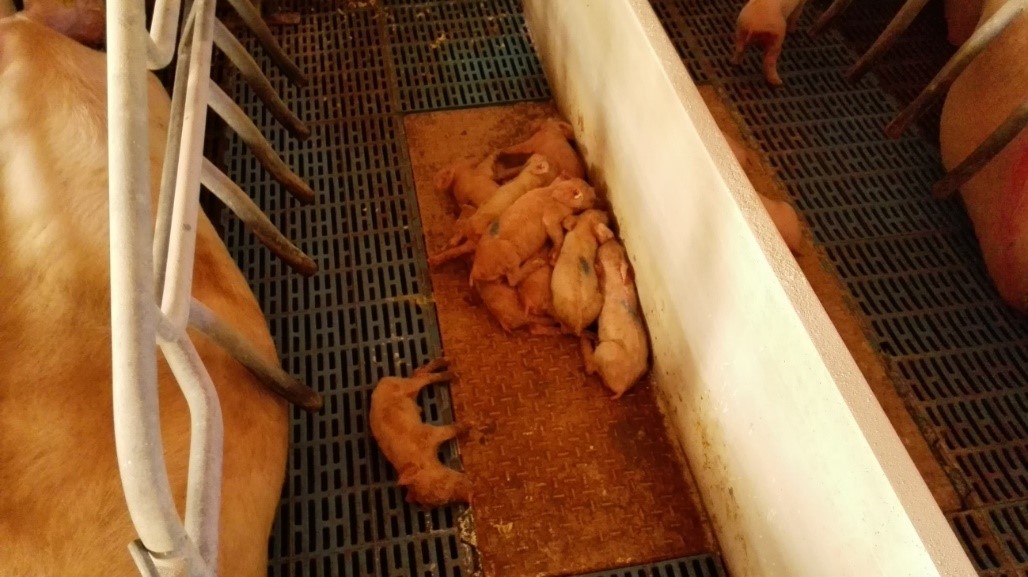
On the first days after farrowing of those new gilts, a diarrhoea process was seen in their piglets that caused an important loss of body condition (photo 1). The antibiotic treatments did not correct the symptoms, although they reduced the severity of the process and the mortality amongst piglets. In other words, there was an increase in the number of piglets that lost weight and ended up dying or generating a significant increase in the number of poor-doing piglets.
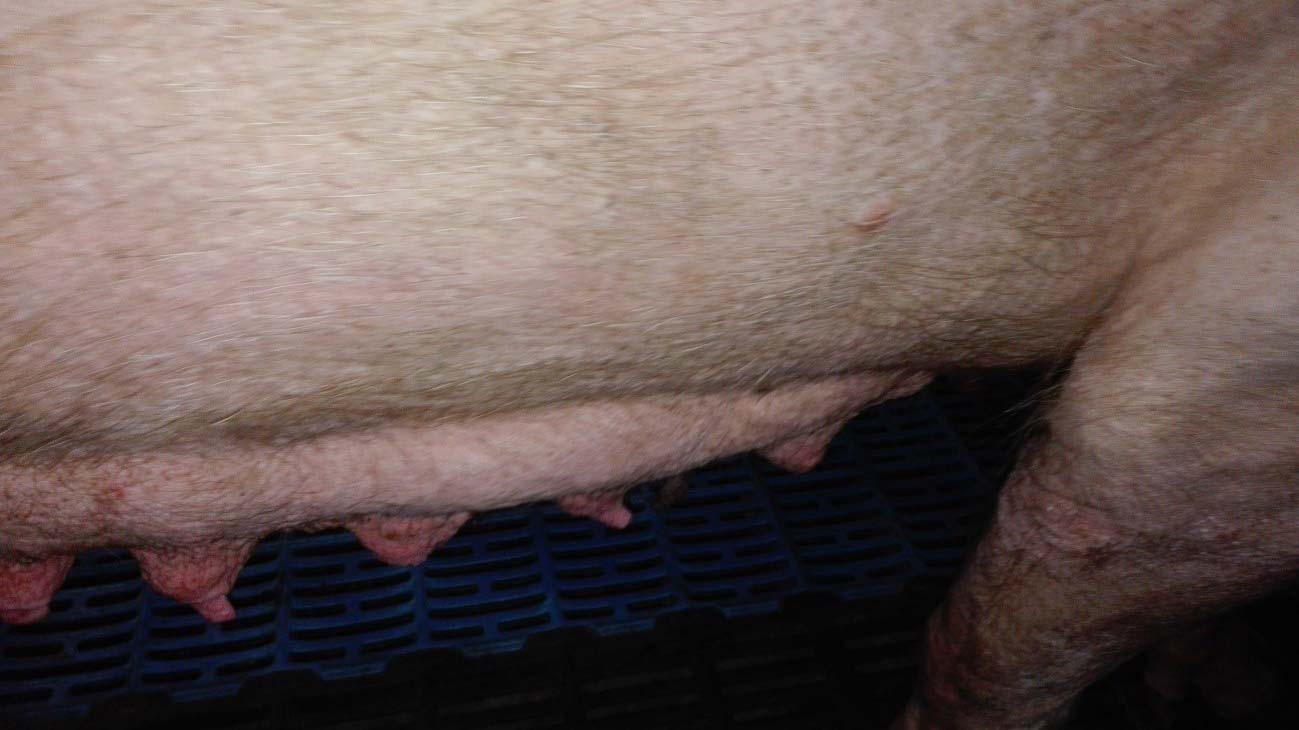
Diarrhoea and poor-doing piglets caused a loss of mammary gland development on the sows, due to the partial emptying of the mammary gland (Photo 2).
The loss of piglet quality was reflected at the nursery, generating more runts due to the low quality of the weaned pigs.
Diagnostic approach
The environmental and housing conditions were evaluated and the management conditions were later reviewed.
We used a basic checklist, to go through the possible causes of diarrhoea that have an origin in the farrowing management (Table 1)
Table 1: Farrowing management.
| Risk conditions | Effect | Optimal conditions | Effect | ||
| Environment | Farrowing room temperature | >28ºC <14ºC | • ↓ Feed consumption and milk production • Welfare reduction |
Sow thermoneutral zone (18-22ºC) without drafts | • ↑ farrowing feed consumption • ↑ milk |
| Temperature of heating pads | Cold | Crushing | • Paper bedding • Heating pad at 36-38ºC • Extra heat lamp • Fast piglet drying |
• Piglets resting on the heat pad • ↓crushing |
|
| Sow Feeding | Sow drinkers | Water flow under 2 L/min | • ↓ Milk production • ↓ Physical, chemical and microb iological quality of the water |
• >2 L/min |
• ↑ Farrowing feed consumption • ↑ milk |
| Sow feeders | Dirtiness Food leftovers Fermentation |
• Hygiene • Accessibility |
|||
| Feeding program | Inadequate feeding level from the second half to the end of gestation. | Potential mammary gland oedema |
Review gestation and farrowing feeding levels |
↑ colostrum and milk production at the start of next lactation | |
| Feed | Type and consumption level | ||||
| Down time , cleaning and disinfection | Down time | <3 days after cleaning Humidity |
• ↑ Infection pressure • Presence of diarrhoea |
• Dry rooms • >3 days |
↓ Infection pressure |
| Cleaning and disinfection | Lack of cleaning and disinfection | • Detergent • Pit cleaning • Disinfectant rotation |
Samples were sent to the laboratory: rectal swabs and intestinal content from a gut portion (table 2) of unmedicated piglets. Coronavirus PCR was requested and also virulence factors of E. coli. If conclusive data were not obtained in this first approach, histopathology was the next step.
Table 2: Results of the intestinal content samples
| Test requested | Faeces pool |
| Rotavirus A | + |
| Transmissible
gastroenteritis. (TGEV) |
- |
| Porcine Epidemic Diarrhoea (PEDV) | - |
An E. coli without virulence factors was isolated from the swabs (Table 3), which almost in all likelihood complicated the clinical picture of the piglets and caused higher mortality.
Table 3: Results of the swab samples
| Strain | Adhesins | Toxins | |||||||
| F4 (K88) | F5 (K99) | F41 | F6 (987P) | F18 | LTI | ST-Ia | ST-II | Stx2 | |
| E. coli spp | - | - | - | - | - | - | - | - | - |
| E. coli spp | - | - | - | - | - | - | - | - | - |
| E. coli spp | - | - | - | - | - | - | - | - | - |
Only translucent intestines were detected at the necropsies, which led to suspect an important loss of the intestinal villi. Rotavirus causes a destruction of mature enterocytes, their replication sites. The proliferation of immature enterocytes gives rise to diarrhoea due to their secretory activity. Some congestion of the intestine and yellowish diarrhoea was observed in some of the animals.
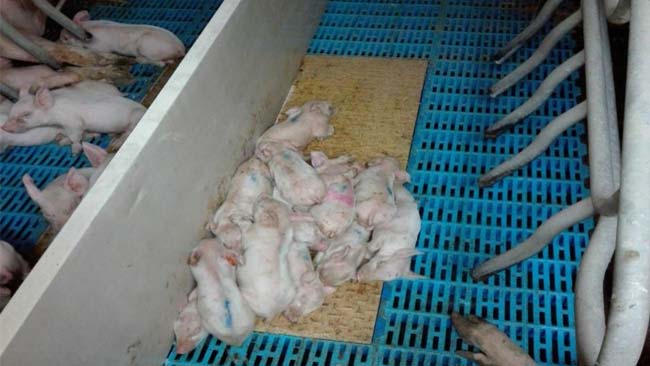
The use of antibiotics for the treatment of these diarrhoeas, in which the primary agent is a virus and then bacteria complicate the clinical picture, induces important variations of the piglet's microbiota and its intestinal integrity, thus preventing its correct development (Photo 3).
Therapeutic approach
First, faecal feedback from affected animals can be used by giving faecal material to pregnant gilts a month before farrowing. This measure usually brings good results, although it has some drawbacks and a very important health risk. The potential practical inconveniences when performing this practice include:
- It is essential to inactivate the chlorine in the water we put the faeces in with milk or thiosulfate;
- Sometimes there is not enough diarrhoea to mop up and pieces of intestine are added. In PRRS positive farms it is an important risk (even though the farm might be stable, there is always a % of animals that could be viraemic)
- Material from piglets over 5 days old should not be used. Immunization against rotavirus can be carried out after this period, since it is a very ubiquitous virus, and a low infective dose is required, but the transmission of other pathologies present on the farm is also possible.
For all of these disadvantages, we are of the opinion of not using or recommending faecal feedback.
In this case, the actions taken to solve this problem included:
- As there was an available vaccine against both colibacillosis and Clostridium perfringens type C toxoid (also including a live attenuated rotavirus A), pregnant gilts were vaccinated at 60 and 90 days of gestation. The objective was to obtain a high antibody concentration in colostrum. Colostrum is a reflection of the sow's immune history. Vaccination, in these cases, is the safest and most effective therapeutic alternative, although a correct passive immunity of the piglets via colostrum intake must be ensured.
- Monitoring the piglet colostrum intake: checking that the smaller piglets, and those that had suffered some thermal stress or high stress during the birth process, take colostrum in the first hours after birth. Additional heat and paper for the piglets to dry quickly are useful alternatives to increase the vitality of piglets.
- Monitoring the hygiene and the feeding of the sow in the transition period between the last days of gestation and the first days of lactation is basic to avoid mammary oedema and hipogalaxia (photo 4). Both conditions will lead to a clinical process due to deficiencies in colostrum production. Special care must be taken regarding the level of feed increase in the last third of gestation and the peripatum period: since it can lead, not only to a colostrum production failure, but also to a milk production failure after farrowing.
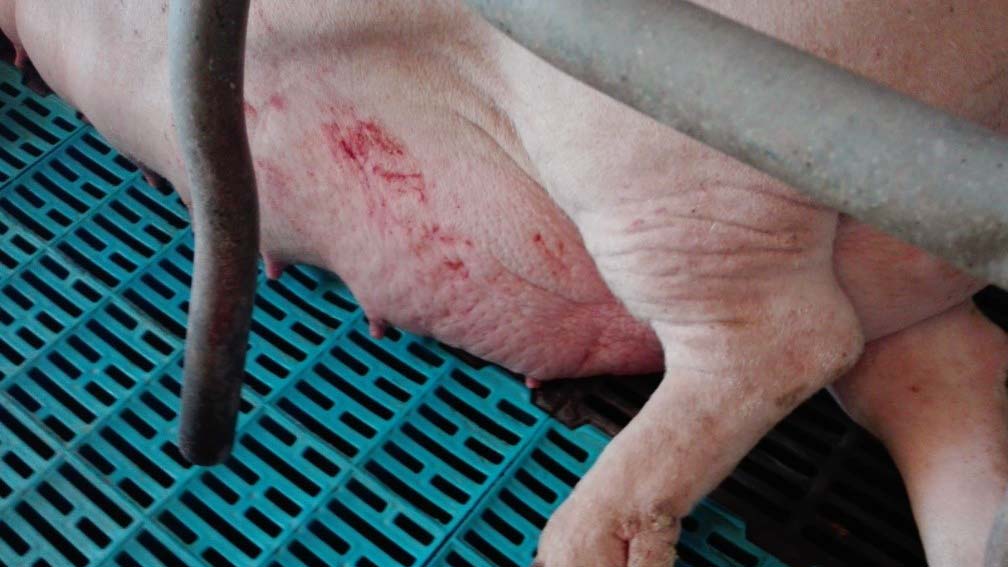
- Obviously, strict hygiene measures were maintained at the farrowing house to reduce infection pressure. Cleaning the farrowing pens with foam, in order to reduce the viral load on the sides of the piglets’ slats, is essential. The use of foam makes it easy for the disinfectant to reach all corners of the slatted floor. The cleaning has to be carried out thoroughly, trying to clean the slurry pits and bathing the sows at the entrance to the farrowing area. The sows and the floor should be allowed to dry after application of foam with chlorhexidine, and before farrowing starts.
- It is essential to monitor the vitality of the piglets at birth since, depending on it, colostrum intake is better or worse. It is essential to monitor sow temperature and the farrowing duration.
Conclusions
- We do not know if the rotavirus was already at the farm or it was brought by the gilts of the new origen. The fact is that the enteric process aggravated by both the rotavirus, and the e.coli secondary infections, increased the length of the clinical healing process. This reduced the piglets’ quality at weaning and increased mortality and loss of milk production.
- Decisions about changes on the replacement animals source farm are always difficult. Monitoring through testing before the introduction of the new animals into the farm is not sufficient.
- The incidence of enteric processes in lactation increases every day. It is necessary to rely more on the use of vaccination, on animal management measures and on cleaning and disinfection protocols for both farrowing rooms and sows, in order to reduce the pressure of infection: this should be our main objective.
- Vaccination alone is not a guarantee of success if correct colostrum intake by the piglets is not controlled. Any incidence that affects colostrum production by the sow or the amount of colostrum ingested by the piglets must be urgently addressed. Once all management factors have been corrected, the use of vaccines will help us to succeed.
The increase in prolificacy that has been seen in recent years, has reduced the intake of colostrum by the individual piglet: lower birth weight reduces their vitality, and therefore, reduces their capacity of a good colostrum intake.