
Post-weaning E.coli enterotoxaemia: nutrition as a predisposing factor
15-Jun-2015 (11 years 4 months 1 days ago)
Bacterium Escherichia coli is a Gram negative bacillus present in the saprophytic flora of pigs and people. Only a few of the more than 200 different types are pathogens, causing enterocolitis in the upper small intestine. Therefore, the balance of the digestive flora in pigs is an essential part to prevent the clinical symptoms of disease. Similarly, we know that a correct balance of the microflora promotes proper development and maturation of the enteric mucosal immune system, where up to 65% of the defence cells are produced; these constitute the first barrier to the enterohaematic entrance of such E.coli pathogenic strains and their toxins. Therefore, if there is no balance between the saprophytic and the pathogenic flora, a good development of the immune system is not possible, and the risk of post-weaning colibacillosis pathologies is higher.
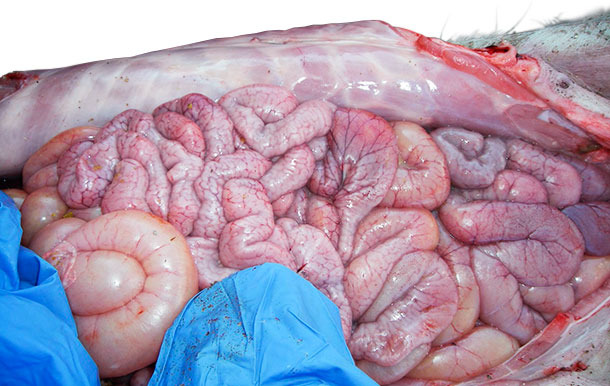
1- Distended small intestine with fluids, gases and vascular congestion.
This practical work intends to address the interactions between nutritional strategies and prevalence / severity of post-weaning E. coli enterotoxaemia. Bellow are some nutritional risks linked to the feed itself, as well as its management by workers.
Risk factors linked to the feed
- Excessive dietary crude protein. Piglets can only digest up to 45% of crude protein. Its metabolism results in an increased production of biogenic amines, that alter the digestive flora.
- Addition of low digestibility protein. The higher the protein digestibility, the lower the gastrointestinal risk; values over 85% digestibility in first stage piglet feeds reduce the risk of digestive problems. The proteins which values need to be over 85% in first stage feeds (post-weaning phase) in order to reduce the incidence of digestive problems are the ones with the highest digestibility (milk protein, plasma protein, fish protein, egg protein, animal protein concentrates...)
- Particular attention must be paid to the use of high inclusion rates of vegetable protein. It can cause anaphylactic reactions in the intestine and increase the proliferation of pathogenic flora.
- Low digestibility diets favour the presence of undigested nutrients, sources of volatile fatty acids which, in turn, provide energy for the pathogenic flora.
- Inclusion of fats with high percentage of acidity.
- Incorrect levels of lactose in first stage feeds.
- Lactose source (pure and/or lactose whey powder) in prestarter and starter feeds.
- Total and types of sugar in prestarter and starter feeds.
- Low palatability of the feed, which can lead the animals to not reach the minimum necessary consumption to meet their needs, and to a negative balance of nutrients encouraging the growth of pathogenic flora. It's important to remember that the gastrointestinal mucosa regenerates its lining every other day in the first weeks of the piglet's life, requiring a minimum supply of nutrients to meet these requirements.
- The addition of soluble fibre favours the proliferation of saprophytic flora.
- Using flora competitive specific probiotics reduces the incidence of post-weaning E. coli enterotoxaemia.
- Other additives, such as prebiotics, improve the balance of flora and enteric immunity, reducing the risk of E. coli enterotoxaemia.
- Diets with high buffering capacity prevent the production of hydrochloric acid in the stomach, thereby facilitating the multiplication of pathogenic E. coli strains. In this regard, the inclusion of organic acids in first stage feeds allows pH reduction in the stomach and, therefore, multiplication of EPEC.
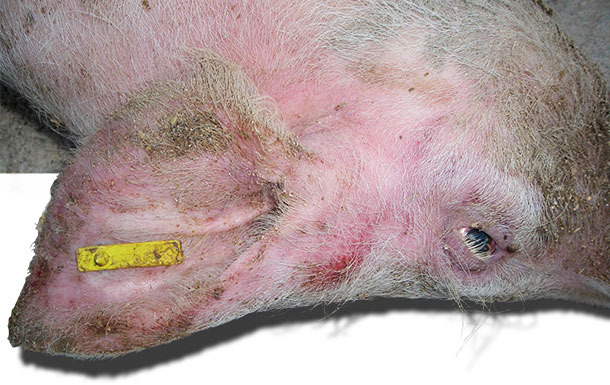 2. Signs of dehydration and septicaemia.
- Poor hygiene of some raw materials.
- Poor hygiene of the final feed.
- Poor microbiological quality of drinking water.
- Incorrect drinking water temperature: cold or hot.
- Contamination with anti-nutritional factors.
- Contamination with certain mycotoxins.
- Massive supply of antibiotics in the feed in early stages.
- Antibiotics drastic suppression from a feed to the next.
- High doses of antibiotics or mixtures of antibiotics, that not only control specific infectious agents, but also the saprophytic flora, including E. coli.
- High concentrations of zinc oxide in feeds for piglets maintained beyond two weeks after weaning have a drastic effect on the intestinal microbiota, especially against Lactobacillus, which is why their abrupt withdrawal favours the appearance of E. coli enterocolitis symptoms.
Risk factors linked to feed management
- Giving piglets a feed destined to older/heavier animals. The difference between an 18-day old and a 25-day old piglet at gastrointestinal level, in terms of saprophytic flora and enteric immunity balance, is huge, so that when piglets are weaned a week too early —changing from a liquid to a solid diet—, the risk of diarrhoea caused by E. coli is up to six times higher.
- Giving piglets a feed destined to younger/lighter animals. An excessive intake of certain nutrients in higher concentrations in first stage feeds poses a high risk for the digestive tract, also affecting its maturation.
- Rationing followed by overconsumption —which involves a lack of absorption of certain nutrients—, together with the fact that intestinal transit time in piglets up to 8 weeks old is less than 24 hours, favours the arrival of undigested nutrients to the end sections of the small and large intestines, increasing proliferation of E. coli, the pathogenic flora prevailing over the saprophytic flora ("exclusive competition").
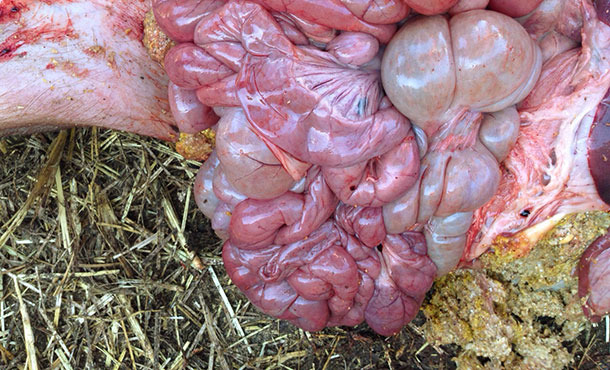
3. Haemorrhagic small intestine with normal full stomach.
- Poor management of feed hoppers.
- Insufficient feeding trough space per number of pigs.
- Insufficient water supply nipples per number of pigs.